
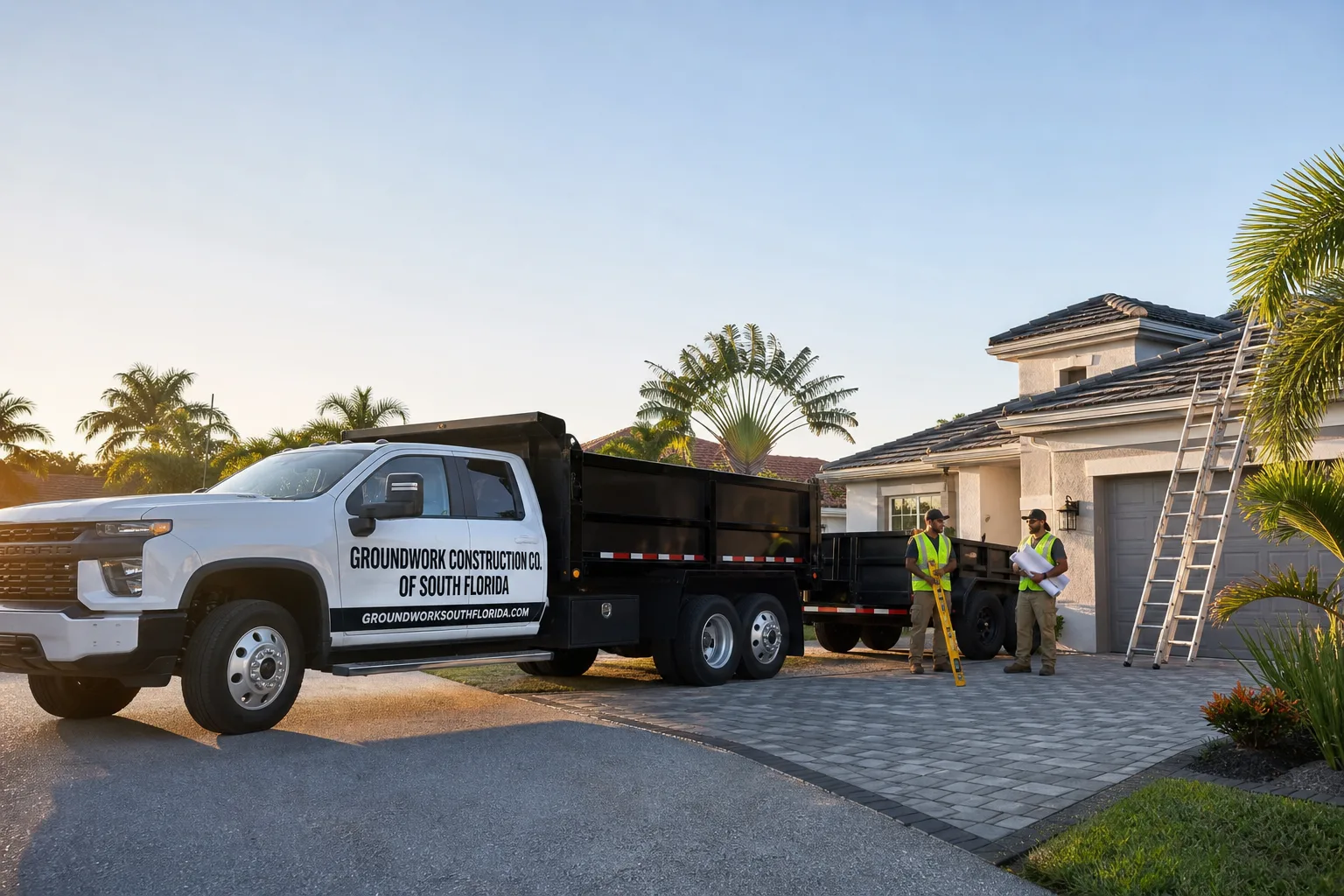
Tile Roofing in Isle of Normandy, FL - Timeline, Cost & What to Expect
Tile roofing in Isle of Normandy typically runs $8,000-$20,000 for a full replacement and takes 5-10 working days from tear-off to final inspection, though the island’s single causeway access can add a day for material staging. Most homes here need upgraded hurricane straps and deck fastening to meet current Miami-Dade wind codes, which we factor into the scope from the start. Call (844) 665-0162 and we’ll walk your roof, assess the existing structure, and deliver a written estimate with line-item pricing.
How We Handle a Tile Roof from Start to Finish
We’ve learned to build extra lead time into every Isle of Normandy job. The Normandy Drive Causeway is the only way in, and one stalled concrete truck or oversize delivery can back up the entire island. So we pre-stage materials on-site the day before any critical phase. Here’s how a typical tile roofing project moves:
Day 1: Tear-off and deck inspection. We strip the old roof to the deck, then assess every sheet of plywood or plank decking for rot, delamination, and fastener withdrawal. On the 1940s-1970s CBS homes that dominate Isle of Normandy, we often find original decking nailed with ring-shank nails that have corroded from decades of salt-air exposure. If the deck needs replacement, we mark it now and adjust the material order before the staging window closes.
Day 2-3: Structural upgrades and dry-in. This is where Isle of Normandy jobs diverge from mainland Miami Beach. Many homes here predate Hurricane Andrew and lack proper hurricane straps, ridge ties, or sufficient roof-to-wall connections. We install code-compliant metal connectors, re-nail or replace decking to meet the 8d ring-shank fastener pattern Miami-Dade requires, and apply synthetic underlayment. The homeowner’s decision point here is whether to add secondary water barrier (self-adhered membrane) at valleys and penetrations, which we recommend given the island’s exposure.
Day 4-6: Tile installation. We set battens if the profile requires them, or direct-set for flat profiles. Clay and concrete tiles go down in courses, with proper overlap for the 6:12 to 12:12 pitches common on these mid-century homes. The homeowner chooses the tile color, profile, and whether to use standard weight or lightweight concrete. We stage extra tiles on-site because the causeway makes mid-project resupply unpredictable.
Day 7-8: Flashing, ventilation, and detail work. We install valley metal, pipe boots, chimney saddles, and ridge/hip caps. Ventilation gets special attention on these older homes, many of which were built with minimal or blocked soffit venting. We discuss whether to add ridge vents or maintain the original look with static vents.
Day 9-10: Final inspection and cleanup. Miami-Dade requires a roofing inspection for tile installations, and we coordinate scheduling. The inspector checks nailing patterns, uplift resistance, and flashing details. We don’t consider the job closed until the homeowner walks the finished roof with us and the permit is finaled.
The Tile Choices That Change Your Roof’s Performance and Price
Tile roofing in Isle of Normandy isn’t one product. The material you select determines weight load, wind resistance, color retention, and whether your existing structure can handle it without reinforcement. Here’s what we most often present:
- Standard-weight concrete tile (900-1,200 lbs per square): The most common replacement for original clay on these older homes. Costs less than clay, offers decent wind uplift with proper fastening, and comes in dozens of profiles from flat S-tile to high-barrel. The trade-off: weight. We often need to verify that 1950s-era roof framing can carry it, or add structural reinforcement.
- Lightweight concrete tile (600-800 lbs per square): Developed specifically for re-roofing older structures without full engineering upgrades. We use this when the existing rafters or trusses show stress, or when the homeowner wants to preserve ceiling height in a future attic conversion. Slightly higher material cost, but often saves $2,000-$4,000 in structural work.
- Clay tile (1,000-1,500 lbs per square): The original material on many 1960s Isle of Normandy homes. Fired clay holds color longer than concrete in salt-air environments and doesn’t absorb moisture the same way. It’s the premium choice for homeowners restoring mid-century character. Requires the most robust structure and the highest budget.
- Flat vs. high-profile installation: Flat tiles (two-piece or single-lap) shed water well but require precise underlayment because wind-driven rain can push underneath at the island’s exposed elevation. High-barrel tiles create more turbulence that deflects wind, but the gaps collect salt spray and need periodic rinsing. We recommend flat profiles for low-slope sections and high-barrel for prominent roof faces visible from the causeway.
- Fastening method: Foam adhesive, screws with washers, or nail-and-wire hybrid. Miami-Dade’s high-velocity zone pushes us toward mechanical fastening with corrosion-resistant hardware, stainless or hot-dip galvanized. Foam alone doesn’t satisfy us on a fully exposed island roof.
What Tile Roofing Costs in Isle of Normandy, FL
Most tile roofing projects we bid in Isle of Normandy fall between $8,000 and $20,000. The range is wide because these homes vary enormously in condition and code compliance.
Here’s what pushes a job toward the low or high end:
- Roof size and complexity: A simple gable on a 1,200-square-foot 1950s cottage runs toward $8,000-$11,000. A multi-hip 1970s home with dormers, skylights, and chimney crickets can hit $18,000-$20,000 before upgrades.
- Deck condition and structural needs: Replacing 10% of decking adds modest cost. Finding corroded fasteners, insufficient rafter ties, or a sagging ridge beam can add $3,000-$7,000 in structural remediation.
- Code compliance gap: Homes built before 1992 often need hurricane straps, enhanced nailing, and sometimes ridge beam connections brought to current standard. This is not optional if the inspector flags it, and we price it into our estimate rather than surprise you mid-project.
- Tile material grade: Standard concrete at the low end, lightweight concrete mid-range, imported clay at the premium. The material delta can be $2,000-$5,000 on a typical home.
- Access and staging complexity: The Normandy Drive Causeway restriction means we may need a smaller crane or multiple smaller deliveries rather than one large load. This rarely changes the total significantly, but it can affect scheduling.
A written estimate from Groundwork Construction Co. includes tear-off, disposal, deck repair (up to a specified percentage), underlayment, tile, fastening, flashing, ventilation components, permit fees, and final inspection coordination. It does not include interior repairs from pre-existing leaks, gutter replacement, or tree trimming for access, though we can quote those separately.
Why Isle of Normandy’s Island Geography Shapes Every Tile Roof We Install
Isle of Normandy isn’t coastal. It’s encircled, fully surrounded by Indian Creek and Biscayne Bay, which means salt-laden air hits from every direction, not just an oceanfront exposure. We’ve stripped roofs here where the tile itself was intact but every metal fastener beneath it was corroded to half its original diameter. The chloride-driven corrosion attacks rebar in the CBS walls, the anchor bolts at the sill plate, and the galvanized connectors in the roof assembly faster than anything we see on the Miami mainland.
The housing stock compounds this. Most homes were built between the late 1940s and 1970s, before Miami-Dade adopted its post-Andrew high-velocity wind zone requirements. We regularly find roofs with no hurricane straps, decking nailed with 6d common nails rather than ring-shank, and ridge beams simply butted rather than strapped. When we install tile roofing in Isle of Normandy, we’re not just replacing a weather surface. We’re often reconstructing the structural connection between roof and wall so the new tile doesn’t become projectiles in the next named storm.
The water table sits essentially at grade year-round, so any below-grade work during a larger renovation, drainage improvements or foundation repair tied to the roofing project faces chronic moisture. And that single causeway, Normandy Drive, means we pre-stage every pallet of tile, every bundle of underlayment, every bucket of fasteners on-site before the installation begins. A contractor who treats this like a mainland Miami Beach job risks losing a day to a fender-bender or an oversize delivery that can’t clear the bridge.
Homeowners on the island often pair a full roof upgrade with Impact Windows & Doors in Isle of Normandy to bring the whole envelope to current code, or add Sliding & Patio Doors in Isle of Normandy to replace aging openings that leak air and water. If you’re considering a broader exterior renovation, our Roofing in Isle of Normandy page covers how we coordinate multi-trade projects as a single-source contractor.
Serving Isle of Normandy, FL - Our Local Coverage Area
We’re based in the Isle of Normandy area and know this community well. Use the map below to see our service coverage - if you’re nearby, we can almost certainly help.
Frequently Asked - Tile Roofing in Isle of Normandy
Most tile roofing installations take 5-10 working days, with an extra day built in for material staging due to the Normandy Drive Causeway access constraint. Call (844) 665-0162 and we’ll confirm a realistic timeline after seeing your roof’s condition and complexity.
Yes. Miami-Dade County requires a roofing permit for all tile roof replacements, and the work must pass inspection for deck nailing, underlayment, and final installation. We handle permit application, scheduling, and inspector coordination as part of our standard scope.
Sometimes, if the existing decking is solid, properly fastened, and free of rot or delamination. On Isle of Normandy’s 1950s-1970s homes, we find compromised decking in roughly 60% of tear-offs due to salt-air fastener corrosion, so we budget for partial replacement and verify during our initial inspection.
Yes. Tile roofing typically costs 40-60% more than asphalt shingle for the same footprint, but it carries longer material life, better wind resistance in Miami-Dade’s high-velocity zone, and can last 30-50 years versus 15-25 for shingles. For homeowners planning to stay long-term, the lifecycle cost often favors tile.
Tile manufacturers typically offer material warranties ranging from 50 years to limited lifetime on concrete and clay products. Our installation workmanship is backed by our standard project guarantee, and we use manufacturer-certified installation methods so your material warranty remains valid. We’ll review the specific warranty terms for your chosen tile during the estimate.
Get Your Tile Roofing Estimate in Isle of Normandy
We’ll walk your roof, photograph the existing conditions, and deliver a written estimate with line-item pricing for tile, underlayment, structural upgrades, and permitting. No deposit required to schedule. Call (844) 665-0162 or request a time through our Isle of Normandy service page. Our Roofing crew serves Isle of Normandy and nearby North Bay Village, Miami Shores, Miami Beach, and Bay Harbor Islands.
Written by Raymond Estevez, Owner at Groundwork Construction Co., serving Isle of Normandy and South Florida.