
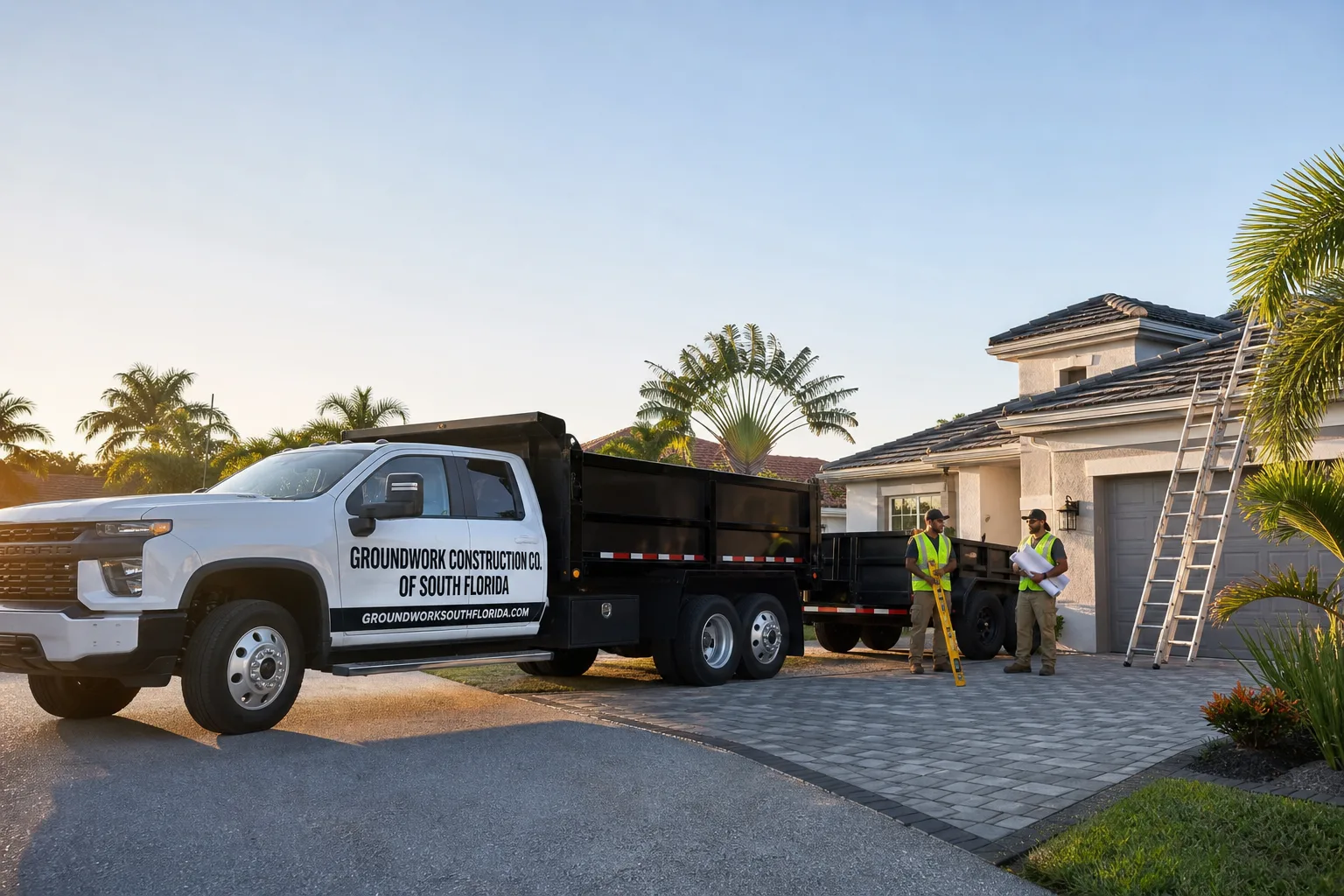
Tile Roofing in Richmond Heights, FL - What It Costs and How Long It Takes
Tile roofing in Richmond Heights, FL typically runs $8,000-$20,000 for a full replacement and $600-$2,500 for targeted repairs, with most projects taking 5 to 10 business days from permit approval to final inspection. We work with clay and concrete tile systems from GAF, CertainTeed, and Boral, all Miami-Dade NOA-approved for High-Velocity Hurricane Zone compliance. Call (844) 665-0162 and we’ll walk your roof, check your decking, and give you a written estimate with no obligation.
Richmond Heights sits on some of South Florida’s most distinctive ground - the Miami Rock Ridge, where shallow limestone bedrock and a 1940s-1960s housing stock of concrete block homes create roofing challenges you won’t find in newer developments. The original flat and low-slope roofs common to that era weren’t built for modern tile loads or today’s HVHZ fastening requirements. When we quote tile roofing here, we’re often looking at more than a surface swap.
How Tile Roofing Gets Done - Stage by Stage
Every tile roof we install in Richmond Heights follows a five-phase sequence. Here’s what happens, what you’ll need to decide, and how long each phase runs.
Phase 1: On-site assessment and scope lock (1-2 days). We walk the roof, photograph every plane, and probe the decking. In Richmond Heights, this is where we often find the surprise - original mid-century roof decks that won’t pass Miami-Dade inspection once the permit opens. We’ll tell you upfront if we expect decking replacement, not after we’ve stripped your old roof. You decide at this stage whether to proceed with full replacement or scope down to repairs.
Phase 2: Material selection and permitting (5-15 business days). You’ll choose between clay and concrete tile profiles - barrel, S-tile, flat, or shake-look - and specify color and manufacturer. We file your permit with Miami-Dade, which triggers HVHZ product-approval verification. Every tile, underlayment, and fastening system must carry a current NOA. We handle the paperwork, but you’ll need to sign off on material specs before we submit.
Phase 3: Tear-off and deck prep (1-2 days). Crews strip existing roofing to the deck, then replace any compromised plywood or OSB. In Richmond Heights homes with original 1950s-1960s construction, we frequently find insufficient fastening or degraded sheathing that must be brought to current code. This phase can add $1,500-$4,000 to the project if full deck replacement is needed - something we flag in Phase 1, not here.
Phase 4: Underlayment and tile installation (3-5 days). We install a Miami-Dade-approved secondary water barrier, then set tiles to manufacturer specifications with HVHZ-rated fasteners. Clay tiles go down differently than concrete - lighter but more brittle, requiring experienced setters. Our crew works from the eaves up, cutting tiles at valleys and penetrations as we go. You’ll want to be reachable during this phase for any field decisions on chimney flashing or vent placement.
Phase 5: Inspection and closeout (1-3 days). Miami-Dade inspects for deck integrity, fastener patterns, and flashing details. We don’t collect final payment until you pass. Final walkthrough includes photography of completed work and manufacturer warranty registration for your tile system.
The Tile Options You’ll Actually Choose Between
- Clay barrel tile: The classic Mediterranean look, 50+ year lifespan, but heavier and more expensive. Best for homeowners staying put and wanting authentic curb appeal. Runs at the higher end of our pricing range. We source from Boral and select GAF clay lines.
- Concrete S-tile or flat tile: More affordable, wider color range, slightly shorter lifespan but still 30-50 years. The practical choice for most Richmond Heights re-roofs. Concrete handles impact better than clay but shows dirt more readily in lighter colors.
- Lightweight composite tile: Newer category, roughly one-third the weight of clay, suitable for structures where load-bearing capacity is a concern. Mid-range pricing. We specify these when the original 1950s roof structure can’t handle traditional tile mass without costly reinforcement.
- Cool-roof rated colors: Not a material type but a specification choice - lighter tiles with higher solar reflectance reduce attic heat load. In Richmond Heights’ intense summer sun, this matters for homes with aging insulation or minimal shade coverage. Adds little to material cost but affects long-term energy bills.
- Underlayment grade: Standard felt vs. self-adhering membrane vs. full hot-mop system. Miami-Dade minimums are strict, but there’s a difference between code-minimum and upgraded redundancy. We recommend the upgrade for homes with mature tree canopy or any history of wind-driven rain penetration.
What Tile Roofing Costs in Richmond Heights, FL
| Scope | Price Range |
|---|---|
| Tile roof repair (localized) | $600-$2,500 |
| Partial re-roof (one section) | $4,000-$9,000 |
| Full tile roof replacement | $8,000-$20,000 |
| Deck replacement (if triggered) | $1,500-$4,000 additional |
Five variables push your number within these ranges. Roof size and complexity matter most - a simple gable on a 1,200-square-foot 1950s ranch sits at the low end; a hipped roof with multiple valleys and a 2,400-square-foot footprint drives toward $20,000. Existing condition is the wild card in Richmond Heights. Original decking, outdated venting, or previous unpermitted layers all add labor and material. Material grade separates clay from concrete from lightweight composite. Structural reinforcement - adding tie-beam connections or upgrading fasteners to meet current HVHZ standards - can add $800-$2,500. Finally, permit scope itself: a repair permit skips some inspections; a full replacement triggers the complete Miami-Dade sequence.
Our written estimates include tear-off, disposal, deck repair up to a specified square footage, NOA-approved underlayment and tile, all fasteners and flashing, permit fees, and final inspection coordination. What’s typically separate: full deck replacement beyond our allowance, chimney rebuild or re-pointing, skylight installation or replacement, and gutter work. We itemize these so you’re not surprised.
What Richmond Heights Homes Specifically Do to This Job
Richmond Heights is one of South Florida’s earliest planned communities for Black residents, and its dense core of late-1940s to 1960s CBS homes creates a roofing environment unlike anywhere else in Miami-Dade. These concrete block structures, many still on original slab foundations, carry the flat or low-slope roofs typical of mid-century South Florida construction. When homeowners in this neighborhood call us about tile roofing, we’re often starting from a roof profile that wasn’t designed for tile at all.
Here’s what local contractors know: pulling a permit in Richmond Heights frequently means a Miami-Dade inspector will flag original mid-century roof decks as non-compliant the moment a re-roofing job opens the permit. That “straightforward” tile installation becomes a structural deck replacement before a single new tile gets set. The cost surprise is real, and it’s rarely encountered just across the county line in Broward, where building codes diverge. We build this contingency into our initial assessment so you’re deciding with full information.
The Miami Rock Ridge geology matters too. That shallow limestone bedrock sitting inches below the surface means any excavation for additions, drainage improvements, or footing work requires specialized equipment. While less directly relevant to a pure re-roof, it affects homeowners who are considering roofing in Richmond Heights as part of a larger exterior envelope project. If you’re also looking at impact windows and doors in Richmond Heights or sliding and patio doors in Richmond Heights, the structural coordination gets complex fast. Our roofing crew coordinates with our window and door teams so you’re not managing multiple permits and inspectors.
Every permitted tile roof in this ZIP 33176 neighborhood must meet HVHZ standards - the strictest residential construction code in the United States, developed post-Hurricane Andrew. That means your tile system, underlayment, and fastening pattern all carry NOA approval. We source accordingly from GAF, CertainTeed, Owens Corning, and Boral. The upside: a properly permitted tile roof in Richmond Heights is built to survive what South Florida throws at it.
Serving Richmond Heights, FL - Our Local Coverage Area
We’re based in the Richmond Heights area and know this community well. Use the map below to see our service coverage - if you’re nearby, we can almost certainly help.
Frequently Asked - Tile Roofing in Richmond Heights
Most full tile roof replacements take 5 to 10 business days of actual construction, plus 5 to 15 business days for permitting. Weather, inspection scheduling, and any deck replacement discovered during tear-off can extend this. Call (844) 665-0162 and we’ll give you a realistic timeline based on current Miami-Dade permit turnaround.
Yes. Any roof covering replacement in Miami-Dade requires a building permit, and Richmond Heights falls under the county’s High-Velocity Hurricane Zone. We handle permit application, NOA verification, and inspection scheduling as part of our standard process. The permit is not optional and unpermitted work can block future sales or insurance claims.
Sometimes, but not always. Many Richmond Heights homes from the 1950s and 1960s were built for flat or low-slope roofing with lighter load profiles. Tile adds significant weight. We engineer for this during assessment - if your structure needs reinforcement, we’ll tell you before you commit. Lightweight composite tile is an alternative when structural upgrades are cost-prohibitive.
Upfront, yes. Tile sits at a premium to asphalt shingle and comparable to standing seam metal in most Richmond Heights applications. The trade-off is lifespan - 30 to 50+ years versus 15 to 25 for standard shingle - and the architectural character tile adds to mid-century homes. We run numbers for your specific roof so you can compare true lifecycle cost, not just first cost.
Manufacturer warranties on the tile itself typically run 50 years for clay and 30 to 50 years for concrete, depending on brand and product line. Our workmanship warranty covers installation quality. Material warranties require proper installation and maintenance - we register your warranty and document installation to protect that coverage. For exact terms on your selected tile, call (844) 665-0162.
Ready to Talk Through Your Tile Roof?
We’ll walk your Richmond Heights roof, check your decking condition, and give you a written estimate with real numbers - no obligation, no pressure. Call Groundwork Construction Co. at (844) 665-0162. Raymond Estevez or a member of our team will schedule your on-site assessment, typically within 48 hours.
Written by Raymond Estevez, Owner at Groundwork Construction Co., serving Richmond Heights and South Florida.