
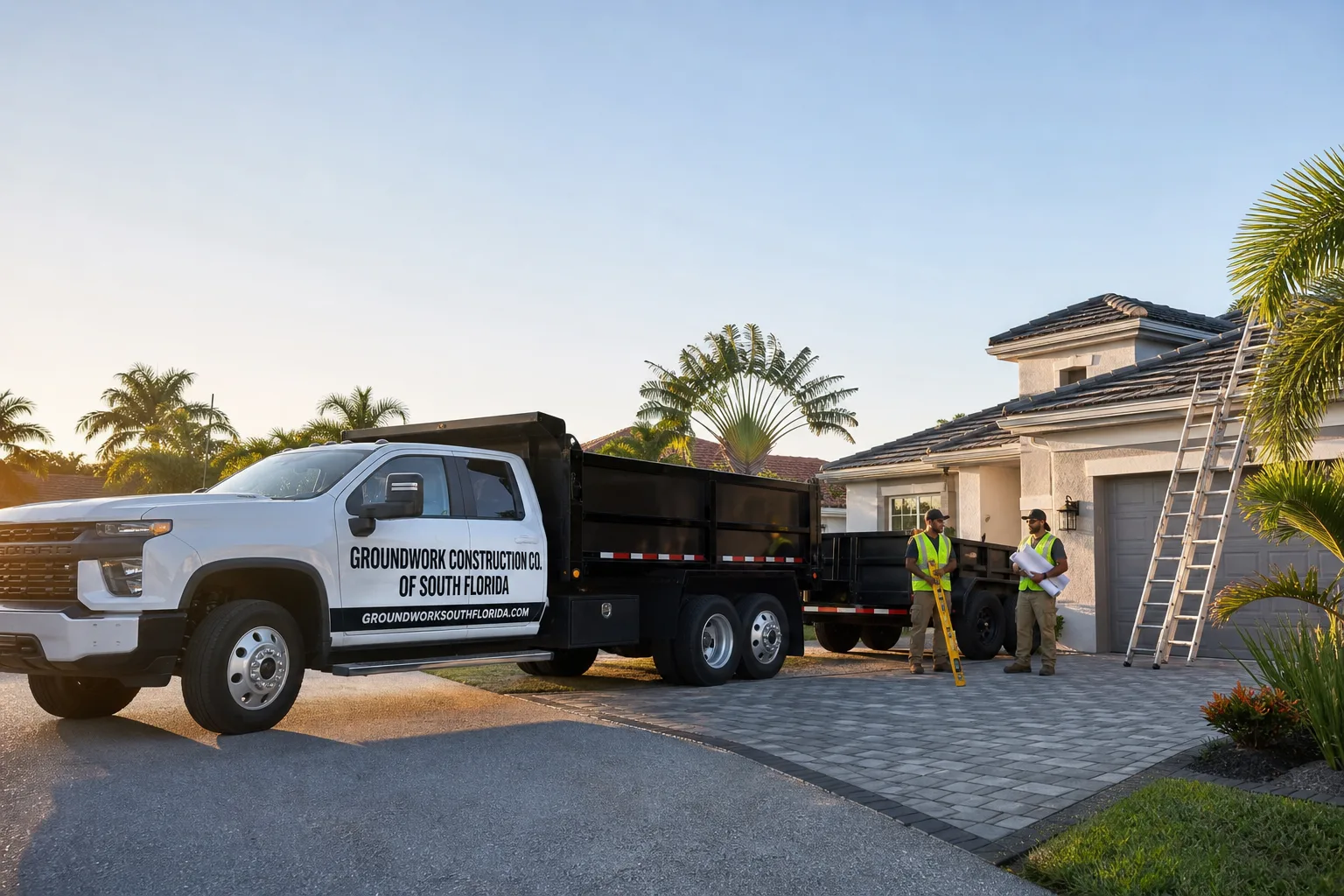
Home Addition Contractors Near Me in South Florida: What Actually Matters When You’re Adding On
A home addition in South Florida typically runs $45,000-$130,000 depending on footprint, structural complexity, and whether you’re building up or out. Most homeowners searching “home addition contractors near me” get a list of remodelers who’ve done a bump-out once and call themselves addition specialists. Here’s the problem: in Miami-Dade and Broward, an addition isn’t just more square footage. It’s a structural, MEP, and HVHZ compliance challenge that separates contractors who’ve done this before from ones who’ll learn on your permit. Call us at (844) 665-0162 if you want to skip the vetting lottery and talk to a team that self-permits every scope.
The HVHZ Question Nobody Asks Until It’s Too Late
After Hurricane Andrew rewrote the building code, Miami-Dade and Broward became High Velocity Hurricane Zones. That label isn’t bureaucratic decoration. It means every structural connection, every window opening, every roof tie-down in your addition has to satisfy engineered wind-load calculations that don’t apply in Orlando, let alone Atlanta.
When you’re vetting Home Additions & ADU contractors, ask this specifically: “Do you have a standing relationship with a structural engineer who produces HVHZ-compliant drawings, or do I hire the engineer separately?”
The answer tells you everything. Contractors who routinely pull addition permits in Coral Gables, Hialeah, or Fort Lauderdale have an engineer on speed dial. They’ve been through plan review enough times to know what the Miami-Dade Building Department’s structural reviewers flag before they flag it. Contractors who pause, hedge, or suggest you “find someone” are outsourcing their learning curve to your timeline and your wallet.
At Groundwork, we work with HVHZ-experienced structural engineers who understand South Florida’s specific wind-borne debris regions and exposure categories. The permit package goes in as one coordinated submission, not a relay race where the structural drawings sit in one queue while the MEP plans sit in another.
Permit Authority: Who Actually Files What
A home addition touches five permit scopes minimum: structural, roofing, electrical, plumbing, and HVAC. In older South Florida neighborhoods like Little Havana, North Miami, or parts of Hollywood, you’re almost certainly also dealing with existing code violations that surface once walls open up.
Here’s the vetting question most homeowners miss: “Which of those permit applications do you file under your own license, and which do your subs file?”
More self-performed permits means less coordination risk. When one contractor holds structural, roofing, and window permits, there’s no finger-pointing when the roof tie-in detail conflicts with the window header. When four separate subs each hold their own permit, you become the project manager by default.
Groundwork self-performs or directly manages all permit scopes for a home addition. That includes:
- Structural framing and HVHZ engineering coordination
- Roofing tie-ins using GAF, CertainTeed, or Owens Corning systems
- Electrical panel upgrades and new circuit runs
- Plumbing rough-in for added bathrooms or kitchenettes
- HVAC zoning for the expanded footprint
- Impact window and door installation from Andersen, Pella, Marvin, or PGT
One contractor, every phase. You don’t coordinate the electrician’s inspection schedule with the roofer’s dry-in date. We do.
The South Florida Housing Stock Reality Check
Raymond Estevez grew up in Hialeah watching his uncle gut and rebuild houses on the block. He’ll tell you: pre-2002 CBS construction in South Florida hides surprises that don’t exist in newer markets. Unreinforced masonry connections. Galvanized plumbing. Polybutylene pipe. Electrical panels that won’t handle modern loads. Federal Pacific or Zinsco breakers that insurers flag.
An experienced local contractor budgets for discovery contingency. An inexperienced one delivers change order shock.
In neighborhoods like Miami Shores, El Portal, or older Fort Lauderdale pockets, we’ve learned to probe during initial site visits. We’ll ask about your electrical panel brand, your water line material, whether you’ve had insurance inspection issues. Not to upsell. Because adding 400 square feet to a house with a 100-amp Federal Pacific panel and galvanized supply lines means the addition scope isn’t just the addition. It’s the infrastructure that supports it.
Our standard process includes a pre-construction survey that identifies these conditions before permit submission. Do it right the first time or you’ll do it twice - and the second time always costs more.
Five Questions to Ask Any South Florida Home Addition Contractor
Before you sign, run this checklist. The answers separate contractors who’ve managed full additions from ones who’ve managed pieces:
- How many HVHZ-permitted additions have you completed in the last 24 months? Anything less than a handful suggests occasional dabbling, not core competency.
- Do you file the MEP permits or do your subs? Self-performed permits signal integrated project control.
- What’s your standard engineering relationship? “We have one” beats “you’ll need to find one” every time.
- What’s your contingency process for discovering pre-existing code violations? Look for a documented discovery protocol, not vague assurances.
- Who is my single point of contact from permit to punch list? One name. One phone number. No routing through office staff who weren’t on the job site.
What Groundwork Brings to Home Additions in South Florida
We’re not a design-build firm that subs out structural. We’re not a remodeling contractor that occasionally builds out. We handle home additions as a core service, with capabilities that extend from traditional stick-built construction to modern prefab options through partners like Abodu, Dvele, Mighty Buildings, and Boxabl.
That matters in South Florida’s constrained lot environments. An Abodu or Dvele unit can drop onto a prepared foundation in days, not months. For homeowners in dense neighborhoods where construction duration affects neighbor relations and living conditions, prefab offers a legitimate alternative to months of stick-built staging.
Our material roster spans 50+ brands across every category. For additions that include kitchen or bathroom expansion, that means KraftMaid or Wellborn cabinetry, Cambria or Silestone countertops, and your choice of flooring, fixture, and finish brands - not whatever the contractor gets a volume deal on.
Home Addition Cost in South Florida
| Project Type | Typical Range |
|---|---|
| Standard Home Addition (stick-built) | $45,000 - $130,000 |
| ADU Construction (detached) | $90,000 - $220,000 |
| Garage Conversion | $30,000 - $80,000 |
These ranges reflect South Florida’s specific conditions: HVHZ engineering costs, impact-rated window requirements in many zones, and the infrastructure upgrades common to older housing stock. Your specific project depends on square footage, structural complexity, and finish selections. Call (844) 665-0162 for a free estimate with line-item transparency.
FAQs
A standard home addition in South Florida typically costs $45,000-$130,000, with ADU construction running $90,000-$220,000 and garage conversions $30,000-$80,000. Many homeowners weighing a Home Addition vs ADU in South Florida, FL find the decision hinges on lot constraints and long-term use. The range depends on whether you’re building up or out, your home’s existing structural capacity, and whether HVHZ engineering and impact-rated openings are required. Call (844) 665-0162 for a free estimate based on your specific site conditions.
No. Miami-Dade and Broward counties require HVHZ-compliant structural engineering for all home additions, including wind-load calculations and wind-borne debris protection for openings. Any contractor who suggests otherwise hasn’t pulled a permit here recently. At Groundwork, we coordinate HVHZ engineering in-house as part of our standard addition process.
Building out is usually less expensive per square foot if you have available lot coverage, but South Florida’s small lots and strict setback rules often make building up the only viable option. Building up requires structural analysis of your existing foundation and framing, plus stair reconfiguration, which adds complexity. We evaluate both paths during initial site assessment and give you real numbers for each.
Permit review in Miami-Dade typically runs 4-8 weeks for HVHZ additions with complete submissions; incomplete packages cycle back and add months. If you’re wondering How Long Does It Take to Build an ADU? (South Florida, FL), construction duration ranges from 3-6 months for modest additions, longer for complex projects or those requiring infrastructure upgrades. Our single-source permit approach avoids the multi-sub coordination delays that stretch timelines.
Ready to Add Space That Holds Up to South Florida?
Searching “Home Additions & ADU Near Me in South Florida, FL” is the easy part. Vetting for HVHZ competence, permit authority, and local housing stock experience is what protects your investment. At Groundwork Construction Co. of South Florida, we self-permit every scope, coordinate engineering in-house, and build with the brand choices you actually want. Call (844) 665-0162 for a free estimate. We’ll walk your site, flag the conditions other contractors miss, and give you a scope that doesn’t surprise you halfway through.
Written by Raymond Estevez, Owner & General Contractor, Groundwork Construction Co. of South Florida at Groundwork Construction Co. of South Florida, serving South Florida, FL.
What Our Customers Say
"The finished work is exactly what we wanted. It did run about three weeks over, mostly waiting on a cabinet delivery that was out of his hands, though I would have liked more updates during that stretch."
- Dev Sharma"We lived in the house through the whole thing. He kept the dust wall up, cleaned every Friday, and made sure we always had a working bathroom."
- Craig Whitaker"Found unpermitted work by the previous owner once he opened the wall. He stopped, explained the options and what each would cost, and let me decide rather than making it my emergency."
- Marco Castillo