
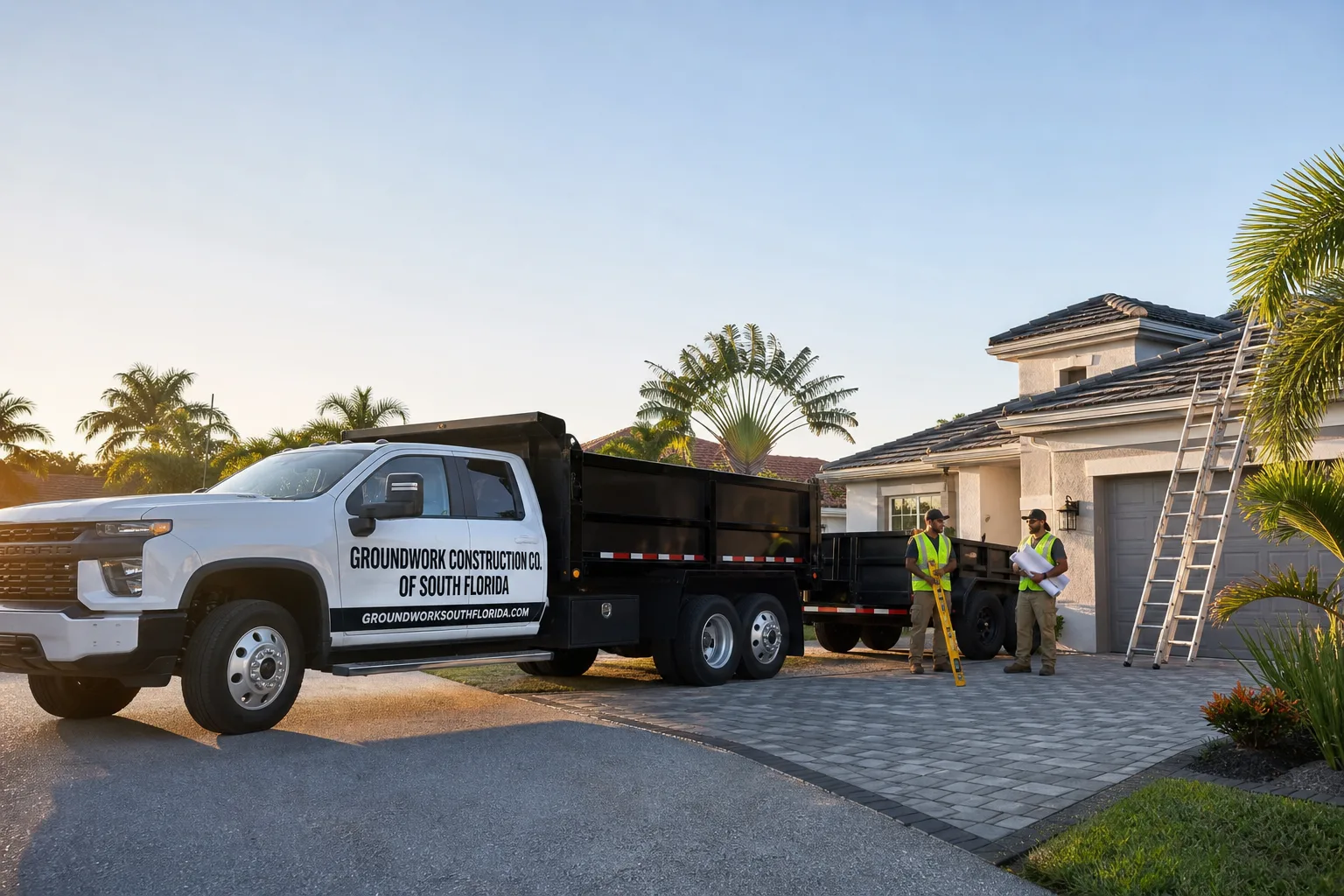
Chain Link Fence in Lake Worth Corridor - Timeline, Cost, and What to Expect
A chain link fence installation in Lake Worth Corridor typically runs $3,500-$9,000 for residential properties, with most projects completed in 2-4 business days once permits clear. We handle the Palm Beach County permitting, site prep, and galvanized or vinyl-coated install start to finish. Call (844) 665-0162 for a free on-site estimate with line-item pricing.
We’ve built chain link fencing across the corridor’s 1950s-1970s CBS neighborhoods, from the blocks near Lake Worth Road down to the pockets off Kirk Road. The job isn’t complicated, but it has to be done right the first time - county inspectors here don’t grandfather in sloppy work, and the salt air off the nearby Intracoastal finds every uncoated fastener.
How We Install a Chain Link Fence - Start to Finish
Our process breaks into five stages. Here’s what happens, how long each takes, and what you’ll need to decide.
Stage 1: Site Survey and Marking (Day 1, 2-3 hours)
We walk the property line with you, locate utilities, and flag any sprinkler heads, shallow irrigation, or AC pad edges that sit inside the fence path. On Lake Worth Corridor’s tight lots - many under 6,000 square feet - every inch matters. We mark post locations with spray paint and confirm gate swing directions so you don’t end up with a gate that bangs into your driveway or your neighbor’s hedge.
Stage 2: Permitting with Palm Beach County (3-10 business days)
Because Lake Worth Corridor is unincorporated Palm Beach County, we file directly with the county building department, not a city hall. For a standalone chain link fence under 6 feet, this is usually a simple zoning verification and permit pull. But if your home has unpermitted additions from prior decades - common in this corridor - we flag that risk upfront so an inspector doesn’t red-tag unrelated work later. We handle the paperwork; you don’t visit the county office.
Stage 3: Layout, Post Holes, and Concrete (Day 2-3)
We set terminal posts first - corners, ends, and gate posts - then line posts every 8-10 feet. In Lake Worth Corridor’s sandy, well-draining soil, we dig 30 inches deep for 6-foot fences and set posts in wet-mix concrete with a slight crown for water runoff. Posts get a 24-hour cure before we hang fabric. If we hit old sprinkler lines or undocumented footings from a prior carport conversion, we stop, photograph, and reroute with you before continuing.
Stage 4: Fabric, Tension Wire, and Gates (Day 3-4)
We stretch 9-gauge or 11-gauge galvanized fabric with a come-along, attach to line posts with tension bands, and run bottom tension wire to keep the mesh from lifting. Gates get welded or pressed-steel frames with adjustable hinges and fork latches. You’ll decide now: barbed wire or three-strand top rail for security? Privacy slats in green, black, or brown? We stock samples so you see color against your stucco before we order.
Stage 5: Final Inspection and Walkthrough (Day 4 or 5)
Palm Beach County requires a final inspection for fences over a certain height or those with security toppings. We meet the inspector, address any punch-list items same-day, then walk you through gate operation, latch adjustment, and seasonal maintenance. The whole job, permit to final, typically spans 7-14 calendar days.
The Chain Link Fence Options You’ll Actually Choose Between
- Galvanized standard (9-gauge, 2-inch mesh): The baseline. Zinc-coated steel resists rust and costs the least upfront. In Lake Worth Corridor’s salt-air environment, expect 12-15 years before significant corrosion appears on exposed surfaces. Best for back-yard utility enclosures, rental properties, or budget-focused perimeter jobs.
- Vinyl-coated galvanized (9-gauge core, PVC jacket): Adds a bonded color layer - black, green, or brown - that doubles corrosion protection and softens the industrial look. The coating adds roughly 25-35% to material cost but extends service life to 18-22 years near the coast. Most homeowners in the corridor choose this for street-facing sides.
- Aluminized or stainless hardware upgrade: Standard galvanized fittings and tension bands rust first; we offer aluminized or 304-grade stainless line wires, hinges, and latches for a modest upcharge. On properties within a mile of the Intracoastal, we recommend this. It won’t eliminate maintenance, but it pushes replacement of hardware from year 7 to year 15.
- Mesh size and gauge: 2-inch mesh is standard for residential. Smaller 1.5-inch or 1.25-inch mesh contains pets better and climbs harder, but costs more per linear foot and requires tighter post spacing. Heavier 6-gauge fabric exists for security applications; most homes don’t need it.
- Privacy slats: Inserted vertically into the mesh, these give 70-90% visual blockage. Wind load increases, so we use heavier posts and closer spacing. Slats in Lake Worth Corridor fade faster on south-facing runs; we source UV-stabilized polyethylene, not cheap PVC that chalks in two summers.
- Gate configuration: Single swing (up to 5 feet), double swing, or rolling track for wider openings. On the corridor’s narrow driveways, a 4-foot single gate with a removable drop rod often beats a tight double-swing that scrapes your car’s mirror.
What Chain Link Fence Costs in Lake Worth Corridor, FL
| Component | Typical Range |
|---|---|
| Standard galvanized, 150 linear feet | $3,500-$5,200 |
| Vinyl-coated upgrade, same scope | $4,400-$6,800 |
| Privacy slats, full perimeter | $800-$1,400 add-on |
| Stainless/aluminized hardware package | $300-$600 add-on |
| Gate with operator prep (future automation) | $450-$900 per gate |
| Total project range | $3,500-$9,000 |
Five variables push your number up or down:
- Linear footage and layout complexity. A simple rectangle in a flat backyard costs less than a zigzag perimeter around mature trees, sheds, or pool equipment pads.
- Existing fence removal and disposal. We haul away old chain link, wood, or vinyl. Rusted posts set in concrete take longer to extract and add labor.
- Grade changes and drainage. Lake Worth Corridor’s lots are mostly flat, but some blocks near the canal have subtle swales. Stepped installation or retained bottom rails add material and time.
- Material grade and coating. Vinyl-coated fabric with stainless hardware hits the top of the range; bare galvanized with standard fittings keeps you at the bottom.
- Permit scope and compliance triggers. If your property survey reveals encroachments or unpermitted structures, Palm Beach County may require resolution before fence approval. This is rare for standalone fence permits but worth budgeting for on older corridor homes.
Our written estimates include posts, fabric, hardware, gates, concrete, permit fees, and final inspection. They don’t include tree removal, sprinkler relocation, or property line survey disputes - we flag those separately if they come up during site survey.
What Lake Worth Corridor Homes Specifically Do to This Job
Lake Worth Corridor’s unincorporated status means every permit runs through Palm Beach County’s building department on PGA Boulevard, and the corridor’s dense concentration of 1950s-1970s CBS homes creates a compliance environment you won’t find in newer western suburbs like Wellington or Royal Palm Beach. We’ve pulled fence permits on Kirk Road properties where the survey revealed a 1982 carport conversion with no hurricane straps, triggering a structural review before the fence could proceed. The county inspector didn’t care that the conversion was 40 years old; the unpermitted work had to be documented and brought current.
The housing stock itself shapes how we build. These small CBS homes - often 900-1,400 square feet - sit on compact lots with minimal side setbacks. Fence lines run close to stucco walls, original jalousie windows, and flat-roofed additions. We measure carefully to avoid blocking window egress or creating moisture traps where the fence meets the house. The intense humidity and salt air off the nearby waterways accelerate corrosion on any exposed steel, which is why we default to vinyl-coated fabric for street-facing installations and recommend aluminized hardware within a mile of the Intracoastal.
Homeowners here often pair a new chain link perimeter with hardscape work to complete the property envelope. If you’re resurfacing the driveway or adding a patio, our Concrete Driveways & Concrete Work in Lake Worth Corridor crew coordinates timing so the fence goes in after heavy equipment finishes. Same for Asphalt Driveways & Resurfacing in Lake Worth Corridor - we sequence the jobs to avoid demolition damage to new fencing.
Serving Lake Worth Corridor, FL - Our Local Coverage Area
We’re based in the Lake Worth Corridor area and know this community well. Use the map below to see our service coverage - if you’re nearby, we can almost certainly help.
Frequently Asked - Chain Link Fence in Lake Worth Corridor
Physical construction takes 2-4 business days; permitting through Palm Beach County adds 3-10 business days. Most Lake Worth Corridor jobs are complete within two weeks of contract signing. Call (844) 665-0162 to check current county turnaround times.
Yes. Because Lake Worth Corridor is unincorporated Palm Beach County, we file with the county building department. Fences under 6 feet typically get a zoning permit; taller or security-topped fences need structural review. We handle the application and inspection scheduling.
Usually. We route the fence line around fixed obstacles when possible. If your sprinkler manifold or AC pad sits exactly on the property line, we may need to relocate heads or shift the pad slightly - we flag this during site survey so you’re not surprised mid-project.
Yes. Chain link fence in Lake Worth Corridor starts around $3,500 for a typical residential perimeter, while vinyl fence installation runs $3,500-$9,000 at the low end and aluminum fence installation starts near $4,000-$10,000. Chain link gives you the most linear footage per dollar, though it offers less privacy and a different aesthetic.
We warranty our workmanship for one year against installation defects. The fabric and coating carry manufacturer warranties - typically 10-15 years on vinyl-coated products against cracking or peeling. Hardware warranties vary by grade; stainless components often carry longer coverage than galvanized standard.
Get Your Free Estimate for Chain Link Fence in Lake Worth Corridor
We’ll walk your property, confirm measurements, check for permit complications, and deliver a written estimate with options for galvanized, vinyl-coated, and privacy-slatted chain link fence. No deposit required to schedule. Call (844) 665-0162 or reach out through our Lake Worth Corridor service page. If your project is part of a full exterior update, we’ll coordinate with our Fence Installation in Lake Worth Corridor team and our broader Fence Installation crew to keep everything on one timeline.
Written by Raymond Estevez, Owner at Groundwork Construction Co., serving Lake Worth Corridor and South Florida.