
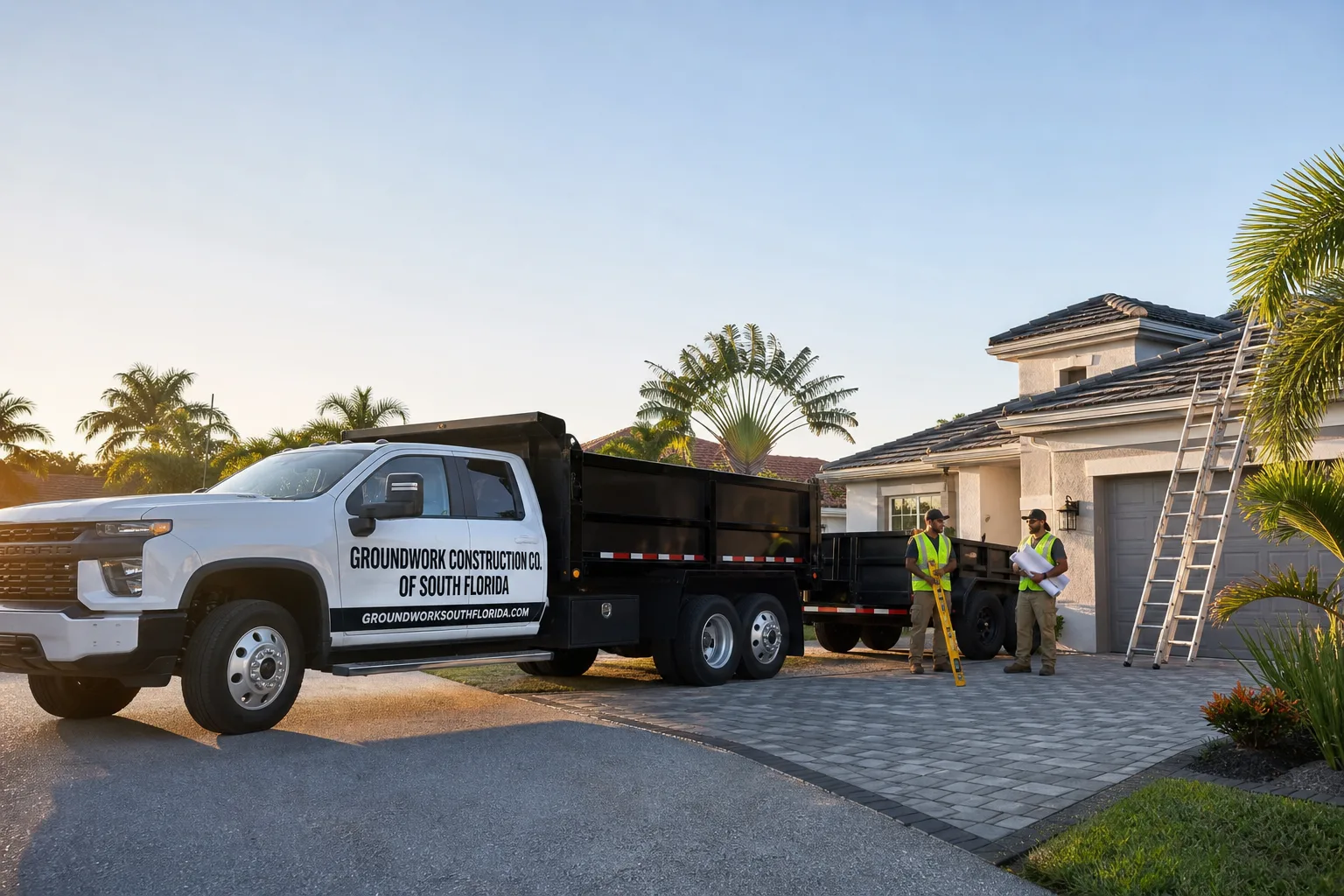
Chain Link Fence in Miami Beach, FL - What It Costs and How Long It Takes
Chain link fence installation in Miami Beach typically runs $3,500-$9,000 for residential properties, with most projects completed in 2-4 business days once permits clear. You’ll need Miami-Dade NOA-certified materials if the fence is part of a larger exterior envelope project, and standard galvanized or vinyl-coated chain link works for standalone yard enclosures. Call (844) 665-0162 for a free on-site estimate - we’ll measure, check access, and flag any elevation issues the same visit.
How We Build a Chain Link Fence in Miami Beach - Start to Finish
Day one is always site verification and layout. We walk the property line with you, verify survey pins or existing markers, and check for the surprises Miami Beach throws at every exterior project: utility stubs that sit below newly raised street grades, ADA ramps that no longer drain properly, or original concrete footings from previous fences that have spalled from salt-air chloride exposure. We mark post locations with spray paint, confirm gate swing clearances, and note any tree roots or irrigation lines that need protection. You’ll decide gate placement and height at this stage - most Miami Beach homeowners go with 4-foot for front yards, 6-foot for side and rear enclosures.
Day two is excavation and post setting. We auger post holes 24-30 inches deep depending on wind-load zone and fence height, set posts in wet-mix concrete, and brace them plumb while the concrete cures. In South Beach and parts of Mid-Beach, we regularly hit the water table within that depth range, which means we switch to rapid-set concrete and pump out standing water rather than wait for natural drainage. Posts stay braced overnight minimum.
Day three is framework and fabric hang. We install top rails, tension bars, and line posts, then stretch the chain link fabric with a mechanical stretcher to proper tension - hand-tightened fabric sags within a season in Miami Beach’s UV and salt-air cycle. We attach fabric with aluminum tie wire at 12-inch intervals, install tension bands and brace bands, and set bottom tension wire if you’ve specified it for pet containment or debris control.
Day four is gates, hardware, and final walkthrough. We hang gates with adjustable hinges, install latches and drop rods for double gates, and tension the fabric one final time after overnight settling. You walk the line with us, we adjust anything that reads off, and we photograph the completed installation for your records and our permit closeout.
Permit timeline runs parallel, not sequential. Miami Beach Building Department typically reviews fence permits in 5-10 business days for properties outside the Historic Preservation Board’s jurisdiction. If you’re in a South Beach Art Deco district with HPB oversight, add 2-4 weeks for board review of any visible exterior alteration. We file electronically, pull the permit under our contractor license, and schedule the required inspection before we pour concrete.
The Chain Link Fence Options You’ll Actually Decide Between
- Galvanized vs. vinyl-coated fabric: Galvanized steel is the baseline - silver-gray, functional, holds up 15-20 years in Miami Beach if you rinse salt buildup quarterly. Vinyl-coated adds a PVC layer in black, green, or brown; costs roughly 25-35% more but hides scratches and blends better with landscaping. The trade-off is coating degradation - once the vinyl cracks, the underlying steel corrodes faster than bare galvanized would.
- 9-gauge vs. 11-gauge wire: Thicker 9-gauge fabric resists impact and climbing stress; we specify it for properties with large dogs or where debris impact from storms is a concern. 11-gauge is standard residential and saves 10-15% on material. For most Miami Beach homes, 9-gauge is worth the upgrade given wind-borne debris during hurricane season.
- 2-inch vs. 1-3/4-inch mesh: Standard 2-inch mesh is what you picture when you think chain link. Tighter 1-3/4-inch mesh is harder to climb and contains smaller pets; it adds roughly 8-12% to fabric cost. We recommend it for pool enclosures per Florida residential pool barrier code, even when chain link is used as a secondary perimeter.
- Residential vs. commercial framework: Residential-grade posts and rails use thinner wall tubing. Commercial-grade with Schedule 40 pipe adds structural margin for the wind loads Miami Beach sees; we default to commercial-grade for anything over 5 feet or within 1,500 feet of open water where wind exposure is higher. The upgrade is 15-20% but eliminates the sway and rattle you see on cheap installs after the first tropical storm.
- Barbed wire, privacy slats, or bare: Barbed wire is generally prohibited in Miami Beach residential zoning. Privacy slats in PVC or HDPE weave through the mesh and turn chain link into a visual screen; they add $4-$8 per linear foot and need replacement every 7-10 years in UV exposure. Most homeowners skip them - if privacy is the goal, we typically steer you toward Fence Installation in Miami Beach options better suited to that need.
What Chain Link Fence Costs in Miami Beach, FL
| Project Scope | Typical Range |
|---|---|
| Small residential enclosure (under 100 linear feet, 4 ft height) | $3,500-$5,200 |
| Standard yard perimeter (150-200 linear feet, 6 ft height) | $5,500-$7,800 |
| Large property or commercial-grade framework (250+ linear feet) | $7,500-$9,000+ |
Five factors push your number up or down. Linear footage and height are obvious - every additional foot of height adds 12-18% to fabric and post cost. Existing fence removal and concrete demo adds $800-$2,500 depending on how much old footing is buried; in Miami Beach, we often find original footings from the 1950s-60s that are twice the volume of modern specs. Access difficulty matters - zero-lot-line properties in North Beach or gated Mid-Beach courtyards where we can’t get a mini-excavator mean hand-digging and higher labor. Material grade selection (galvanized vs. vinyl-coated, residential vs. commercial framework) moves the needle 20-35%. And permit scope - a straightforward zoning compliance permit vs. Historic Preservation Board review with revised elevation drawings - can add $400-$1,200 in fees and drafting time.
Our written estimate includes: all materials, permit filing and fees, excavation, concrete, installation, gates with standard hardware, and one post-installation inspection walkthrough. It does not include: tree or stump removal, irrigation relocation, electrical line burial, or landscaping restoration beyond backfilling and rough grading. If your property needs any of those, we’ll flag it during the site visit and price it separately so you’re not surprised.
What Miami Beach Specifically Does to This Job
Chain link fence work in Miami Beach sits at a convergence of water, salt, and elevation change that mainland contractors often underestimate. The barrier island’s average 4-foot elevation above sea level means we’re working in a High Velocity Hurricane Zone where every exterior element, including fencing when it’s part of a larger building envelope project, must carry Miami-Dade NOA certification. For standalone residential chain link, this doesn’t trigger HVHZ product requirements directly, but we still specify wind-rated posts and concrete footings sized for the 140+ mph design wind speeds - because a fence that leaves the ground becomes debris that damages your home or your neighbor’s.
The salt air is the silent killer. Chloride-driven corrosion attacks chain link from day one, especially within a few blocks of the Atlantic or Biscayne Bay. We see this most acutely in South Beach 33139 and North Beach 33141, where older galvanized fences show red rust at the base within 5-7 years because homeowners never rinse them. We specify hot-dip galvanized fabric (not electro-galvanized) and aluminum tie wire rather than galvanized - the galvanic compatibility prevents the dissimilar-metal corrosion you get when steel and zinc meet in salt air.
Then there’s the elevation problem. The city’s “Rising Above” program has lifted road grades 1-2 feet in many South Beach and Mid-Beach corridors, leaving original property entrances and fence lines below the new street level. We’ve pulled permits on Alton Road corridor properties where the as-built survey shows a 4-foot front fence, but the raised sidewalk now puts the top rail at 2.5 feet relative to pedestrian eye level - triggering ADA sight-line concerns and requiring a design revision. We check current FEMA flood maps and city grade surveys before we finalize post heights, not after.
HOA and historic overlay layers add complexity. The Miami Beach Historic Preservation Board reviews any visible exterior alteration in designated districts, and while chain link is less common in HPB jurisdictions than masonry or iron, we’ve had projects in Flamingo Park and Nautilus where the board required powder-coated black rather than galvanized silver to reduce visual impact. We handle the filing and presentation if HPB review applies - it’s not something you should navigate alone.
Homeowners in Miami Beach often pair exterior fencing with hardscape work to address the grade-elevation mismatch. If you’re already adjusting driveway height to match raised streets, Concrete Driveways & Concrete Work in Miami Beach or Asphalt Driveways & Resurfacing in Miami Beach can be sequenced with fence installation to avoid tearing up new work later. Our Miami Beach crew coordinates both trades under one schedule.
Serving Miami Beach, FL - Our Local Coverage Area
We’re based in the Miami Beach area and know this community well. Use the map below to see our service coverage - if you’re nearby, we can almost certainly help.
Frequently Asked - Chain Link Fence in Miami Beach
Physical installation takes 2-4 business days once we start digging. Total elapsed time is typically 2-4 weeks including Miami Beach permit review, or 4-8 weeks if Historic Preservation Board approval is required. Call (844) 665-0162 and we’ll check your property’s permit pathway during the site visit.
Yes - any fence over 2.5 feet in height requires a Miami Beach building permit, and fences over 6 feet need zoning verification for setback compliance. We file the permit, pull required surveys, and schedule inspection as part of our standard scope. The permit fee is included in our estimate.
Usually yes. We locate irrigation lines with your utility markout and hand-dig within 18 inches of known lines. If your system runs exactly on the property line, we may need to relocate a head or two - we flag this during day-one layout so you can decide before we cut anything.
Chain link is the lowest-cost permanent fence option, running roughly 40-60% less than vinyl or aluminum for equivalent linear footage. It costs more than temporary construction fencing but lasts decades with basic maintenance. The trade-off is privacy and aesthetic refinement - it’s functional security, not curb appeal.
We warranty our installation workmanship for the period specified in your written contract, and the materials carry manufacturer defects coverage. Fabric typically warranties against structural failure from manufacturing defect; coatings warranty against premature fading or peeling. Specific terms vary by product line and are itemized in your estimate.
Get Your Free On-Site Estimate for Chain Link Fence in Miami Beach
Call (844) 665-0162 or submit a request through our site. We’ll schedule a 30-minute walkthrough at your Miami Beach property, measure your line, check access and grade, flag any permit or HOA considerations, and deliver a written estimate within 48 hours. No deposit required to book, and we’ll hold your preferred install week with a signed contract and permit filing. Our Fence Installation team works across South Florida, and we keep dedicated crews in Miami Beach for responsive scheduling.
Written by Raymond Estevez, Owner at Groundwork Construction Co., serving Miami Beach since our founding in Fort Lauderdale.