
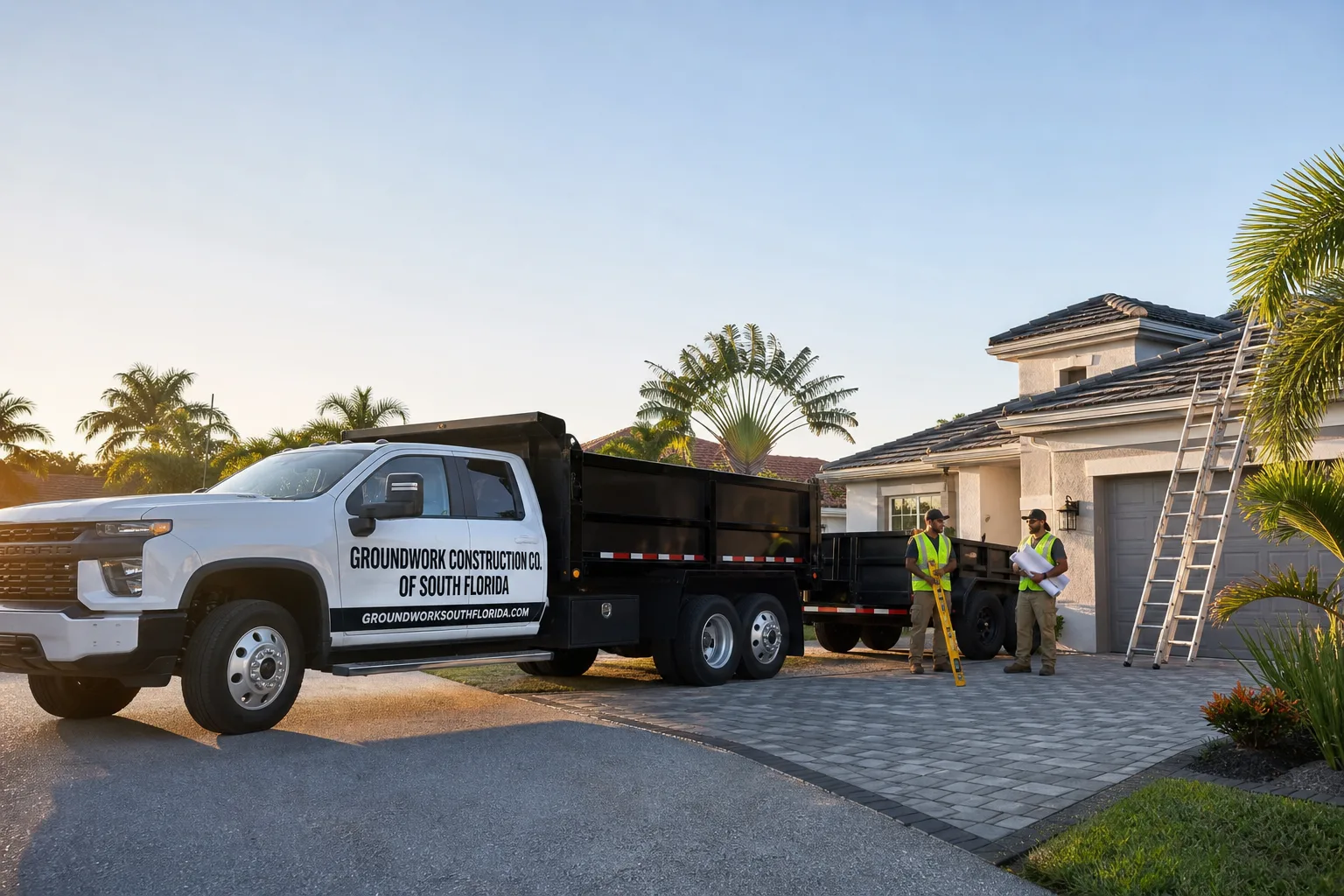
Glass Railing Cost in South Florida: What Coastal Homeowners Actually Pay
Glass railing installation in South Florida typically runs $180-$420 per linear foot installed, with most residential pool decks and balconies falling in the $240-$320 range. The spread is wide because salt-air corrosion, hurricane wind-load requirements, and existing deck conditions create variables that inland cost guides ignore. For an exact quote on your project, call us at (844) 665-0162 - estimates are free, and we measure on-site.
Here’s the problem: a glass railing that looks identical to one installed in Phoenix will fail in Boca Raton within three years if the posts and standoffs aren’t marine-grade stainless or powder-coated aluminum. That hardware upgrade alone shifts the cost band by $30-$60 per linear foot, yet most online calculators treat hardware as a commodity. In South Florida, it isn’t.
Why South Florida Glass Railing Costs Don’t Match National Averages
We learned this the hard way on a job in Fort Lauderdale about eight years ago. The homeowner had sourced a “great deal” on a frameless system online. Eighteen months later, the zinc-alloy standoffs had oxidized to the point where we needed a torch to remove them. Raymond Estevez, our owner, walked the site and said what he always says: “Do it right the first time or you’ll do it twice - and the second time always costs more.” We replaced the whole system with 316-grade marine stainless. The homeowner paid roughly double.
Three factors push South Florida glass railing costs above the national baseline:
- Salt-air hardware specification: Standard zinc or chrome standoffs oxidize and seize within 18-24 months in coastal South Florida. 316-grade marine stainless steel or anodized aluminum are the only appropriate specs - a material choice generic cost guides never mention.
- Wind-load glass thickness: Florida Building Code requires thicker panels for frameless systems, typically 1/2″ tempered or laminated glass versus the 3/8″ common inland. Thicker glass means heavier panels, more labor, and often a crane or glass suction rig for elevated installs.
- Deck substrate anchoring: Glass railing posts in South Florida are frequently anchored into existing concrete pool decks or pavers. Core drilling and epoxy anchoring runs $20-$40 per post versus simple lag-bolt attachment into wood framing.
In Hollywood and Coral Gables, we regularly see 1970s-era pool decks with thin concrete toppings over hollow clay tile. You can’t know until you core - and that uncertainty is why we don’t give firm quotes over photos.
Frameless vs. Semi-Frameless vs. Framed: Cost and Code Implications
The system type you choose isn’t just an aesthetic decision in South Florida. It’s a structural engineering decision with direct cost consequences, which is why understanding Glass Railing Systems matters before you commit.
Frameless systems rely entirely on glass strength for lateral stability. No top rail, no vertical posts between panels. To meet Florida Building Code wind-load requirements without intermediate posts, these need 1/2″ minimum tempered or laminated glass, often with a structural silicone edge condition. In South Florida, expect $320-$420 per linear foot installed. The hardware - typically stainless steel spigots or standoffs - must be 316-grade marine spec, not 304.
Semi-frameless systems add a top rail and intermittent posts, allowing thinner 3/8″ glass in many applications. This drops the range to $240-$340 per linear foot. The top rail provides lateral bracing that reduces the wind-load demand on individual panels. For second-story balconies in West Palm Beach or Pompano Beach, this is often the practical middle ground.
Framed systems use aluminum or stainless posts at regular intervals with glass infill. Costs run $180-$260 per linear foot. The framing carries the wind load, so glass thickness requirements relax. These are common for ground-level pool enclosures where sightlines matter less than durability and budget.
| System Type | Glass Thickness | Hardware Spec | Installed Cost per Linear Foot |
|---|---|---|---|
| Frameless | 1/2″ tempered or laminated | 316 marine stainless spigots/standoffs | $320-$420 |
| Semi-frameless | 3/8″ tempered (typical) | 316 marine stainless or anodized aluminum posts | $240-$340 |
| Framed | 1/4″-3/8″ tempered | Anodized aluminum or powder-coated steel posts | $180-$260 |
The Deck Condition Variable: What Hides Beneath the Surface
We’ve cored into enough pool decks across Miami-Dade and Broward to know that “concrete” covers a lot of sins. In older neighborhoods like Pinecrest or Lauderhill, you might find 2″ of topping over corrugated metal pan. In newer construction, you might hit post-tensioned cables that can’t be drilled without locating first.
Core drilling with a vacuum attachment runs cleaner but slower - about 20 minutes per post versus 5 minutes for a simple wood-deck lag. Epoxy anchoring adds material cost and cure time. On a 40-linear-foot run with posts every 4 feet, that’s 10 posts. At $30 per post for core-and-epoxy versus $8 for lag bolts, you’re looking at a $220 swing on labor and materials alone.
When we’re already on-site for paver work using Belgard, Tremron, or Techo-Bloc, we coordinate the railing layout before the final course goes down. That integration saves the homeowner the coordination mess of separate trades - and avoids the “oops, your paver pattern conflicts with your post locations” conversation nobody wants to have.
Pool Barrier Compliance: The Overlap Nobody Talks About
Glass railing near a pool enclosure in South Florida may trigger dual compliance: Florida Building Code wind requirements and ASTM F2200 pool barrier standards simultaneously. The pool barrier standard governs climbability, gap dimensions, and self-latching gates. A frameless system with a 4″ gap beneath the bottom rail fails ASTM F2200, even if it’s structurally sound for wind.
Most railing-only installers aren’t equipped to navigate this overlap. We’ve seen systems that passed structural inspection fail pool barrier inspection, requiring post-installation modifications that cost $800-$1,500 to resolve. At Groundwork, we handle both scopes because our Windows & Doors capability and hardscape work sit under the same roof. One contractor, every phase - and one accountable party when questions arise.
When Glass Railing Integrates with Larger Exterior Work
The homeowners who get the most value from our glass railing work are typically already planning exterior transformations. If you’re resurfacing a pool deck, replacing impact windows, or adding an outdoor kitchen, bundling the railing into the same scope eliminates the “who goes first” scheduling conflicts that plague multi-contractor jobs. Many clients who ask us How Are Custom Windows Made? (South Florida, FL) end up bundling both projects together.
Our Windows & Doors in South Florida team coordinates glass spec across the project - matching tint levels, Low-E coatings, and thermal performance so your railing glass doesn’t read green against blue-tinted impact windows. It’s a detail that matters when you’re standing at the pool looking back at the house.
We’ve also integrated glass railing with full exterior envelope projects: James Hardie siding, new roofing with GAF or CertainTeed materials, and paver driveways. From driveway to roofline, one relationship, one schedule, one call if something needs adjustment.
Key Takeaways
- Budget $240-$320 per linear foot for most South Florida residential glass railing; frameless systems run higher, framed systems lower.
- Insist on 316-grade marine stainless or anodized aluminum hardware - standard specs fail in coastal salt air.
- Factor deck substrate conditions into your estimate; core drilling and epoxy anchoring add $20-$40 per post.
- Pool-adjacent installations may require ASTM F2200 pool barrier compliance in addition to wind-load engineering.
- Bundling glass railing with paver, window, or exterior work under one contractor reduces coordination risk.
FAQs
Most residential glass railing in South Florida costs $240-$320 per linear foot installed, with frameless systems at $320-$420 and framed systems at $180-$260. Salt-air hardware upgrades and deck anchoring conditions push local costs above national averages, which is why many homeowners first ask How Long Do Windows Last? (South Florida, FL) when budgeting exterior upgrades. Call (844) 665-0162 for a free on-site estimate.
Frameless glass railing is worth the premium when uninterrupted sightlines are the priority, such as waterfront properties in Fort Lauderdale or Miami Beach. The 30-40% cost increase over semi-frameless buys aesthetic minimalism but requires 1/2″ glass and marine-grade hardware to meet South Florida code. For second-story applications or budget-conscious projects, semi-frameless often delivers 90% of the visual impact at lower cost.
Yes, but it requires core drilling through the pavers into the concrete substrate below, then epoxy-anchoring the posts. This adds roughly $20-$40 per post versus wood-deck installation. In areas with thin paver beds or hollow tile substrates, we may need to remove and re-lay pavers around post locations. We coordinate this with our paver team when Belgard, Tremron, or Techo-Bloc materials are involved.
A typical 40-linear-foot residential run takes 2-3 days: one day for layout and core drilling, one day for glass setting and hardware installation, and a half day for sealant and final adjustment. Custom glass lead times run 3-4 weeks from templating. Projects requiring engineering drawings for HOA or municipal review add 2-3 weeks upfront.
Ready to price glass railing for your South Florida project? Call (844) 665-0162 or schedule a free estimate. We’ll measure your deck, assess substrate conditions, and spec the right system for your sightlines, budget, and the salt air that surrounds us.
Written by Raymond Estevez, Owner & General Contractor, Groundwork Construction Co. of South Florida at Groundwork Construction Co. of South Florida, serving South Florida, FL.
What Our Customers Say
"We lived in the house through the whole thing. He kept the dust wall up, cleaned every Friday, and made sure we always had a working bathroom."
- Craig Whitaker"Found unpermitted work by the previous owner once he opened the wall. He stopped, explained the options and what each would cost, and let me decide rather than making it my emergency."
- Marco Castillo"He pulled the permits himself, scheduled every sub and ran the inspections. I made one decision a week and otherwise stayed out of it, which is exactly what I was paying for."
- Robert Sullivan