
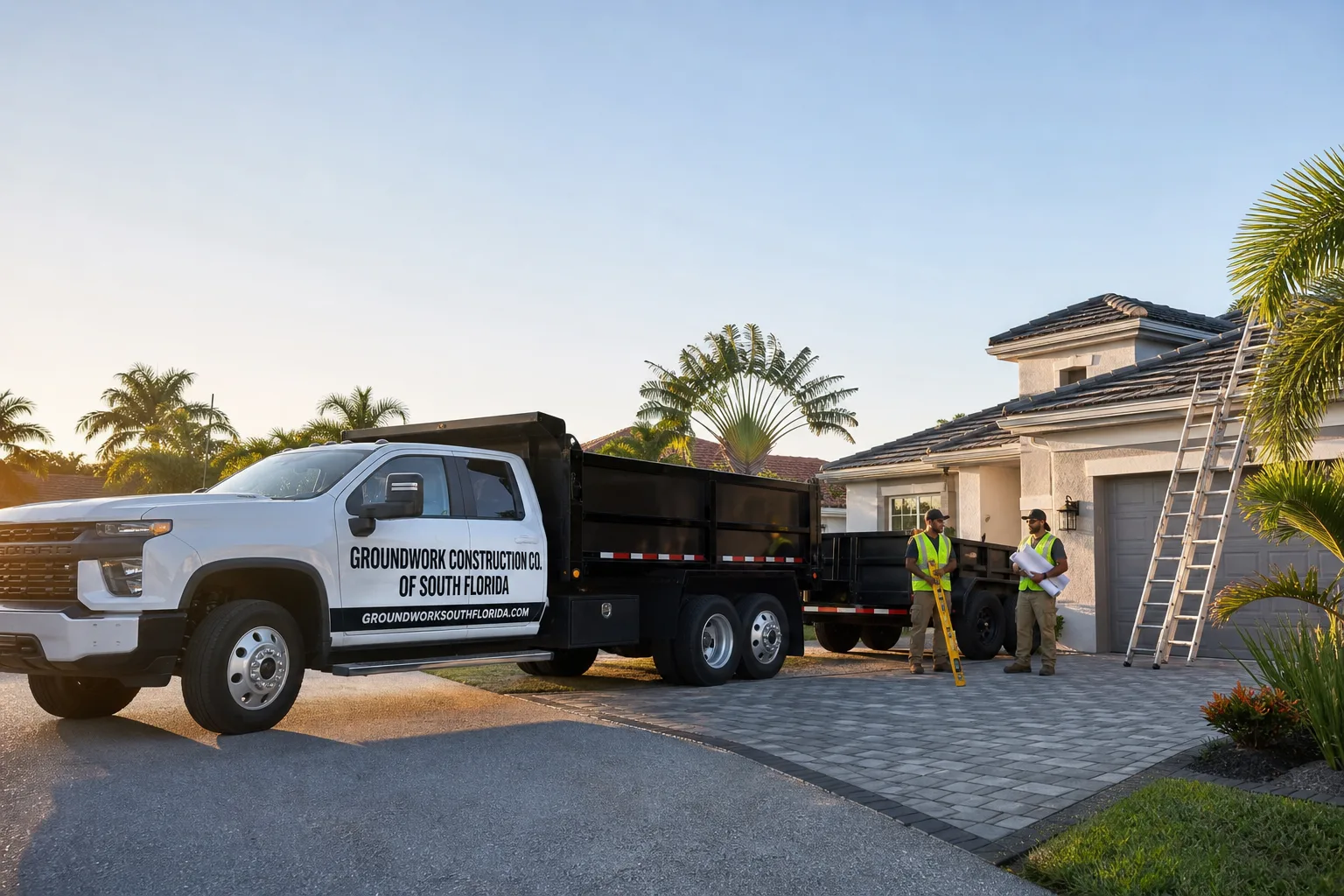
Glass Railing Systems in Carol City, FL - What to Expect
Glass railing systems in Carol City, FL typically run $3,500-$12,000 for a residential installation, depending on linear footage, mounting surface, and whether the project is part of a larger deck, balcony, or stair renovation. Most installations we handle in the 33056 area take 3-5 business days from permit approval to final inspection, though Miami-Dade’s HVHZ material approval process can add 1-2 weeks upfront. Call (844) 665-0162 and we’ll walk you through what’s needed for your specific layout - estimates are free, and we pull permits as part of our standard process.
How We Install Glass Railing Systems - Start to Finish
We’ve learned that glass railing systems in Carol City require more prep than most homeowners expect, mainly because of what lies beneath the surface. Here’s how we break it down:
Stage 1: Site measure and structural assessment (1-2 hours on-site)
We show up with a laser measure and a structural checklist. For homes built in Carol City’s 1958-1968 wave, the concrete block construction is solid but the original slabs and footings weren’t designed for modern lateral loads. We check whether your mounting surface - slab edge, stair stringer, or balcony cantilever - can handle the tension loads a glass rail imposes. You’ll decide at this stage between frameless, semi-frameless, or post-and-rail systems, since each transfers force differently. We photograph everything and note any cracks, spalling, or previous DIY repairs that could complicate anchoring.
Stage 2: Material selection and NOA verification (3-10 business days)
This is where Carol City diverges from Broward County jobs. Every glass panel, aluminum post, base shoe, and fastener needs a valid Miami-Dade Notice of Acceptance (NOA) number. We source from suppliers who maintain HVHZ-approved inventories - typically tempered or heat-strengthened laminated glass meeting ASTM E1996 or Miami-Dade TAS 201/202/203 standards. You’ll choose glass thickness (1/2 inch is standard for residential, 3/4 inch for higher wind-exposure balconies), tint (clear, low-iron, or gray), and hardware finish (brushed stainless, powder-coated aluminum, or marine-grade anodized). We submit NOA documentation with your permit package so inspectors don’t flag materials mid-job.
Stage 3: Permit application and plan review (2-4 weeks)
Miami-Dade Building Department reviews glass railing plans for guardrail height (42 inches minimum for residential, 36 inches for certain stair configurations), load compliance (200 lb concentrated load at top rail), and attachment detail. We handle the drawings, engineer stamps if required, and resubmittals. You don’t need to visit the permit office - we manage correspondence and schedule inspections. For properties in Carol City with existing unpermitted work, we flag potential complications early so they don’t surface during the rough inspection.
Stage 4: Fabrication and installation (2-4 days on-site)
Once permitted, glass gets cut to measured field dimensions - never assume original plans are exact on these older homes. We protect floors and landscaping, demo any existing railings, and core-drill or surface-mount posts depending on your slab condition. Setting base shoes on Carol City’s flat, often poorly-drained lots means we pay particular attention to weep holes and sealant detail so standing water doesn’t migrate behind mounting plates. We torque all fasteners to manufacturer spec and leave protective film on glass until final walkthrough.
Stage 5: Final inspection and touch-up (1 day)
The Miami-Dade inspector checks guardrail height, glass labeling (tempered or laminated markings must be visible), deflection under load, and post spacing. We address any punch-list items immediately and remove protective film once signed off. You’ll get maintenance guidance - mainly, inspect sealant annually and wash with mild soap, never abrasive pads.
The Glass Railing Options You’ll Actually Choose Between
- Base-shoe frameless systems: Glass panels sit in a continuous aluminum channel at the floor or slab edge, with no top rail or vertical posts. Cleanest sight lines, highest material cost per linear foot. Best for open views on rear balconies or pool decks where wind exposure is moderate. Requires the most precise slab prep - any waviness telegraphs through.
- Post-and-rail semi-frameless: Stainless or aluminum posts at 4-6 foot intervals with glass captured in top and bottom rails. More forgiving on older slabs, easier to retrofit around existing conditions. Slightly more visual interruption but significantly stronger for high-wind exposures. Most Carol City second-story applications land here.
- Standoff frameless with point mounts: Glass attached to structural walls or columns via cylindrical standoffs. Dramatic look, limited to applications with a backing structure. We see this on stairwells and elevated walkways where the architecture supports it.
- Laminated vs. tempered glass: Tempered is cheaper and breaks into small granules; laminated holds together when shattered (like a car windshield). For Carol City’s HVHZ, laminated is often required for elevated applications or where falling glass poses a hazard. Low-iron glass reduces the green tint at edges but adds 15-20% to material cost.
- Top-cap options: Frameless systems can take a slim stainless cap rail for hand comfort and code compliance in commercial or multi-family applications. Residential jobs usually skip it unless the homeowner specifically wants the tactile surface.
Our windows & doors crew can coordinate glass railing systems with Windows & Doors in Carol City if you’re refreshing the full exterior envelope - that’s where the single-source approach saves real schedule time.
What Glass Railing Systems Cost in Carol City, FL
| Component / Scenario | Typical Range |
|---|---|
| Standard base-shoe frameless, ground-level deck (20 linear ft) | $3,500-$5,500 |
| Semi-frameless with posts, second-story balcony (25 linear ft) | $5,500-$9,000 |
| Frameless with standoffs, stairwell (15 linear ft) | $4,000-$6,500 |
| Full perimeter, elevated pool deck with wind exposure (40+ linear ft) | $9,000-$12,000 |
| Structural slab reinforcement (if needed) | $800-$2,500 |
| Permit and inspection fees (Miami-Dade) | $400-$800 |
Five factors push your number up or down:
1. Existing slab or substrate condition. Carol City’s 1960s slabs often need epoxy injection, carbon fiber reinforcement, or thickened edge details to handle post tension. We probe with a hammer drill during assessment - soft or hollow spots get flagged.
2. Linear footage and corners. Straight runs are efficient. Every corner, stair transition, or gate opening adds fabrication complexity and hardware.
3. Glass specification and NOA availability. Standard clear laminated with a current NOA is straightforward. Custom tints, oversized panels, or specialty coatings may require extended lead times and engineer involvement.
4. Integration with other trades. If we’re working around new tile, pavers, or waterproofing, sequencing matters. Homeowners often pair glass railing installation with Paver Driveways in Carol City or pool deck resurfacing - we coordinate so finishes meet clean at edges.
5. Access and protection. Second-story balconies over finished landscaping or tight side yards in Carol City’s dense lots require scaffolding or material hoists. We build that into the estimate rather than surprise you later.
Our written estimates include material, labor, permit fees, and two inspections. What’s typically separate: structural engineering stamps (if your specific configuration requires them), demolition and disposal of existing railings, and any slab or framing repair we discover after demo.
What Carol City Homes Specifically Do to This Job
Carol City’s housing stock - that dense grid of 1958-1968 CBS tract homes with flat roofs and terrazzo floors - creates a unique permitting environment for glass railing systems. Because nearly every structure predates Hurricane Andrew and the post-1992 code cycle, Miami-Dade treats even modest additions as opportunities to enforce current HVHZ standards. We’ve had inspectors in Carol City ask for roof-to-wall strap upgrades on second-story balcony jobs because the structural connection became “triggered work” under the renovation scope.
The flat topography at 8-10 feet elevation means water tables sit high year-round, especially May through October. Any core-drilling into slab edges for base-shoe mounting risks hitting saturated soil or shallow footings. We plan for dewatering and use marine-grade fasteners even on nominally “dry” installations - the salt air reaches inland Carol City more than homeowners expect.
We’ve also learned that material suppliers based in Broward or Palm Beach counties sometimes stock products with Florida statewide approval but lacking the specific Miami-Dade NOA. A contractor unfamiliar with Carol City’s jurisdictional reality can order perfectly good glass that fails inspection on paperwork alone. We source through Miami-Dade-certified distributors specifically to avoid that delay. Homeowners in the 33056 ZIP often mention they’re refreshing properties for rental or multi-generational use - either way, permit closure matters for insurance and resale, so we don’t shortcut the documentation.
Some homeowners also ask about Fence Repair in Carol City as part of the same exterior refresh; we can sequence both under one permit package when they share a property line or structural connection.
Serving Carol City, FL - Our Local Coverage Area
We’re based in the Carol City area and know this community well. Use the map below to see our service coverage - if you’re nearby, we can almost certainly help.
Frequently Asked - Glass Railing Systems in Carol City
From permit approval, most residential glass railing systems install in 3-5 business days. The full timeline including Miami-Dade plan review typically runs 4-6 weeks. Call (844) 665-0162 and we can check current permit office turnaround - estimates are free.
Yes. Miami-Dade requires permits for all guardrail installations, and glass railing systems must carry NOA-approved materials. We handle the application, drawings, and inspections as part of our standard scope - you won’t need to visit the building department.
Usually yes, since railings mount to structural slabs, walls, or framing rather than running through interior systems. The exception is integrated lighting or heated floor transitions near mounting points, which we assess during the initial site visit and flag before you commit.
Miami-Dade’s HVHZ requires glass railing systems to meet or exceed the wind loads calculated for your specific structure height and exposure category. We specify laminated glass and aluminum or stainless hardware with published NOA ratings - not all “impact-rated” products qualify for this jurisdiction, so we verify before ordering.
We warranty our installation workmanship. Glass and hardware carry manufacturer warranties that vary by product line - typically 10-20 years for structural aluminum, 5-10 years for glass against manufacturing defects. We provide warranty documentation at final walkthrough and register products when required by the manufacturer.
Ready to Talk Through Your Glass Railing Project?
Call (844) 665-0162 for a free on-site estimate in Carol City. We’ll measure your space, check substrate conditions, explain the NOA requirements that apply to your specific job, and deliver a written estimate with line-item pricing. No deposit required to schedule, and we coordinate permits so you don’t wait at the building department. Whether this is a standalone upgrade or part of a full exterior renovation with our Windows & Doors team, we build to spec, not to convenience.
Written by Raymond Estevez, Owner at Groundwork Construction Co., serving Carol City and South Florida.