
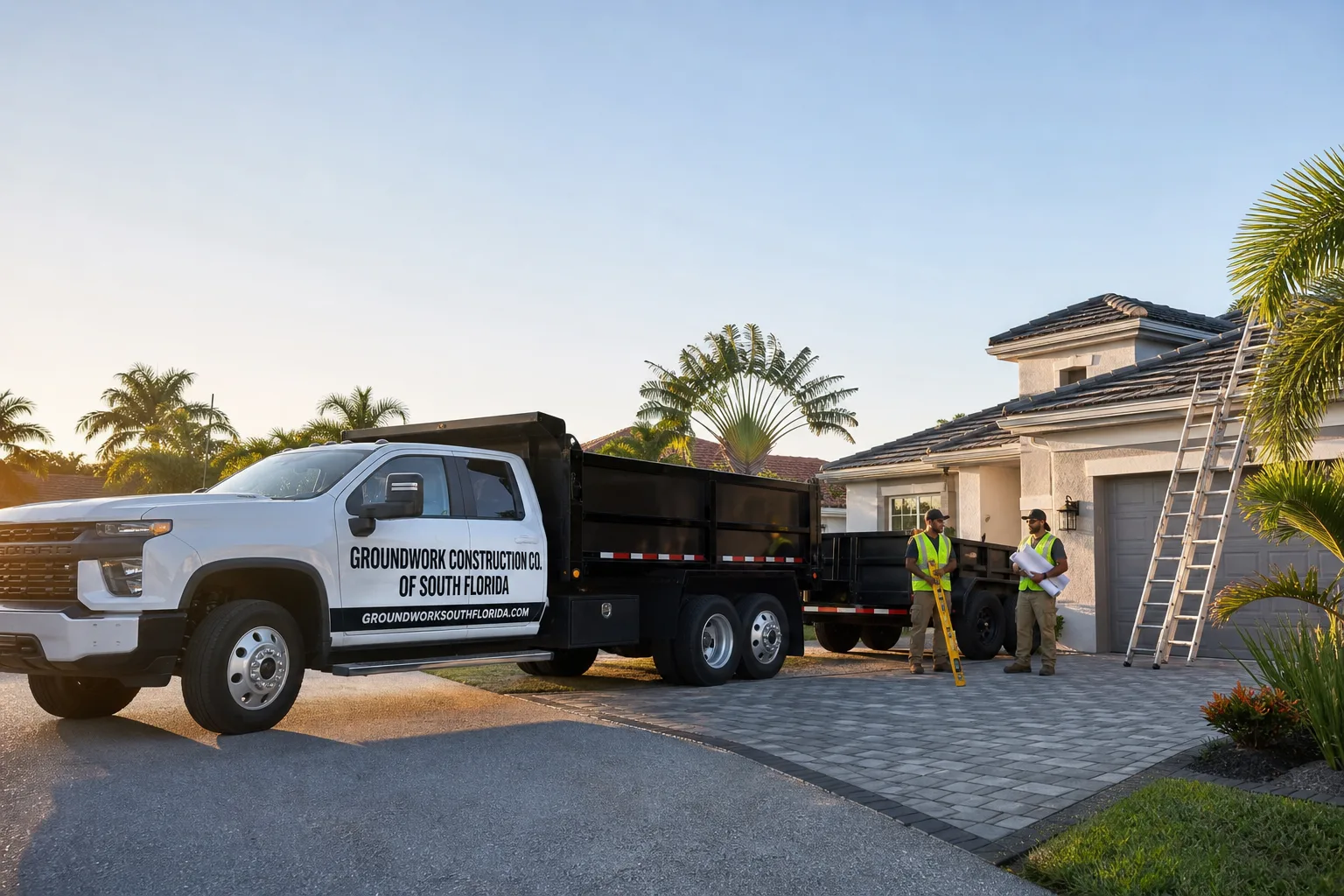
Glass Railing Systems in Miami Gardens - Scope, Timeline, and What to Expect
Glass railing systems in Miami Gardens typically run $8,500-$22,000 for a full residential install, depending on linear footage, mounting surface, and whether the structure needs HVHZ-compliant engineering. Most projects we handle in the 33056 area take 5-10 business days from permit approval to final inspection, with the glass itself fabricated off-site while we prep the mounts. Call (844) 665-0162 and we’ll walk through your layout and give you a written estimate that same visit.
How We Build Glass Railing Systems - Start to Finish
We’ve learned that glass railing work in Miami Gardens goes smoothest when the homeowner knows exactly what’s happening and when they need to make a decision. Here’s how we stage it.
Stage 1: Site measure and structural assessment (Day 1, 2-3 hours). We show up with a laser measure and a structural checklist. For the CBS ranch homes that dominate Miami Gardens - most built during the Carol City development wave from the 1950s through the 1970s - we’re checking whether your existing slab edge, stair stringers, or balcony framing can handle the point loads that glass railing posts or base shoes impose. On homes with original flat roofs and minimal roof-to-wall connections, we sometimes find the perimeter beam needs sistering or epoxy anchoring before we can mount anything. You decide at this stage: surface mount (faster, visible base plate) or core drill (cleaner look, requires solid concrete depth). We photograph everything and send you the markup within 24 hours.
Stage 2: Engineering and permitting (Days 2-14, homeowner passive). Miami-Dade’s HVHZ code means every glass railing system needs a signed structural calculation showing it can withstand 175 mph design wind loads. We submit to Miami-Dade Building Department with the product approval documentation for the specific glass and hardware system you’ve chosen. If your home sits in an HOA with design review - common in the gated sections off NW 27th Avenue - we loop in their architectural committee at this point. You don’t do anything here except approve the final shop drawings we send you.
Stage 3: Fabrication (Days 15-35, homeowner passive). The glass gets tempered and, if specified, laminated off-site. Lead times vary by thickness and whether you want low-iron (starphire) glass for that crystal-clear look versus standard tempered with its slight green edge tint. Hardware - typically 316 stainless steel for coastal corrosion resistance - gets machined to our specs. We don’t start demolition until the glass is in transit to our shop.
Stage 4: Prep and installation (Days 36-40, 2-4 days on site). We protect your floors, remove any existing railing, and cut or core the mounting locations. On older CBS homes in Miami Gardens, we hit rebar more often than you’d expect; when that happens, we shift the layout slightly rather than compromise the structural integrity of your slab or wall. Glass panels go in last, set with structural silicone and mechanical clips per the engineer’s detail. You need to be available for a walkthrough before we seal everything.
Stage 5: Inspection and closeout (Day 41-42). Miami-Dade inspects for code compliance, guardrail height (42 inches minimum for residential), and load resistance. We pass you the final permit card, care instructions, and the manufacturer’s warranty packet. The whole sequence, from our first visit to the inspector’s sign-off, usually spans 5-7 weeks.
The Glass Railing Options You’ll Actually Choose Between
- Framed vs. frameless: Framed systems use metal posts at regular intervals - more affordable, easier to engineer for HVHZ loads, but visually busier. Frameless relies on thick glass (1/2 inch to 3/4 inch) with minimal hardware - cleaner sight lines, higher material cost, and the engineering gets more complex for Miami-Dade’s wind requirements. Most Miami Gardens homeowners with water views or pool decks lean frameless; those prioritizing budget and speed go framed.
- Glass type - standard tempered vs. low-iron (starphire): Standard tempered has a faint green edge and slight tint in thick sections. Low-iron glass costs 30-40% more but reads as nearly invisible, which matters if you’re looking through the railing at landscaping or a pool. Both meet impact safety codes; neither is “better,” just different aesthetics.
- Base shoe vs. post-mounted: A base shoe system runs a continuous aluminum or stainless channel along the floor edge, with the glass slotting in - minimal visual interruption, but requires a perfectly level substrate and solid concrete depth. Post-mounted gives you discrete metal uprights, more forgiving of slight slab irregularities common in 1960s-era Carol City homes where settlement has occurred.
- Top rail or no top rail: Some homeowners want a continuous handrail at 42 inches for grip and code compliance; others prefer the glass edge as the only horizontal line. Code allows either if the glass itself meets handrail deflection standards, but the no-top-rail look requires thicker glass and beefier hardware, which pushes cost up.
- 316 stainless vs. powder-coated aluminum hardware: Miami Gardens is far enough inland that salt corrosion is moderate, not severe, but we still specify 316 stainless for any hardware within 50 feet of a pool or in direct rain exposure. Powder-coated aluminum saves money and works fine for covered applications; the coating just needs touch-up every few years if scratched.
What Glass Railing Systems Cost in Miami Gardens, FL
| Component / Scope | Typical Range |
|---|---|
| Standard framed system, 20 linear feet | $8,500-$12,000 |
| Frameless base-shoe system, 20 linear feet | $14,000-$18,500 |
| Frameless with low-iron glass, 30+ linear feet | $18,000-$22,000 |
| HVHZ engineering and permitting | $1,200-$2,500 |
| Structural slab/wall reinforcement (if needed) | $800-$3,000 |
Five variables move your number within these ranges. Linear footage is obvious - more glass, more cost. Existing substrate condition matters enormously on Carol City-era homes; we’ve had jobs where the original slab edge was too thin for core drilling and we had to pour a supplementary curb. Glass specification - low-iron, laminated, or oversized panels - can add 25-50% to material cost. Height and code triggers: residential guardrails need 42-inch height, but if your local HOA or insurance requires 48 inches for pool enclosures, that changes the engineering. And access difficulty - second-story balconies, tight side yards on the standard 75-foot-wide Miami Gardens lots, or homes with no driveway access for our glass truck - adds labor hours.
Our written estimates include the glass, hardware, engineering, permitting, installation, and Miami-Dade inspection coordination. What’s typically outside: any required slab or framing repair, electrical relocation if you’re integrating LED handrail lighting, and HOA application fees. We flag these possibilities during the site measure so you’re not surprised.
What Miami Gardens Homes Specifically Do to This Job
The residential fabric of Miami Gardens - that dense grid of 1950s-1970s CBS ranch homes from the Carol City suburban development era - creates a specific challenge for glass railing systems that crews working newer construction never encounter. These structures predate Miami-Dade’s post-Hurricane Andrew High Velocity Hurricane Zone code overhaul, which means virtually every permitted glass railing job here triggers the same reality: the existing structure wasn’t designed for the loads modern code requires.
We’ve measured homes near Scott Lake and Lake Lucerne where the original slab perimeter was only 6 inches thick - fine for a 1962 aluminum porch rail, insufficient for a frameless glass base shoe that needs 8-10 inches of embedment. The shallow water table throughout Miami Gardens also means any supplementary footing work stays wet longer, slowing cure times. And because Miami-Dade inspectors here apply HVHZ standards uniformly, there’s no negotiating around wind-load calculations even for interior stair rails that feel protected. The upside: a glass railing system properly engineered and installed in Miami Gardens will survive conditions that would rip an uncredentialed system off a house in Broward County. We treat the extra rigor as a feature, not a bug, and price it in from day one.
Homeowners in Miami Gardens often pair exterior upgrades like this with other envelope work. If you’re already addressing your home’s exterior, you might look at Windows & Doors in Miami Gardens as part of a full-scope project, or consider how Fence Repair in Miami Gardens ties into your property line definition. Our Windows & Doors crew coordinates directly with the railing team when both scopes run concurrently. We cover Miami Gardens and the surrounding Carol City, Lake Lucerne, and Opa Locka areas from our Fort Lauderdale base, and many clients also ask us about Paver Driveways in Miami Gardens while we’re on site.
Serving Miami Gardens, FL - Our Local Coverage Area
We’re based in the Miami Gardens area and know this community well. Use the map below to see our service coverage - if you’re nearby, we can almost certainly help.
Frequently Asked - Glass Railing Systems in Miami Gardens
Yes, any glass railing system in Miami-Dade County requires a permit with structural engineering for HVHZ wind-load compliance. We handle the application, the engineer’s stamp, and the inspection scheduling as part of our standard process. Call (844) 665-0162 if you want us to verify whether your specific layout triggers any additional triggers.
Most glass railing systems in Miami Gardens take 5-7 weeks from our first site visit to final inspection, with 2-4 days of actual on-site work. The longest phase is usually fabrication and permitting, not installation. If you need the project completed by a specific date, tell us upfront and we’ll coordinate the fabrication schedule accordingly.
Usually yes, if the railing runs along an exterior edge or stair where no utilities are embedded. On second-story balconies above living space, we sometimes find conduit or vent stacks that conflict with post locations; we adjust the layout rather than relocate plumbing. Our site measure catches these conflicts before you commit.
Repairing a 1960s metal railing is rarely cost-effective if you want the glass aesthetic; the existing structure typically can’t support glass loads without significant modification. We price both paths when asked, but most Miami Gardens homeowners find that a full replacement with engineered mounting is the better long-term investment. Call (844) 665-0162 for an exact comparison on your specific layout.
The glass itself carries a manufacturer’s warranty against spontaneous breakage and defects, typically 5-10 years depending on the supplier. Our installation workmanship is warranted for 2 years, and we guarantee Miami-Dade permit approval or we correct the issue at our cost. We pass you all warranty documentation at closeout.
Ready to Talk Through Your Glass Railing Project?
We’ll come to your Miami Gardens property, measure the layout, check the substrate condition, and give you a written estimate with no obligation. The visit takes about an hour, and you’ll know exactly what the job involves, what it costs, and how we handle the Miami-Dade permitting. Call (844) 665-0162 to schedule, or ask for Raymond Estevez directly if you want to discuss how this fits into a larger exterior renovation.
Written by Raymond Estevez, Owner at Groundwork Construction Co., serving Miami Gardens since our South Florida launch.