
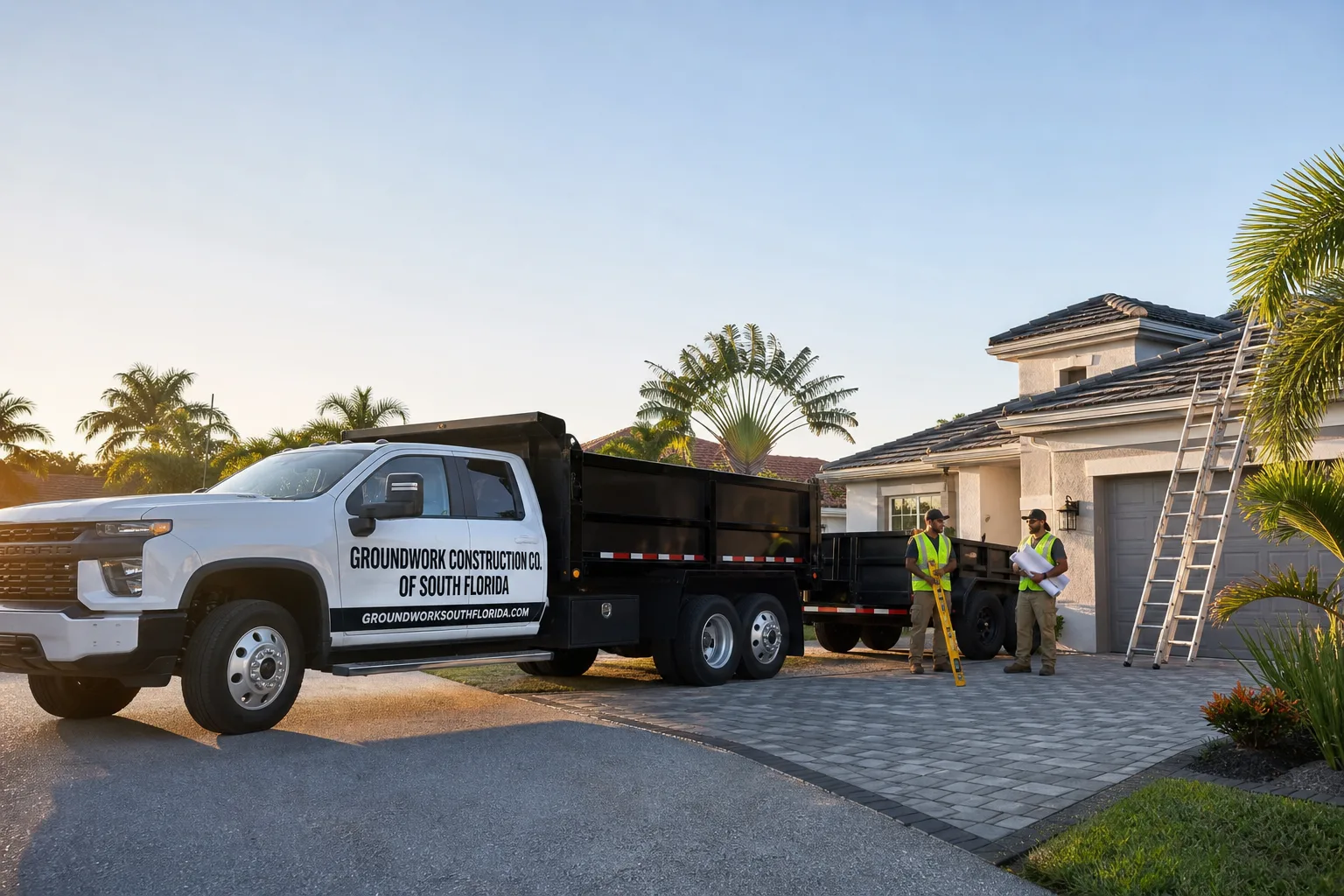
Glass Railing Systems in Palm Springs: Scope, Timeline, and What You’ll Pay
Glass railing systems in Palm Springs typically run $8,500-$22,000 installed, with most residential projects wrapping in 5-10 business days once permits clear. We fabricate and install frameless, semi-frameless, and post-and-rail configurations for balconies, staircases, pool enclosures, and second-story decks, working with tempered and laminated glass rated for Palm Beach County wind loads. Call (844) 665-0162 and we’ll walk your property, measure the run, and email a line-item estimate within 24 hours.
How We Build Glass Railing Systems in Palm Springs
Every glass railing project moves through five distinct stages. Here’s what happens, how long each takes, and what you’ll need to decide before we can advance.
Stage 1: Site measure and structural assessment (1-2 hours on-site)
We show up with a laser measure and a structural checklist. For homes in Palm Springs’ 1950s-1970s CBS neighborhoods, we’re checking whether the concrete substrate can accept stainless steel core-drilled posts or if we need surface-mounted aluminum bases instead. We also verify whether your existing slab or deck framing meets the 200-pound concentrated load requirement in the Florida Building Code. You’ll decide at this stage: frameless (glass clamps to a top and bottom rail), semi-frameless (minimal posts between glass panels), or full post-and-rail. Each has different structural demands.
Stage 2: Templating and glass spec (2-3 business days)
We send field dimensions to our fabricator and select glass thickness based on your configuration. Frameless systems need 1/2-inch minimum tempered glass, often laminated for second-story or poolside work. Semi-frameless can drop to 3/8-inch with engineered spacing. You’ll choose tint (clear, low-iron, gray, or bronze), edge polish, and hardware finish (brushed stainless, powder-coated black, or marine-grade 316 stainless for salt-air exposure). This is also when we flag any permit triggers.
Stage 3: Permitting and engineering (1-3 weeks, Palm Beach County)
We pull the permit under our contractor license and submit stamped drawings if the railing exceeds 30 inches in height or serves as a pool barrier. In Palm Springs, this is where projects often expand: county inspectors routinely flag non-compliant jalousie windows, unreinforced roof-to-wall connections, or inadequate wind-load documentation on older CBS homes. We’ve seen a simple second-story deck railing turn into a broader window-and-door upgrade once the permit file opens. We handle the revisions, but you should budget for this possibility.
Stage 4: Fabrication and staging (1-2 weeks)
Glass gets cut, tempered, and drilled to our templates. Hardware ships separately. We coordinate delivery to avoid storage on-site, since Palm Springs’ summer humidity and sudden thunderstorms can corrode unfinished stainless fittings in days.
Stage 5: Installation and final inspection (1-3 days)
We core-drill or surface-mount posts, set panels with structural silicone and mechanical clips, then seal all penetrations. For pool enclosures, we install self-latching gates and verify 48-inch height compliance. The county inspector signs off, and we hand you maintenance guidelines. You’re typically walking on your new railing system the same day we pass.
The Glass Railing Options You’ll Actually Choose Between
- Frameless glass railing: Panels clamp between a top rail and floor channel, minimal visual interruption. Costs run higher ($14,000-$22,000 for a typical Palm Springs second-story deck) because glass must be thicker and installation demands precise substrate flatness. Best for modern additions and homes where the view is the point. Not forgiving on older CBS slabs with settlement cracks.
- Semi-frameless with minimal posts: Slim aluminum or stainless posts at 4-6 foot intervals, 3/8-inch glass. Mid-range pricing ($10,500-$16,000), easier to engineer on older Palm Springs homes with less-than-perfect concrete. The posts hide minor slab irregularities. Most popular for pool decks and balcony retrofits.
- Post-and-rail with cable or glass infill: Traditional structural posts with horizontal top and bottom rails, glass panels dropped in. Lowest cost ($8,500-$13,500), most forgiving on uneven substrates, but visually heavier. Often the pragmatic choice for ground-level patios in the village’s mid-century ranch neighborhoods where we’re working with 60-year-old concrete.
- Glass type: Standard tempered meets code; laminated tempered adds a polyvinyl interlayer so the panel stays intact if shattered. We specify laminated for any railing over 30 inches high or within 36 inches of a pool edge. Low-iron glass eliminates the green tint at edges, worth the 15-20% upcharge if your railing faces west into the Palm Springs sunset.
- Hardware finish: 304-grade stainless holds up inland; 316 marine-grade resists salt corrosion if you’re close to the Lake Worth Lagoon breeze corridor. Powder-coated aluminum costs less but shows wear faster on high-touch top rails.
What Glass Railing Systems Cost in Palm Springs, FL
Most residential glass railing systems we install in Palm Springs fall between $8,500 and $22,000. Here’s what pushes a job toward the low or high end of that range.
Linear footage and height: A 20-foot ground-level patio rail runs far less than a 60-foot second-story balcony with 42-inch height requirement. Every additional foot of glass and hardware adds material and labor.
Existing substrate condition: New construction with clean concrete? Straightforward. A 1958 CBS ranch with spalled slab edges, settlement cracks, or an add-on deck with questionable framing? We may need to pour new footings or sister joists before glass goes in. That structural prep isn’t in the base number.
Permit scope and code triggers: Palm Beach County’s post-Andrew code adoption means pulling a railing permit on a pre-1994 home often surfaces unrelated deficiencies. If the inspector flags your jalousie windows or demands a wind-load letter from a Florida-licensed engineer, add $800-$2,500.
Glass grade and treatment: Standard tempered versus laminated, clear versus low-iron, custom etched or sandblasted privacy bands. Each step up adds 10-25%.
Access and staging: Tight lots on Palm Springs’ interior streets, zero lot lines, or second-story work requiring a boom lift instead of ladders. Difficult access adds a day or two of labor.
A written estimate from us includes: site measure, permit pull, fabrication, installation, hardware, and county final inspection. It does not include: structural repairs to existing substrates, engineering letters if triggered, tree or fence removal for access, or finish carpentry to repair walls or soffits disturbed during installation. We itemize these separately so you’re not surprised.
What Palm Springs Homes Specifically Do to This Job
Palm Springs isn’t a generic South Florida suburb. The village’s core housing stock - concrete block ranches built from the 1950s through the 1970s - shapes every glass railing project we take on here.
Those CBS walls and slabs are durable but unforgiving. Core-drilling for frameless post mounts hits aggregate pockets that shatter bits. Surface-mounted bases work better, but the original flat roofs and low parapets on these mid-century homes often mean we’re tying into structures never designed for lateral railing loads. We’ve learned to specify heavier base plates and more anchor points than we’d need in a 2005 Wellington tract home.
The permitting reality is equally specific. Palm Beach County adopted stringent wind-mitigation codes after Hurricane Andrew, and Palm Springs’ pre-1994 housing stock triggers mandatory upgrades on nearly every significant permit. We’ve had county inspectors walk a glass railing job and red-tag the original jalousie windows three rooms away, turning a focused deck upgrade into a Windows & Doors in Palm Springs conversation. We don’t fight it; we plan for it, and we warn you before we pull the permit.
The humidity is another local factor that changes material selection. Palm Springs sits on low-lying limestone with a water table that rises fast after summer storms. Any below-grade footing work for ground-level railings hits saturated soil within 18 inches. We spec galvanized or stainless post bases, never powder-coated steel, because we’ve seen standard hardware rust through in three seasons. The persistent moisture also means we avoid wood top rails entirely on pool enclosures; composite or aluminum holds up where mahogany would rot.
Homeowners on streets like Purdy Lane or Kirk Road often pair exterior upgrades with hardscape work. If you’re already replacing a cracked concrete patio, adding Paver Driveways in Palm Springs or a new walkway, it makes sense to spec the glass railing footings during that phase rather than cutting into finished work later. Our Windows & Doors crew coordinates with our hardscape team so you’re not paying twice for layout and excavation.
We cover all of Palm Springs, from the original village grid near 10th Avenue North out to the newer infill near Lake Worth Road. If you’re in a deed-restricted pocket with an active HOA, we submit architectural review packets with your glass samples and engineering cut sheets before permit application, avoiding the six-week delay of a disapproved variance.
Serving Palm Springs, FL - Our Local Coverage Area
We’re based in the Palm Springs area and know this community well. Use the map below to see our service coverage - if you’re nearby, we can almost certainly help.
Frequently Asked - Glass Railing Systems in Palm Springs
Most projects finish in 5-10 business days of active work, but permitting in Palm Beach County adds 1-3 weeks. We can give you a firm schedule after the site measure. Call (844) 665-0162 to book a time.
Yes, if the railing exceeds 30 inches in height or serves as a pool barrier. Palm Beach County requires stamped drawings and wind-load compliance on all residential railings. We pull the permit as part of our scope. Be aware that opening a permit file on a pre-1994 home often triggers broader code-upgrade requirements.
Usually, yes. Glass railing systems are surface-mounted or core-drilled into existing slabs and walls, so we rarely disturb utilities. The exception is integrated LED lighting in top rails or post caps, which may require a licensed electrician to extend a circuit. We flag this during the site measure if you want lighting.
A ground-level post-and-rail system with 3/8-inch tempered glass starts around $8,500 in Palm Springs. That meets code but won’t give you the uninterrupted sightlines of frameless. The honest trade-off: you save 30-40% but add visual weight. We can show you both installed nearby so you decide with your eyes, not a catalog.
We warranty our installation workmanship for two years. The glass itself carries a manufacturer’s defect warranty, typically 5-10 years depending on the fabricator. Hardware warranties vary by finish grade, with 316 marine stainless carrying longer coverage than powder-coated aluminum. We put all warranty terms in your written proposal, not a handshake.
Get a Free On-Site Estimate for Glass Railing Systems in Palm Springs
We’ll walk your property, talk through frameless versus post-and-rail, check your substrate condition, and email a line-item estimate within 24 hours. No deposit to schedule, no pressure to decide on the spot. Call (844) 665-0162 or fill out the form on this page. If you’re also dealing with aging fencing or planning a full exterior update, ask about Fence Repair in Palm Springs during our visit - our crew can sequence both projects under one timeline.
Written by Raymond Estevez, Owner at Groundwork Construction Co., serving Palm Springs and South Florida.