
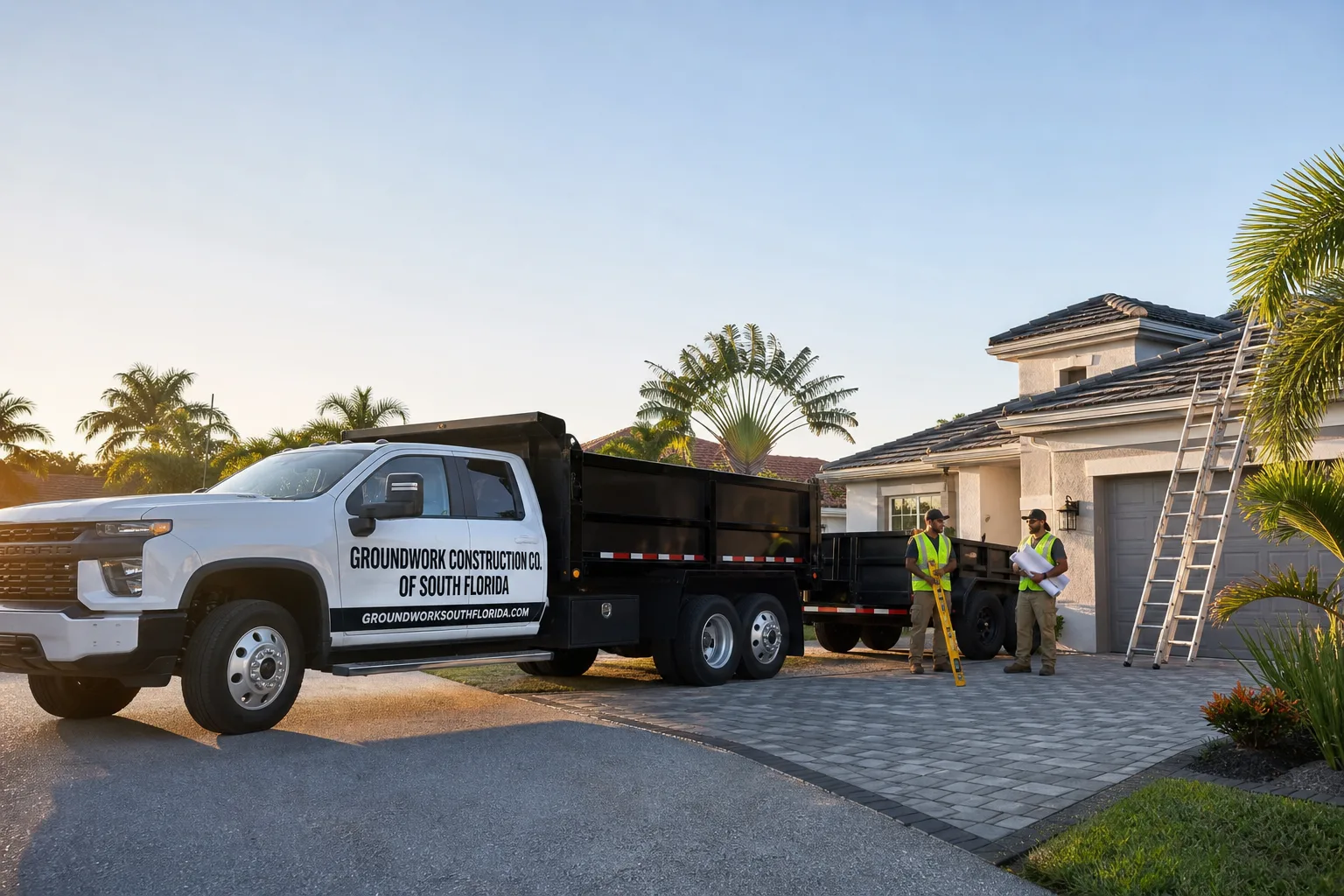
How Much Do Patios, Walkways & Pool Decks Cost in Palm Beach Gardens?
Patios, walkways, and pool decks in Palm Beach Gardens typically run $3,500-$11,000 for paver installations, with most residential projects wrapping in 5-10 business days once HOA Architectural Review Board approval is secured. Call (844) 665-0162 for a free on-site estimate that accounts for your community’s specific material and design standards.
Why Palm Beach Gardens Contractors Can’t Skip the HOA Step
In 2004, an out-of-area crew finished a beautiful travertine pool deck in BallenIsles without ever submitting to the Architectural Review Board. The city permit was clean. The work was technically sound. The HOA still issued a restoration order requiring full tear-out because the paver color wasn’t on the approved palette. That’s not a rare story here, it’s a recurring lesson.
Palm Beach Gardens was master-planned from scratch starting in 1959 by John D. MacArthur, and today it hosts one of the densest concentrations of private, deed-restricted golf course communities in Florida. PGA National, BallenIsles, Mirasol - each operates its own ARB with independent enforcement authority. A contractor can hold a perfectly valid city permit and still face mandatory removal if the HOA’s design standards weren’t satisfied first. We’ve watched this burn general contractors from Broward and Miami-Dade who treated Palm Beach Gardens like any other permitting jurisdiction.
The western 33418 corridor tells a different story. The Avenir development, 4,700+ acres and growing, represents one of Palm Beach County’s largest active master-planned buildouts. Out there, you’re often working with builder-grade concrete slabs that need upgrading to premium hardscape, and the HOA process is newer but no less strict. The local construction market is split between high-end renovation inside established gated communities and large-scale luxury new construction pushing westward. Your patio, walkway, or pool deck project sits somewhere on that spectrum, and the path to completion changes based on which side you’re on.
How We Build Patios, Walkways & Pool Decks in Palm Beach Gardens
Our process accounts for the dual-layer approval reality here: HOA first, city second. Here’s how the timeline actually breaks down.
Stage 1: Site measure and ARB documentation (Days 1-2)
We photograph the existing surface, take precise grade measurements, and identify any drainage or plumbing conflicts. For HOA communities, we simultaneously prepare the ARB submission packet: material samples, color swatches, dimensioned drawings, and manufacturer cut sheets. In Mirasol or PGA National, this packet often requires 10-14 business days for review. We submit before anything else moves.
Stage 2: ARB approval and city permitting (Days 3-14, variable)
Once the ARB signs off, we pull the Palm Beach Gardens building permit. Pool decks involving electrical work for lighting or water features trigger additional plan review. The western 33418 area’s shallow water table, managed by South Florida Water Management District canals, means any significant grading or fill requires SFWMD clearance. We handle this coordination; you don’t chase signatures.
Stage 3: Demolition and substrate prep (Days 15-17)
We remove existing concrete, pavers, or decking and expose the substrate. For pool decks, this means checking the bond beam and coping integrity. For walkways abutting CBS construction homes - the dominant stock in 1970s-90s Palm Beach Gardens neighborhoods - we verify that slab settlement hasn’t created trip hazards at the foundation interface. Bad substrate gets excavated and recompacted with engineered fill.
Stage 4: Base installation and paver laying (Days 18-22)
We install geotextile fabric, 4-6 inches of crushed concrete base, and screed a 1-inch bedding layer. Pavers go down in the approved pattern. For pool decks, we use Belgard or Tremron permeable pavers where drainage is critical, or standard interlocking concrete pavers where the grade already sheds water. Edge restraint goes in with steel or concrete haunching, not plastic spikes that rot in our salt air.
Stage 5: Compaction, joint sand, and final inspection (Days 23-25)
We vibrate-compact the surface, sweep polymeric sand into joints, and activate the binding agent. The city inspector checks for proper slope, drainage, and code compliance. HOA communities often require a separate ARB final approval before the project is formally closed. We schedule both inspections back-to-back when possible.
The Material Choices You’ll Actually Decide Between
- Standard interlocking concrete pavers ($3,500-$7,500 typical): The workhorse option. Tremron and Techo-Bloc both manufacture 60mm and 80mm units rated for vehicular loads, though for patios and pool decks we typically specify 60mm. Colors range from warm coral tones that complement Palm Beach Gardens barrel-tile roofs to cooler limestone grays. The trade-off: standard pavers show efflorescence (whitening) in our humid climate for the first 6-12 months. It’s cosmetic, not structural, but some homeowners upgrade to avoid it.
- Premium travertine or limestone pavers ($6,500-$11,000+): Natural stone stays cooler underfoot than concrete - a genuine consideration for pool decks in Palm Beach County’s eight-month summer. The trade-off: porosity. Travertine requires sealing every 18-24 months in our salt-air environment, and etching from pool chemicals is real. We source from quarries with consistent density, not bargain lots that spall after one freeze-thaw cycle. (Florida “freezes” are mild, but wet stone expanding in a January cold snap will test inferior material.)
- Porcelain pavers ($5,500-$9,500): Relatively new to the outdoor market, these 20mm thick tiles offer near-zero water absorption and won’t fade. The trade-off: installation complexity. Porcelain requires a perfectly flat substrate; any deflection cracks the material. We use these primarily for covered patios or second-story applications where weight matters, not for ground-level pool decks with potential settlement.
- Permeable paver systems (+15-25% over standard): Required in some newer Palm Beach Gardens developments with stormwater retention mandates. The open-graded base stores rainfall and releases it slowly, reducing runoff. The trade-off: ongoing maintenance. Joint aggregate needs refreshing every 2-3 years as organic matter accumulates. We install clean-out ports for pressure washing access.
- Bullnose coping and paver borders: Not a material category but a design decision with cost impact. Pool decks need coping (the edge where paver meets water). Standard 12-inch bullnose runs $18-$28 per linear foot installed. Upgraded 16-inch or mitered-corner detail adds 40%. Many HOAs in PGA National require a 6-inch soldier course border in contrasting color - we identify this requirement during ARB prep, not during installation.
What Patios, Walkways & Pool Decks Costs in Palm Beach Gardens, FL
| Project Type | Typical Range | Most Common Price Point |
|---|---|---|
| Paver patio, 200-400 sq ft | $3,500-$7,500 | $5,200 |
| Pool deck replacement, 400-800 sq ft | $6,500-$11,000 | $8,400 |
| Front walkway, 50-100 sq ft with steps | $2,800-$5,500 | $3,900 |
| Premium natural stone upgrade | +40-60% over concrete paver base | - |
| Permeable system surcharge | +15-25% | - |
| Drainage/grading correction | $800-$2,500 | $1,400 |
Five factors push your project to the high or low end of these ranges:
- Existing condition. A cracked concrete slab that lifts cleanly costs less to demo than a pool deck with bonded tile, mortar beds, and corroded coping anchors. We won’t know until we probe.
- Drainage complexity. Palm Beach Gardens’ flat terrain means water doesn’t leave on its own. If your patio currently ponds after storms, we regrade and possibly install a French drain or channel drain. That’s additional excavation and material.
- Material grade and source. Belgard’s Bergerac line and their standard Holland stone are both quality products; one costs 35% more. We quote the specific SKU, not “Belgard pavers.”
- ARB revision cycles. If your HOA rejects the first color submission and requires a resubmission, that adds 1-2 weeks to calendar time, not necessarily labor cost, but it affects project scheduling.
- Utility conflicts. Pool decks sometimes hide electrical conduits for lighting or water features. Relocating these requires a licensed electrician and permit amendment. We identify visible conduits during site measure; buried surprises get handled with change orders.
Our written estimates include demolition, disposal, base material, pavers, edge restraint, joint sand, compaction, and standard city permitting. They don’t include ARB application fees (varies by HOA), tree or fence protection required by some communities, or irrigation repair if we damage a line during excavation. We carry insurance for accidental damage, but we also locate utilities before digging.
What Palm Beach Gardens Homes Specifically Do to This Job
The housing stock here shapes every patio, walkway, and pool deck we build. The dominant construction is CBS - concrete block and stucco - from the 1970s through 1990s in the original golf communities, alongside 2000s-2010s luxury builds in Mirasol and newer phases. The older CBS homes in PGA National frequently have original single-pane aluminum windows and slab foundations that have settled differentially over forty-plus years. That settlement shows up as cracked pool decks, tilted patios that drain toward the house instead of away, and walkways with trip hazards at the driveway interface.
Hurricane Frances and Jeanne in 2004 drove aggressive code revisions across Palm Beach County. Any new hardscape within the wind-borne debris region must account for Florida Building Code exposure category requirements, though patios and walkways themselves aren’t typically wind-rated structures. The practical impact: if your project includes a covered patio or pergola attachment, the connection to the main structure must meet current wind-load standards. We engineer these connections; we don’t guess.
The shallow water table in western 33418, managed by SFWMD canals, means new construction and significant additions routinely require engineered fill and grading permits. For patio and walkway work, this usually only triggers if we’re raising grade more than 12 inches or extending within wetland buffers. We verify SFWMD jurisdiction during permitting, not after the fact.
Homeowners in established communities often pair hardscape upgrades with other exterior work. A full Driveway & Pavers in Palm Beach Gardens project frequently includes the walkway and patio as part of a coordinated exterior transformation. Our Driveway & Pavers crew handles the full scope, not a subcontractor you’ve never met. Some clients also explore ADU Site Prep & Utilities in Palm Beach Gardens when they’re rethinking how the entire property flows, or Full Kitchen Remodeling in Palm Beach Gardens to match interior finishes with the new outdoor living space. We serve Palm Beach Gardens as a single-source contractor across all these categories.
Serving Palm Beach Gardens, FL - Our Local Coverage Area
We’re based in the Palm Beach Gardens area and know this community well. Use the map below to see our service coverage - if you’re nearby, we can almost certainly help.
Frequently Asked - Patios, Walkways & Pool Decks in Palm Beach Gardens
Physical construction takes 5-10 business days for most residential projects. Calendar time is longer because HOA Architectural Review Board approval typically adds 2-3 weeks before we can pull the city permit. We submit ARB packets immediately after contract signing to keep the timeline moving. Call (844) 665-0162 and we’ll check current ARB turnaround for your specific community.
Yes, Palm Beach Gardens requires a building permit for any hardscape project over 120 square feet or any work involving drainage changes. Pool decks always require permitting due to bonding and electrical considerations. We handle permit drawings, submission, and inspection scheduling as part of our standard process.
Usually, yes. We design the demolition sequence to protect existing plumbing, skimmers, and light conduits. If your equipment pad sits on the deck we’re removing, we’ll need to temporarily support or relocate it. We identify these conflicts during site measure and flag them in the estimate, not mid-project.
Repair is cheaper short-term but rarely lasts in Palm Beach Gardens’ climate. Concrete cracks propagate through our wet-dry cycles, and patching materials delaminate within 2-3 years. Paver replacement at $3,500-$11,000 eliminates the crack risk entirely and adds 15-25 years of service life. For pool decks specifically, pavers also resolve the slipping hazard that comes with algae-stained concrete.
We warranty installation workmanship for two years, covering settling, edge restraint failure, and joint sand loss under normal use. Material defects fall to the manufacturer’s warranty: Tremron and Belgard both offer limited lifetime structural warranties on residential pavers, though color matching for future repairs isn’t guaranteed. We keep project records with specific lot numbers to minimize mismatch risk.
Get a Free Estimate for Your Palm Beach Gardens Project
Call (844) 665-0162 to schedule a free on-site estimate. We’ll measure your space, photograph existing conditions, and identify any HOA or drainage considerations specific to your property. You’ll receive a written estimate with material options from our curated brand roster, a realistic timeline that accounts for your community’s approval process, and no pressure to decide on the spot. Written by Raymond Estevez, Owner at Groundwork Construction Co., serving Palm Beach Gardens since our South Florida expansion.