
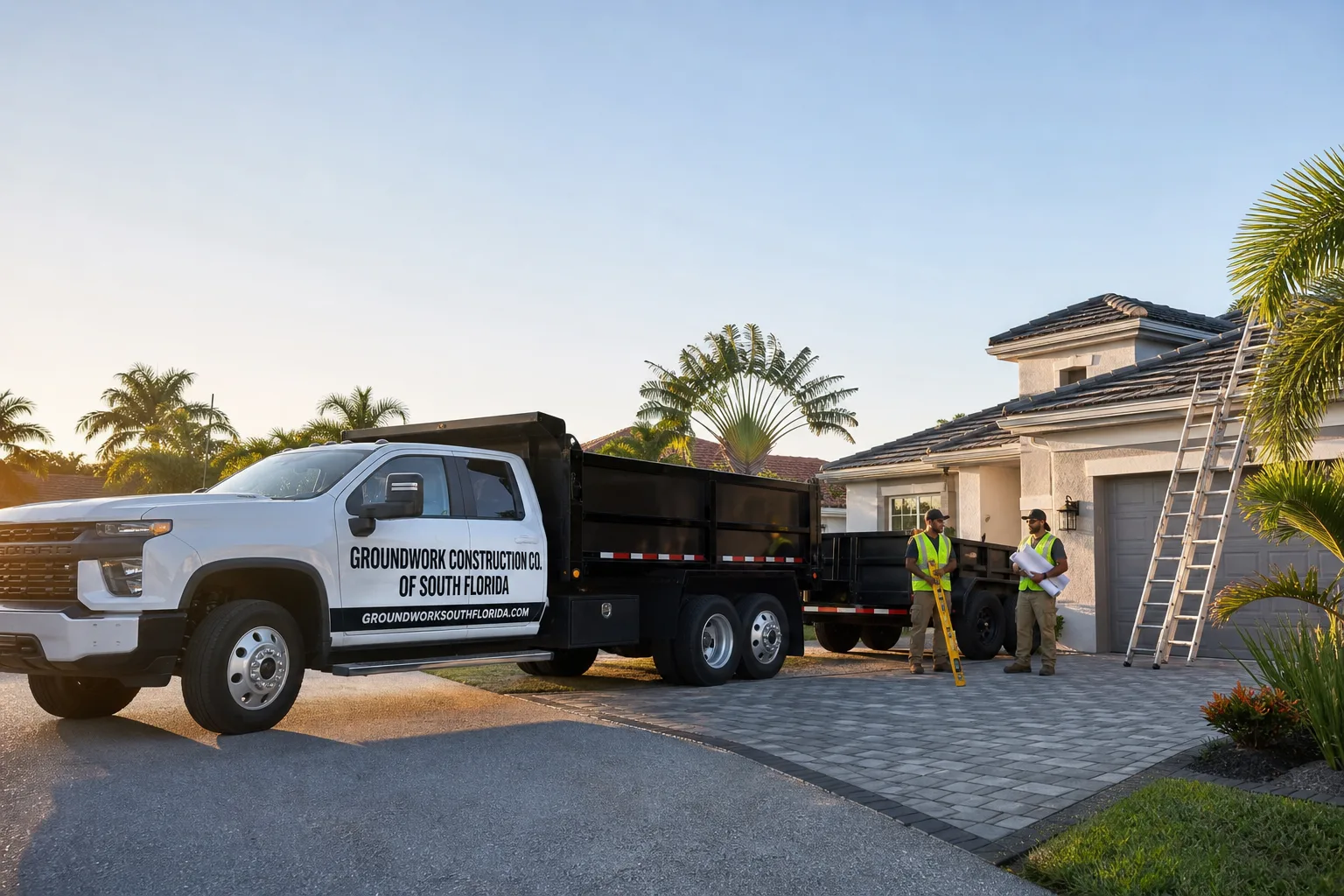
Tile Roofing in Lighthouse Point, FL - Scope, Timeline, and What to Budget
Tile roofing in Lighthouse Point typically runs $8,000-$20,000 for a full replacement on a standard single-family home, with most projects completed in 5-10 business days depending on deck condition and permit scheduling. We work with clay, concrete, and composite tile systems from manufacturers like Boral and Eagle Roofing, installed to meet Broward County’s 175-mph wind-load requirements. Call (844) 665-0162 and we’ll walk your roof, check the deck, and deliver a written estimate with no obligation.
How We Handle a Tile Roof from First Call to Final Inspection
We’ve replaced tile roofs on enough Lighthouse Point canal homes to know where the surprises hide. Here’s how we move through a typical project.
Stage 1: On-site assessment and scope lock (Day 1)
We walk the roof, photograph every cracked or slipped tile, and probe the underlayment and plywood deck at multiple points. On the 1960s-era CBS homes common in Lighthouse Point, we often find the original felt underlayment has turned brittle after decades of salt-air exposure. We mark soft spots, measure total square footage, and note any chimney or vent penetrations that need reflashing. You’ll get a written estimate before we leave, with line-item choices on tile grade, underlayment type, and whether the deck needs partial replacement.
Stage 2: Permit pull and material order (Days 2-5)
Broward County requires a roofing permit with engineered drawings for any tile roof replacement in Lighthouse Point, and the process typically takes 3-5 business days once submitted. We handle the application, the Notice of Commencement, and the wind-load documentation. Meanwhile, your tile order goes to the manufacturer. Clay tiles from Spain or Mexico can sit in port for 4-6 weeks; concrete tiles from domestic plants usually arrive in 7-10 days. We’ll tell you exactly which timeline applies before you sign.
Stage 3: Tear-off and deck repair (Days 6-8)
We strip to the deck, haul away old tile and underlayment, and expose the full structure. This is where Lighthouse Point’s salt environment shows its hand. We’ve opened roofs on Coral Ridge Drive homes to find corrosion-pitted fasteners and delaminated plywood where salt air crept through soffit vents for thirty years. We replace compromised sheeting, sister any rotted rafter tails, and install a high-temp ice-and-water shield at valleys and penetrations. You don’t want to lay new tile over a deck that’s quietly failing.
Stage 4: Underlayment and tile installation (Days 9-14)
We roll a double layer of ASTM D226 Type II felt or a synthetic underlayment rated for tile application, depending on your spec choice. Tiles go down in courses, each mechanically fastened per Florida Building Code Chapter 15. Ridge and hip tiles get mortar-set or foam-adhered with stainless screws through pre-drilled holes. We pay particular attention to the rake edges and eaves where wind uplift concentrates. A 2,500-square-foot roof takes roughly 4-5 days of actual installation once the deck is sound.
Stage 5: Final inspection and walkthrough (Day 15-16)
Broward County inspects for proper fastening pattern, underlayment coverage, and flashing detail. We pass the vast majority on first visit. After approval, we walk the roof with you, show you the warranty paperwork from the manufacturer, and register your 50-year material warranty if applicable. We leave the site cleaner than we found it, with old tile hauled to the proper C&D facility, not dumped curbside.
The Tile Choices You’ll Actually Decide Between
Not all tile performs the same in Lighthouse Point’s salt air and hurricane exposure. Here’s what we see homeowners weighing:
- Traditional clay barrel tile: The classic Mediterranean look you’ll see throughout Lighthouse Point’s older canal neighborhoods. Fired clay won’t fade, but it’s brittle underfoot during installation and cracks if struck by wind-borne debris. Best for homeowners prioritizing authenticity and long-term color stability. Weight runs 900-1,200 pounds per square, so your structure must be verified for load.
- Concrete flat or low-profile tile: Heavier and more impact-resistant than clay, with better performance in high-wind uplift tests. Concrete absorbs more moisture, so the finish coat matters. Premium manufacturers apply an acrylic or ceramic coating that resists salt staining for 20-plus years. More affordable than imported clay, and available in profiles that mimic slate or wood shake.
- Composite or polymer tile: The lightest option at 300-400 pounds per square, which matters if your 1960s roof structure has any sag or if you’re adding tile where asphalt shingles used to sit. Impact ratings are excellent, and some products carry Miami-Dade HVHZ approval. The trade-off is a shorter track record, and some homeowners find the surface texture less convincing up close.
- Underlayment grade: Standard double-felt costs less upfront but may need replacement before the tiles themselves wear out. Synthetic underlayments like those from Owens Corning or CertainTeed cost more but carry 30-50 year warranties and handle the thermal cycling of a dark tile roof better. In Lighthouse Point’s sun and salt, we typically recommend upgrading here.
- Fastening method: Foam adhesive alone won’t pass Broward’s current wind standards for most zones. We use foam-plus-screw or direct deck fastening with corrosion-resistant clips. The labor difference is modest; the performance difference in a Category 3 or 4 event is substantial.
What Tile Roofing Costs in Lighthouse Point, FL
Expect $8,000-$20,000 for a complete tile roof replacement on a typical Lighthouse Point single-family home between 1,800 and 3,200 square feet. Tile roof repair work runs $600-$2,500 depending on scope.
Five factors push you toward the high or low end of that replacement range:
- Roof size and complexity: A simple gable roof on a 1,600-square-foot ranch costs less than a multi-hip roof with turrets and multiple dormers. Each valley, ridge, and penetration adds labor and material waste.
- Deck condition: If we open up and find widespread plywood delamination or rafter damage from years of salt-air infiltration, structural repair adds $2,000-$6,000 before a single new tile goes down.
- Tile material and origin: Domestic concrete tile might run $350-$500 per square installed. Imported Spanish clay can hit $700-$1,000 per square. The spread is real.
- Height and access: Two-story canal homes with zero lot lines and no driveway access for a boom truck require more labor hours for material staging. We’ve worked on homes along the finger canals where everything came across a neighbor’s dock.
- Permit scope and seawall triggers: In Lighthouse Point, pulling a roofing permit on a canal lot can trigger Broward County’s mandatory seawall inspection if your property’s seawall is past its 40-50-year design life. A failed inspection adds a $30,000-$80,000 obligation that has nothing to do with your roof but must be resolved before the Certificate of Completion issues.
Our written estimates include tear-off, disposal, deck repair up to a specified square footage, underlayment, tile, flashing, permits, and final inspection. They don’t include structural engineering if your roof framing needs recertification, seawall repair if triggered, or interior ceiling repair if we discover active leaks during tear-off. We flag these possibilities upfront so you’re not surprised.
Why Lighthouse Point Homes Make Tile Roofing a Different Job
Lighthouse Point’s housing stock shapes every roofing decision we make here. The city is essentially built out with no raw land, so every project is renovation on a 1950s-1980s CBS home originally constructed during the canal-dredging era. These roofs weren’t designed for current Florida Building Code wind loads. The original 1/2-inch plywood decks, fastened with nails that have seen sixty years of salt-air corrosion, often can’t handle the uplift forces that modern tile systems and fastening patterns are engineered for.
The canal environment adds another layer. Homes on Northeast 27th Street or along the Coral Ridge Drive corridor sit with tidal water literally lapping at seawalls that are past their design life. That salt-laden humidity rises through soffits and roof vents, accelerating fastener corrosion from the inside out. We’ve removed tiles on waterfront homes in Lighthouse Point to find the nail heads completely gone, the tiles held in place by nothing but gravity and old mortar.
Then there’s the permitting reality. Broward County’s coastal setback rules and the seawall inspection trigger mean your roofing permit isn’t just a roofing permit. We coordinate with the county’s environmental division when necessary, and we’ve learned to check seawall condition during our initial site visit so you know the full picture before work starts. It’s part of why we recommend Impact Windows & Doors in Lighthouse Point as a parallel upgrade on these same homes, since the full exterior envelope often needs simultaneous attention to meet current code.
Homeowners on these canal lots also frequently ask about Sliding & Patio Doors in Lighthouse Point as part of the same project scope, replacing original aluminum sliders that have corroded in the salt air with impact-rated systems that match the new roof’s wind rating.
Serving Lighthouse Point, FL - Our Local Coverage Area
We’re based in the Lighthouse Point area and know this community well. Use the map below to see our service coverage - if you’re nearby, we can almost certainly help.
Frequently Asked - Tile Roofing in Lighthouse Point
Most complete replacements take 5-10 business days of active work, plus 3-5 days for permit approval before we start. Delays usually come from deck repairs we couldn’t predict or backlogs at Broward County inspections. Call (844) 665-0162 and we’ll check current permit turnaround times when we quote your job.
Yes. Broward County requires a roofing permit for any tile roof replacement, with engineered drawings showing wind-load compliance. We handle the application, but you should know that canal-lot permits can trigger a mandatory seawall inspection. We’ll verify your seawall status during our site visit so there are no mid-project surprises.
Sometimes, but not if the existing plywood shows delamination, soft spots, or fastener corrosion. We probe the deck during our initial assessment and tell you exactly what we find. On Lighthouse Point’s 1960s-era homes, we plan for at least partial deck replacement in our base estimate so you’re not caught short.
Yes. Tile roof replacement runs $8,000-$20,000 versus $8,000-$20,000 for asphalt shingle and $15,000-$40,000 for metal on comparable homes. Tile’s advantage is longevity, with material warranties of 50 years and realistic service life of 30-50 years in Florida’s climate. For homeowners planning to stay in their Lighthouse Point home long-term, the lifecycle cost often favors tile.
Manufacturer material warranties range from 50 years to limited lifetime depending on the tile line. Our workmanship warranty covers installation defects for a period we specify in writing. The material warranty is only as good as the installation, which is why we document fastening patterns and underlayment details with photos for every job. Ask us to show you warranty paperwork from Boral, Eagle, or the manufacturer we specify for your project.
Get a Written Estimate for Your Lighthouse Point Tile Roof
We’ll walk your roof, check the deck and flashing, and deliver a detailed estimate with real numbers, not a phone guess. Call (844) 665-0162 to schedule your free on-site consultation for tile roofing in Lighthouse Point. Raymond Estevez or a senior member of our roofing crew will handle the visit personally, and you’ll have your estimate within 24 hours.
Written by Raymond Estevez, Owner at Groundwork Construction Co., serving Lighthouse Point and South Florida homeowners since our founding. Our Roofing in Lighthouse Point page covers the full scope of our Roofing services, from repairs to full replacements across all material types.