
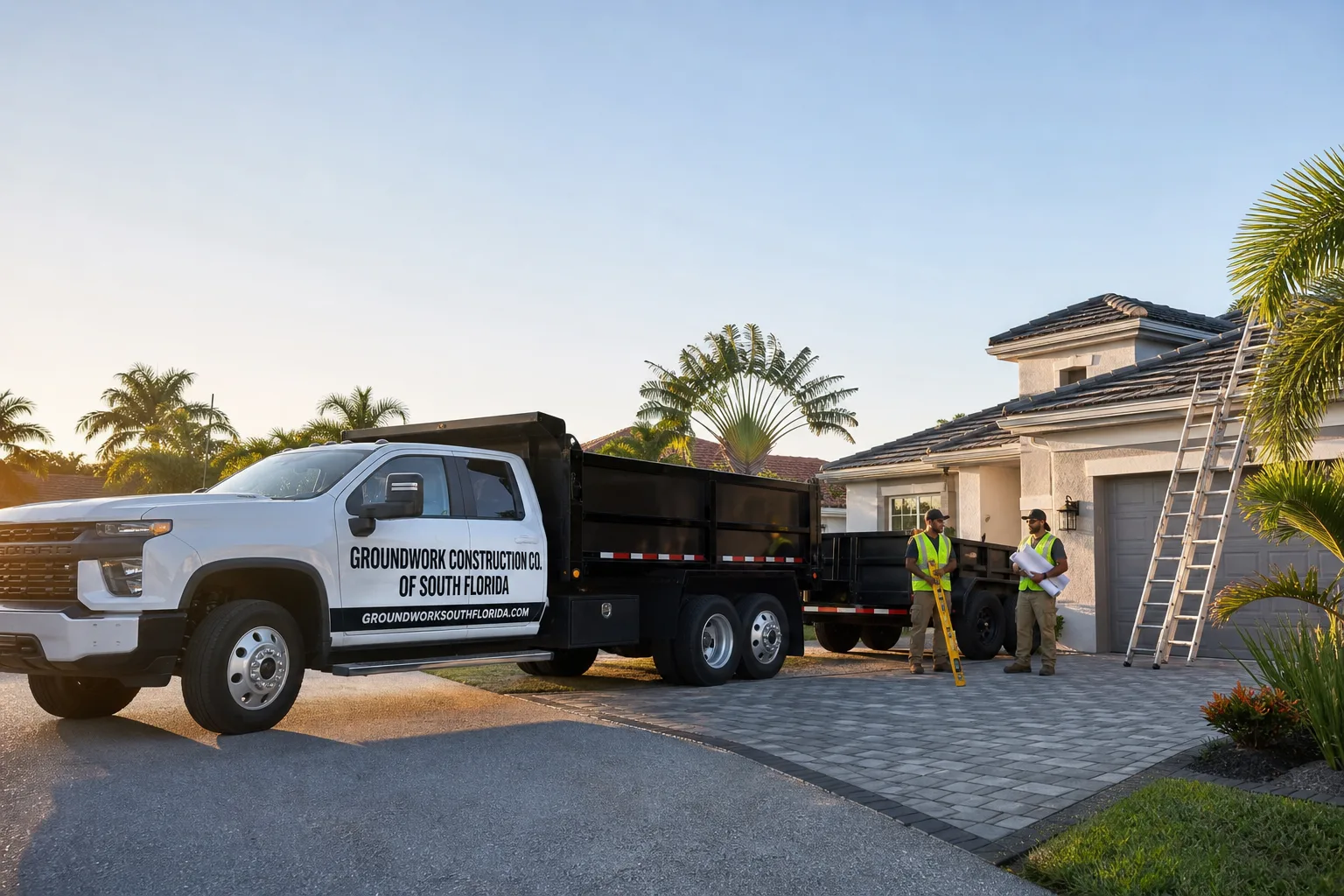
Glass Railing Systems in Norland, FL - Scope, Timeline, and Cost
Glass railing systems in Norland, FL typically run $8,500-$22,000 installed for residential decks, balconies, and stair runs, with most projects completed in 5-10 business days once materials arrive. Every system we install here must carry a Miami-Dade County Notice of Acceptance (NOA), the HVHZ-specific product approval that out-of-area contractors routinely overlook. Call (844) 665-0162 for a free on-site estimate and we’ll confirm whether your existing structure needs reinforcement to meet current wind-load requirements.
How We Install Glass Railing Systems from First Measure to Final Inspection
Day one is structural assessment. We examine your existing substrate, whether it’s a CBS wall cap, concrete slab edge, or wood-framed deck, and test for the continuous load-path connections that Miami-Dade inspectors will verify. Most Norland homes from the 1960s and 70s lack the embedded anchor capacity that modern glass railing systems demand, so we often find ourselves drilling into original concrete block and epoxying stainless steel embeds rated for the 170+ mph wind loads this zone requires. You’ll decide at this stage whether to proceed with base-shoe mounting, standoff posts, or a hybrid system. That choice locks in your hardware package and lead time.
Days two through four cover permitting and material procurement. Because Norland sits in unincorporated Miami-Dade County, we file directly with the county Building Department, not any city hall. Glass railing systems here require a structural submittal showing the NOA, engineer-stamped drawings if the run exceeds 48 linear feet or rises above 30 inches, and wind-load calculations specific to your exposure category. We handle this paperwork, but you’ll need to sign off on the final drawing set. Material lead times range from 10 days for standard tempered glass with aluminum base shoes to 4-6 weeks for low-iron glass with custom stainless steel posts.
Days five and six are demo and prep. We remove existing railings, grind down old anchor points that don’t meet current embed depth standards, and address any concrete spalling or wood rot we uncover. In Norland’s flat, low-lying terrain, we pay particular attention to drainage planes at deck edges; water that ponds against a base shoe will corrode even 316 stainless over time. If we’re working on a second-story balcony, we stage materials to avoid the afternoon thunderstorm window that hits reliably from June through September.
Days seven through nine are installation. We set posts or base shoes with structural adhesive and mechanical anchors, install glass panels with setting blocks and edge gaskets rated for thermal movement, and torque all hardware to manufacturer spec. Every panel gets a temporary brace until the full run is complete and the system acts as a unit. We then call for inspection.
Day ten is county inspection and punch list. Miami-Dade inspectors verify NOA documentation, anchor embed depths, glass thickness, and deflection under load. We’ve seen inspectors reject systems where the glass label didn’t match the NOA exactly, even when the product was technically identical. We stay on-site to address any corrections same-day. Once passed, we walk you through cleaning protocols and warranty registration.
The Glass Railing Options You’ll Actually Choose Between
- Tempered vs. laminated glass: Tempered runs 15-20% less and shatters into granular pieces if broken, which meets code for most residential applications. Laminated glass stays in frame when cracked, like a car windshield, and qualifies for higher wind-load ratings without additional structural support. For Norland’s HVHZ exposure, we often spec laminated on elevated decks and rooftop terraces where failure would mean falling debris.
- Clear vs. low-iron vs. tinted: Standard clear glass carries a faint green edge that bothers some homeowners on long runs. Low-iron glass eliminates that tint and transmits more light, but adds roughly 25% to material cost. Tinted or frosted options work for privacy screens between close-set Norland ranch homes, though they reduce the open-view effect that drives most glass railing purchases.
- Base-shoe vs. post-and-rail vs. standoff systems: Base-shoe mounting hides hardware in a continuous aluminum or stainless channel at the deck edge, cleanest visually but requires the strongest substrate. Post systems transfer load through vertical supports every 4-6 feet, more forgiving of older concrete that may have voids or rebar conflicts. Standoff systems mount glass directly to structural walls with through-bolts, ideal for Norland’s CBS construction when the wall itself is sound.
- Aluminum vs. stainless steel hardware: 6063-T6 aluminum with a Class I anodized finish holds up well if you’re 3+ miles inland. Within a mile of the coast, or for pool enclosures where chlorine accelerates corrosion, we specify 316 stainless steel. The price gap is significant, roughly 40% more for stainless, but we’ve replaced aluminum base shoes in Norland after seven years that should have lasted twenty.
- Top rail or frameless: A continuous top rail adds rigidity and provides a hand grip, required by code on stairs and recommended on any run over 42 inches. Frameless systems look more dramatic but rely entirely on glass stiffness and precise edge support. We don’t recommend frameless on retrofitted Norland homes where substrate deflection may exceed new-construction tolerances.
What Glass Railing Systems Cost in Norland, FL
Residential glass railing systems in Norland typically range from $8,500 for a straightforward 20-linear-foot base-shoe installation on sound concrete to $22,000+ for a multi-level laminated-glass system with stainless posts on a home requiring structural reinforcement. The five variables that move you within or above this range:
- Linear footage and height: Code minimum is 36 inches for residential guards, but many homeowners spec 42 inches for better sight-line privacy. Every 6 inches of added height requires thicker glass or closer post spacing.
- Existing substrate condition: Original 1960s-70s CBS caps often need core drilling, epoxy injection, and in some cases a poured concrete curb to achieve the edge distance that anchors require. This prep work can add $1,500-$4,000 before glass goes up.
- Glass specification: Standard 1/2-inch tempered in clear glass is your baseline. Stepping to 9/16-inch laminated, low-iron, or custom fabrication pushes material costs up 30-60%.
- Hardware grade and finish: Aluminum base shoes in a standard mill finish keep costs down. Brushed 316 stainless with custom end caps and cover plates moves the needle, especially on curved or angled runs that require field welding.
- Permit and engineering scope: Straight runs under 48 feet on single-family homes often clear with a standard NOA submittal. Longer runs, rooftop applications, or anything attached to a structure with questionable load path triggers engineered drawings, typically $800-$1,800 additional.
Our written estimates itemize glass, hardware, substrate prep, permit fees, and installation labor separately. What they don’t include: ongoing maintenance like sealant replacement, future glass panel replacement from impact damage, or any electrical work if you’re integrating LED handrail lighting. We specify exclusions clearly so you’re not surprised at final invoice.
What Norland’s Housing Stock and Hurricane Zone Mean for Your Glass Railing Project
Norland’s concentration of 1960s-70s CBS ranch homes creates a specific challenge for glass railing systems that contractors from outside Miami-Dade rarely anticipate. These homes were built before continuous load-path requirements existed, meaning the connection between your deck or balcony slab and the main structure may not transfer the lateral forces that a modern glass railing system generates in a design wind event. We regularly open up soffits in the Norland area to add post-tensioned rods or epoxy-bonded rebar that ties the railing substrate back to the roofline, work that wouldn’t be necessary on a 1995-or-newer build.
The Miami-Dade County NOA requirement is non-negotiable here. We’ve had county inspectors red-tag jobs where the glass bore a Florida statewide product approval number but lacked the county-specific NOA documentation. That distinction matters because some national glass railing manufacturers don’t pursue Miami-Dade approval, considering the market too specialized. We source exclusively from suppliers who maintain current NOAs, and we verify that status before quoting. If you’re working within an HOA in the Norland area, we also check their architectural guidelines early; some associations restrict frameless systems or require matching finishes across visible hardware, constraints that are easier to accommodate at specification stage than after glass is ordered.
Summer installation scheduling in Norland requires flexibility. The near-daily thunderstorms that drop 3-5 inches in an hour can halt exterior work, and we won’t set glass in wet conditions because sealant adhesion failures are the most common warranty claim we see in this climate. We build weather days into our schedules and communicate proactively when radar shifts.
Serving Norland, FL - Our Local Coverage Area
We’re based in the Norland area and know this community well. Use the map below to see our service coverage - if you’re nearby, we can almost certainly help.
Frequently Asked - Glass Railing Systems in Norland
Most residential glass railing systems in Norland take 5-10 business days of on-site work once materials arrive, with permitting adding 2-3 weeks beforehand. Call (844) 665-0162 and we’ll confirm current Miami-Dade Building Department turnaround times for your specific project scope.
Yes, all glass railing systems in Norland require a Miami-Dade County building permit with NOA documentation, and many need engineer-stamped drawings depending on run length and height. We handle the entire submittal process as part of our standard project management.
Usually yes, since glass railings mount at deck edges and balcony perimeters away from typical plumbing and electrical runs. We verify with a pre-install scan if your home has radiant heating, outdoor kitchens, or custom lighting integrated into the railing zone.
The most cost-compliant path is a base-shoe system with 1/2-inch tempered clear glass and aluminum hardware on sound, existing concrete, which typically starts around $8,500 for 20 linear feet. Cutting corners on glass thickness or hardware grade to save money risks inspection failure and replacement costs that erase any initial savings.
We warranty our installation workmanship for two years, and the glass and hardware carry manufacturer warranties ranging from 10 years to lifetime depending on the specific products you select. We register all warranties in your name and provide documentation at project closeout.
Get Your Free Estimate for Glass Railing Systems in Norland
Call (844) 665-0162 to schedule a free on-site estimate for glass railing systems in Norland. We’ll measure your run, assess your substrate condition, confirm the right NOA-compliant products for your exposure, and deliver a written estimate with itemized costs within 48 hours. If your project is part of a full Windows & Doors in Norland upgrade, our Windows & Doors crew coordinates scheduling so you’re not managing multiple trades. Many homeowners pair exterior upgrades with Fence Repair in Norland or Paver Driveways in Norland to complete their outdoor transformation in a single project phase.
Written by Raymond Estevez, Owner at Groundwork Construction Co., serving Norland and South Florida homeowners since 2014.