
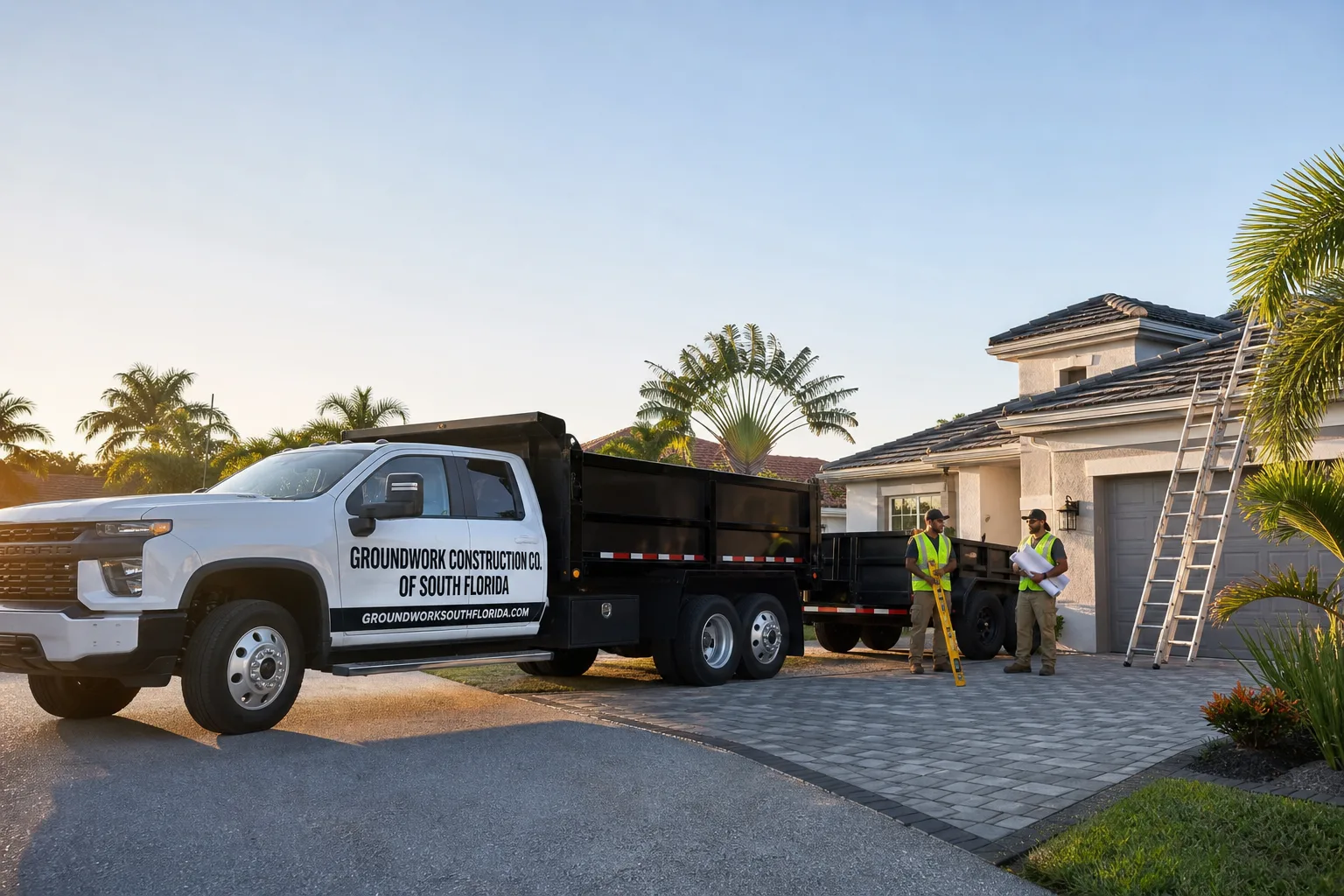
Trusted Kitchen Remodeling for South Florida Homeowners
A complete kitchen remodel in South Florida typically runs $14,000-$45,000 depending on layout changes, material selections, and whether you’re updating a compact Lake Worth galley or expanding a Boca Raton open-concept space. Most projects we handle move from design to completion in 6-10 weeks, with our team managing every trade so you don’t coordinate separate crews. Call (844) 665-0162 to talk through your timeline and get a free, itemized estimate.
We’ve seen what happens when South Florida homeowners juggle a cabinet installer, a separate countertop fabricator, and a tile crew who never communicate. Drawers hit new appliance handles. The quartz slab arrives before the cabinets are level. The project stretches from March to August because someone didn’t pull the right permit for Wellington’s building department. At Groundwork Construction Co., one team carries your kitchen from demolition through final walkthrough. We’re a single-source contractor, not a referral network dressed up as a generalist. Raymond Estevez built this company on the principle that homeowners deserve one accountable partner and genuine material choice, not whatever brand happens to be convenient for the builder that week.
South Florida’s climate shapes how we build here. The humidity that swells cabinet doors in July. The salt air that corrodes cheap hardware in coastal West Palm Beach homes. The afternoon thunderstorms that test window seals during a kitchen expansion. We factor these conditions into every specification, from moisture-resistant KraftMaid cabinet boxes to proper vapor barriers behind backsplash tile. You’re not getting a kitchen copied from a Phoenix or Chicago template.
What Our Kitchen Remodeling Service Includes
Full Kitchen Remodeling
This is Full Kitchen Remodeling: layout reconfiguration, electrical and plumbing relocation, new cabinetry, countertops, flooring, lighting, and appliance integration. You need this when your kitchen’s workflow fights you every evening or when you’re opening walls to connect with living space. Our crew handles structural assessment, permit drawings for South Florida municipalities, and every finishing trade. We don’t hand you off to a subcontractor after demo.
Cabinets & Countertops
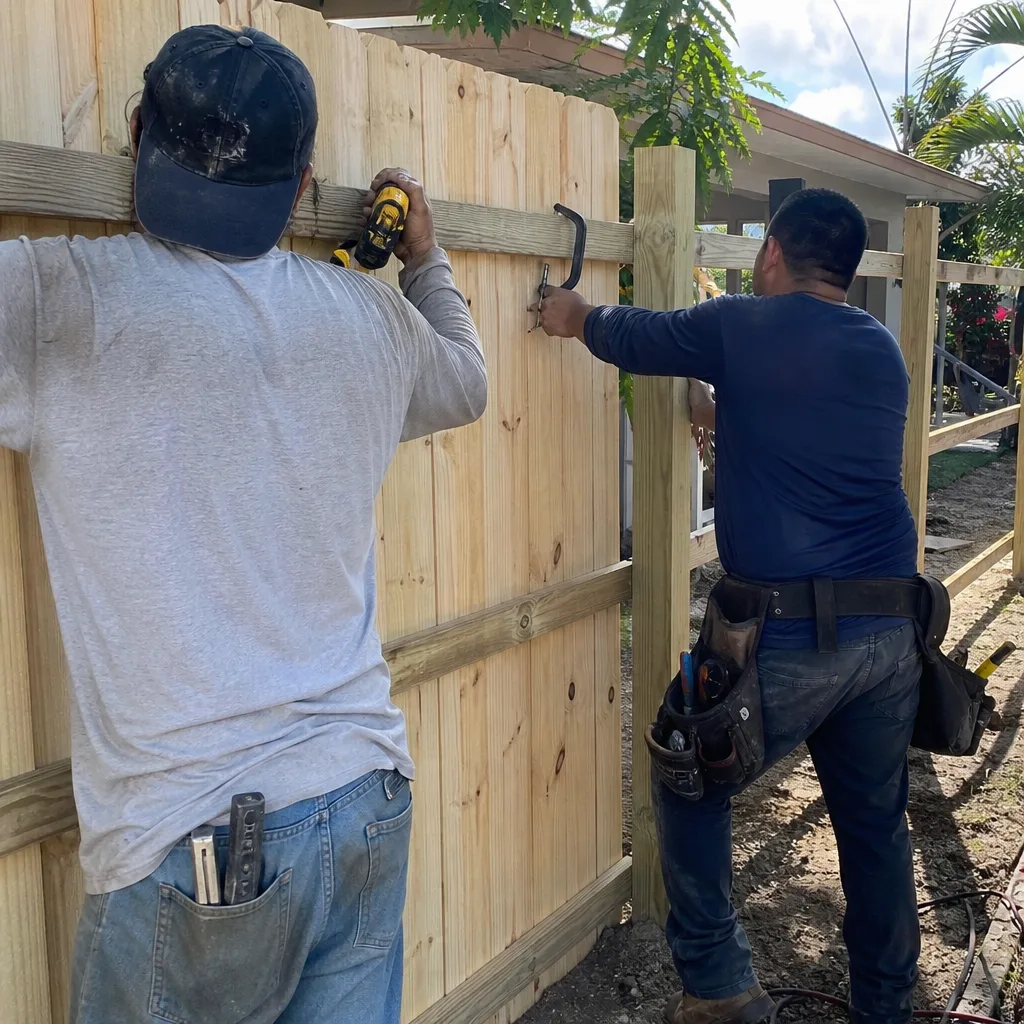
The visual and functional core of any kitchen, Cabinets & Countertops. We install KraftMaid and Wellborn cabinetry across multiple price tiers, paired with Cambria, Silestone, or Caesarstone quartz surfaces. You need this when doors won’t close square, drawers sag, or your laminate countertops have burned through near the cooktop. Our team measures with laser precision after cabinet installation settles, so your quartz seam lands where it should, not where a rushed fabricator needs it to.
Backsplash
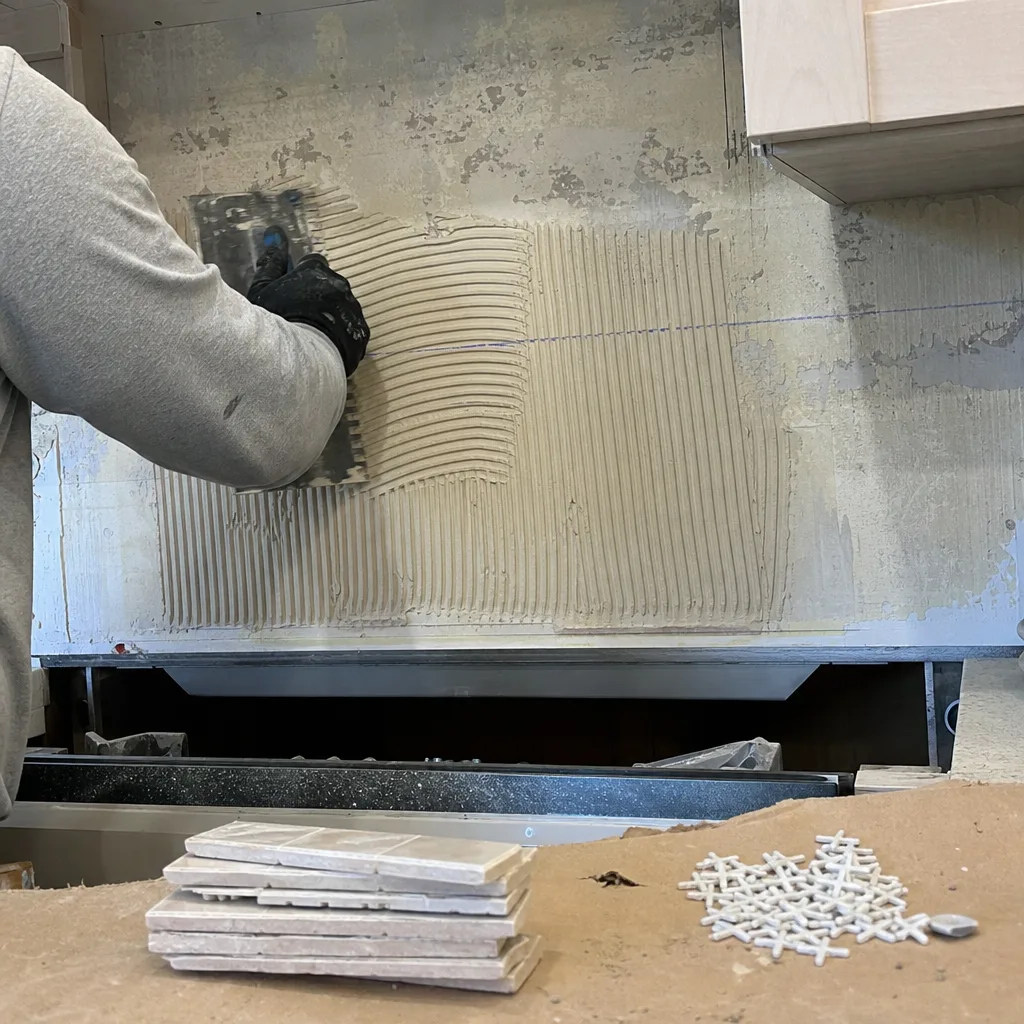
Backsplash, Tile & Flooring protection for the wall area between countertops and cabinets. You need this when painted drywall behind your range has absorbed years of grease, or when you want a visual anchor that ties cabinet color to countertop movement. We waterproof cement board properly, critical in South Florida’s humidity, and set tile with appropriate thinset for your substrate. No shortcuts that lead to cracked grout six months later.
Tile & Flooring
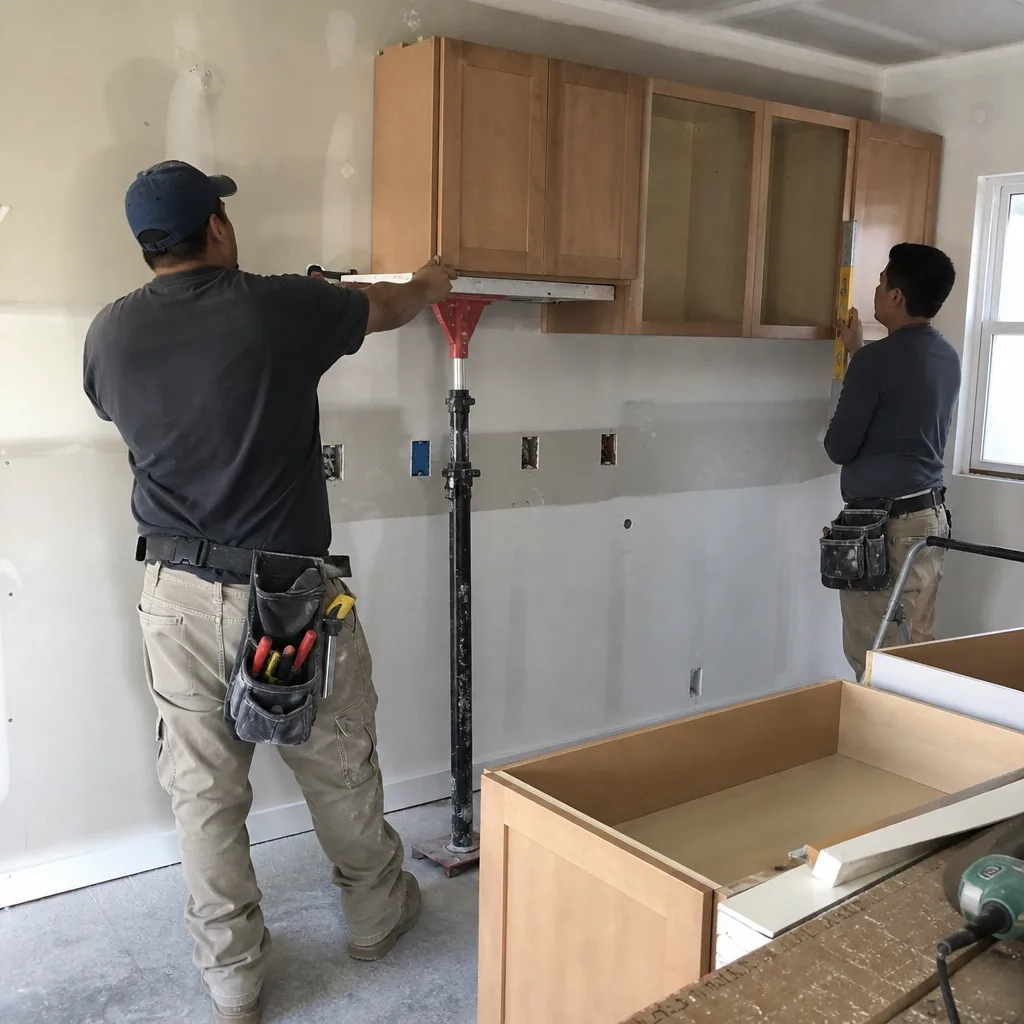
Durable, water-resistant surfaces that withstand dropped pots, pet traffic, and tracked-in sand from South Florida beaches. You need this when vinyl has peeled at the seams, when tile has cracked from improper subfloor prep, or when you’re extending flooring into a newly opened adjacent space. We assess subfloor flatness to within 1/8 inch over 10 feet, a standard many skip, and we let thinset cure properly before grouting in humid conditions.
Kitchen Design & Layout
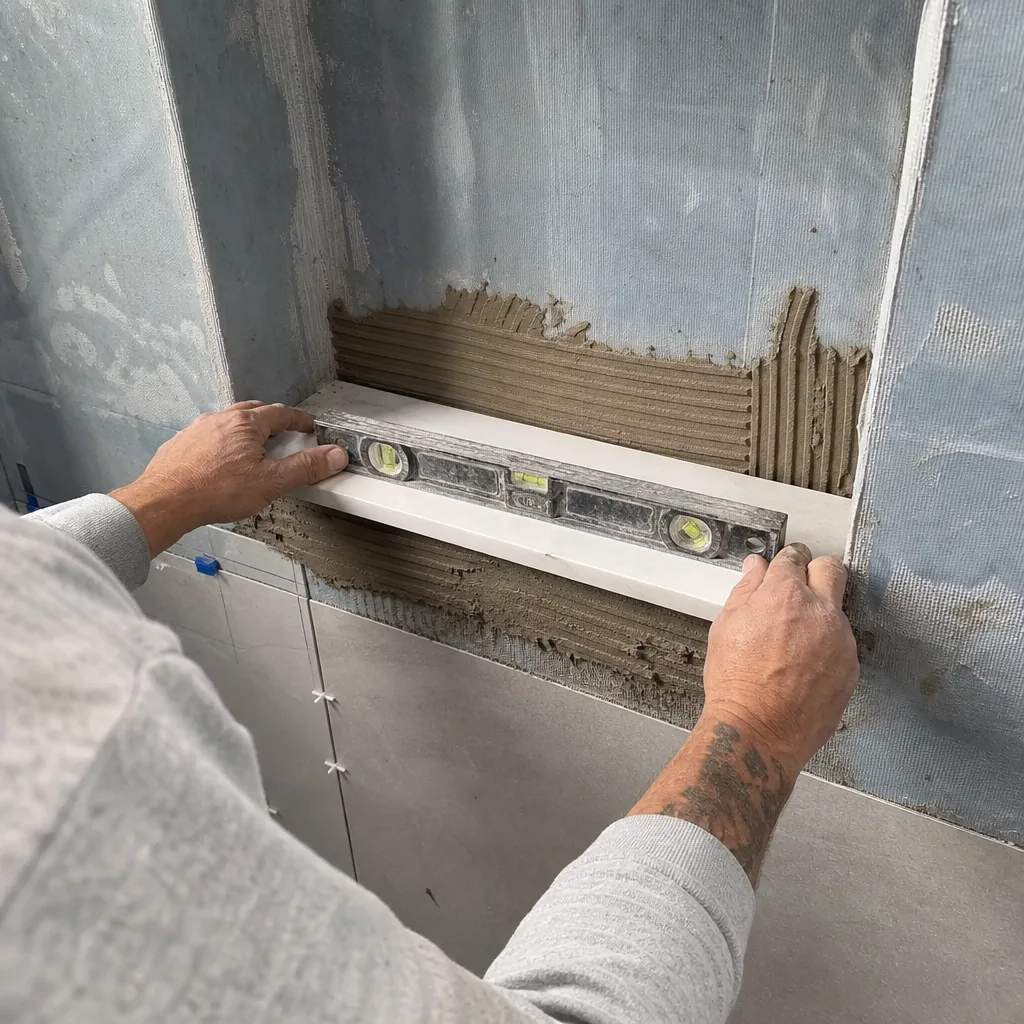
Spatial planning that accounts for how you actually cook, store, and gather. You need this when the refrigerator door blocks the pantry, when two people can’t prep simultaneously, or when you’re considering removing a wall for open concept. Raymond Estevez reviews every design personally before we finalize drawings. We model traffic flow, landing space near cooking zones, and sight lines to adjoining rooms. Built to spec, not to convenience.
Small & Partial Kitchen Remodels
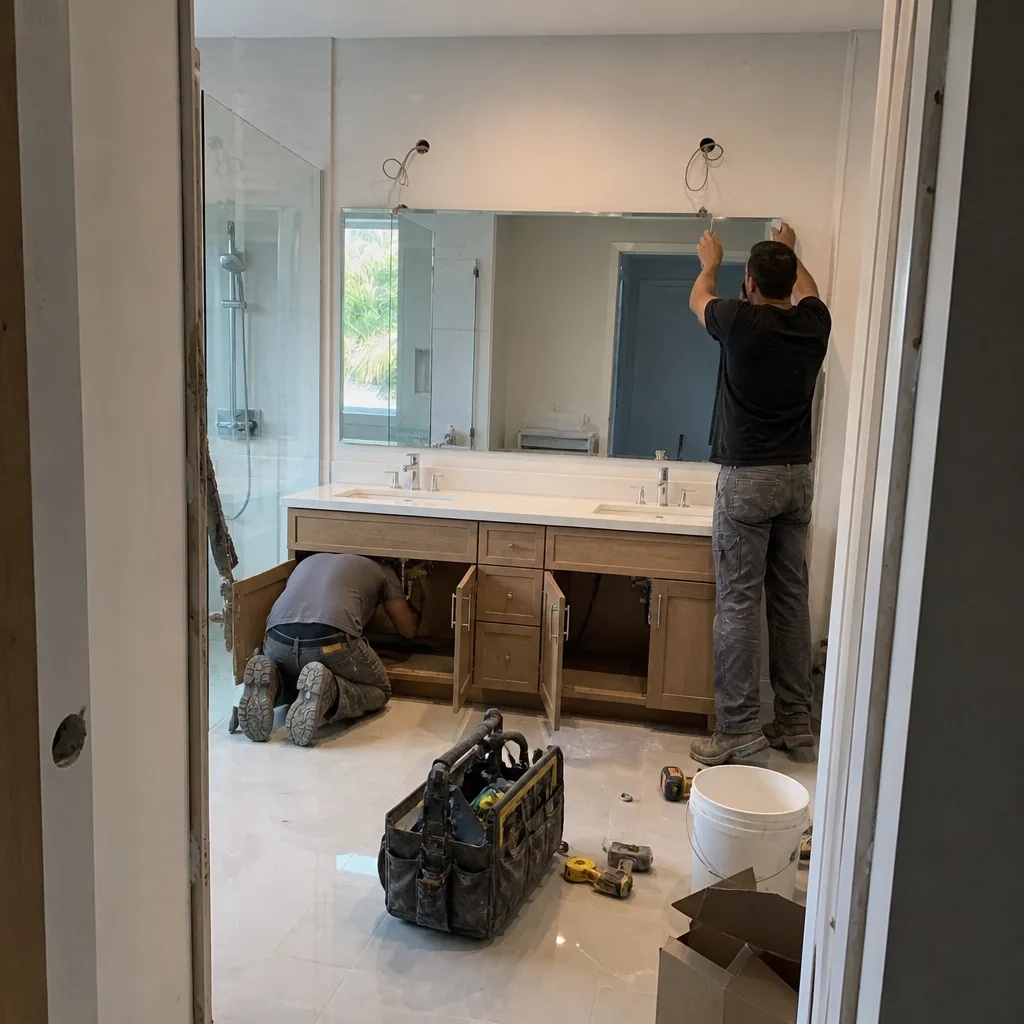
Targeted updates for homeowners who don’t need everything replaced. You need this when cabinets are sound but countertops date the space, when you want to reface rather than replace, or when budget allows phased improvements. We’ll tell you honestly what’s worth keeping and what isn’t. In older South Florida homes, we’ve saved clients thousands by preserving solid wood cabinet boxes and updating doors, hardware, and surfaces.
Cabinet Installation & Refacing
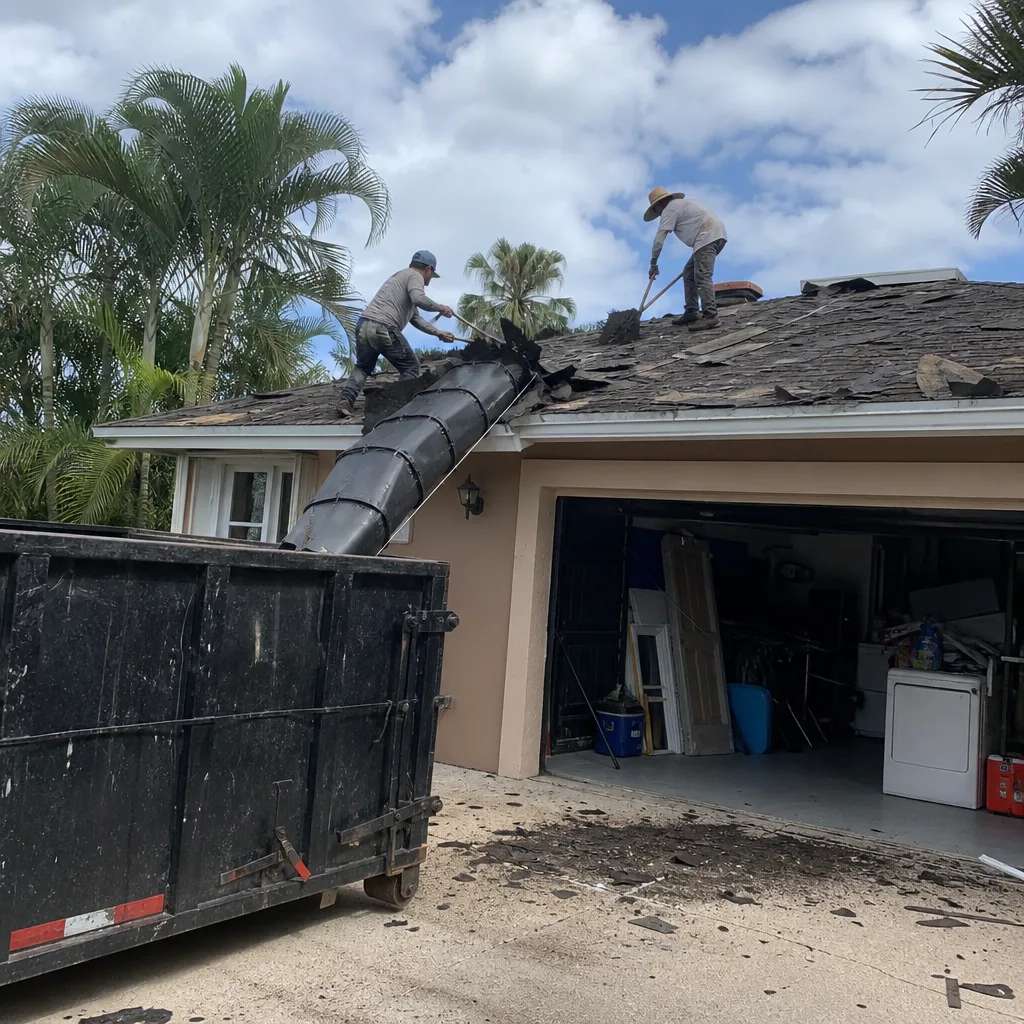
Cabinet Installation & Refacing: new cabinet boxes and doors, or new doors and veneer on existing frames. You need this when interiors are damaged but structures are sound, or when you want a new style without the cost of full replacement. We install KraftMaid boxes with proper shimming and attachment to studs, never just drywall anchors. For refacing, we match veneer grain direction and use heat-resistant adhesives that hold up when South Florida kitchens hit 85 degrees with the AC cycling.
Quartz & Granite Countertops
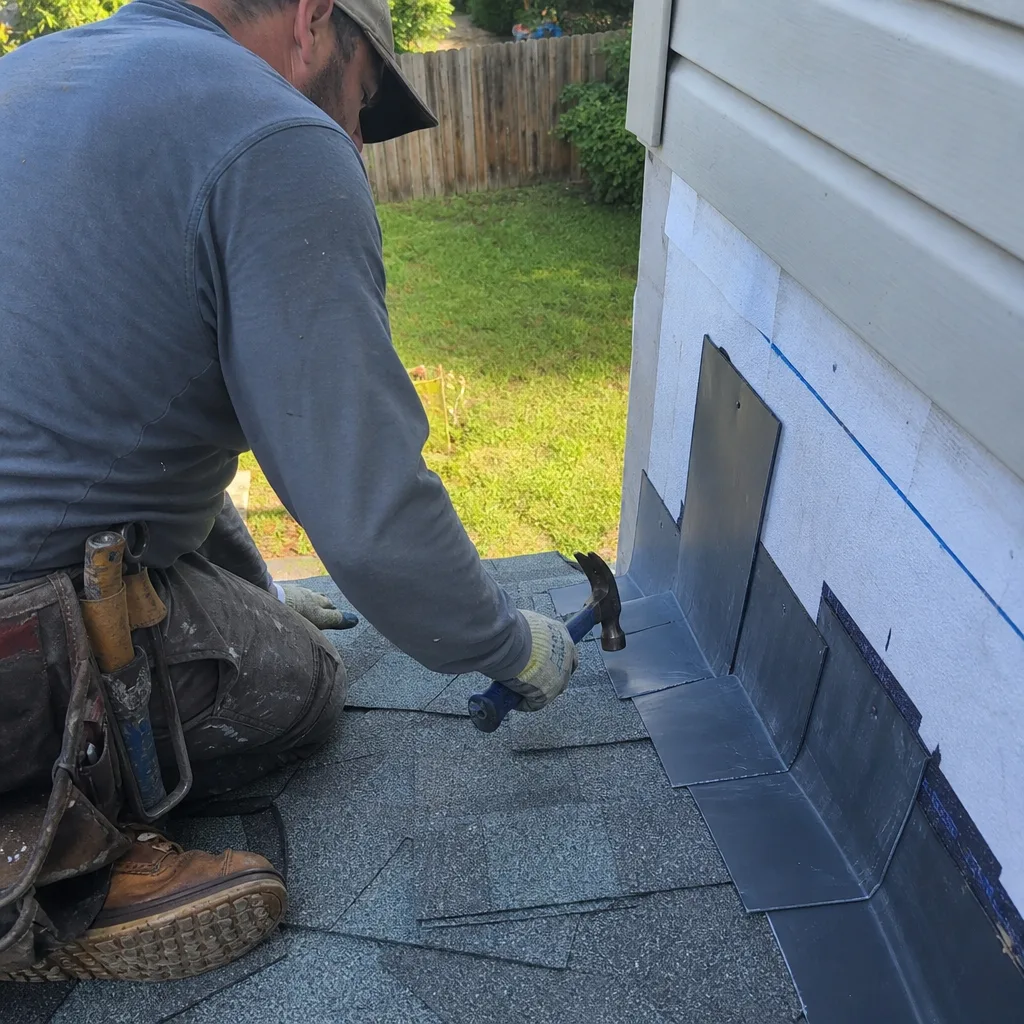
Engineered or natural stone surfaces fabricated to your kitchen’s exact dimensions. You need this when laminate has failed, when you need heat and scratch resistance, or when resale value matters. We template only after cabinets are installed and leveled, not from rough measurements that leave gaps. Cambria, Silestone, and Caesarstone each offer distinct color palettes and warranty terms; we’ll walk you through which suits your usage and aesthetic.
Kitchen Island Installation
Freestanding or anchored workspace that adds prep area, storage, and often seating. You need this when your kitchen lacks counter space, when you want a visual divider in an open plan, or when you’re adding appliances like a wine fridge or secondary sink. We assess floor load capacity, especially in South Florida slab-on-grade homes where plumbing runs can complicate anchoring. Electrical and ventilation integration happen through our team, not a separate electrician you have to schedule.
What happens when you call
- 1
A real person answersNo phone trees - you reach a local pro.
- 2
You get an upfront price rangeHonest numbers before anyone is dispatched.
- 3
A background-checked tech heads outLicensed & insured, dispatched right away.
- 4
You approve before work beginsNothing starts until you say go.
Brands We Service for Kitchen Remodeling
Our cabinet work centers on KraftMaid, one of the most specified brands in American residential construction. We’ve installed KraftMaid semi-custom lines in Wellington ranch homes and their full-custom options in North Palm Beach waterfront properties. Their dovetail drawer construction and soft-close hardware hold up to South Florida’s humidity better than budget alternatives we’ve replaced after three years. We specify their all-plywood box construction, not particleboard, because the difference matters when humidity swings 30% seasonally.
We also work extensively with Wellborn Cabinet, a family-owned manufacturer that offers solid wood construction at competitive price points. Their Aspire line fits tighter budgets without the veneer-over-MDF construction that fails at seam joints. For exterior projects that complement kitchen work, we’ve installed James Hardie siding on homes where kitchen expansions changed rooflines and wall configurations, ensuring the envelope matches the interior investment. Whether you have KraftMaid, Wellborn, or any other make, we can source, modify, or repair to match your existing kitchen. Our brand roster runs 50+ deep because you choose the material, we handle the build.
Signs You Need Kitchen Remodeling Right Now
- Your cabinets are literally falling apart. Doors that won’t align, drawers that jam, and shelves that sag indicate structural failure, not cosmetic wear. In South Florida’s humidity, particleboard cabinets absorb moisture and lose integrity faster than solid wood or plywood construction. We replace with materials rated for your climate.
- You’ve stopped cooking because the space frustrates you. When layout inefficiency drives you to takeout, your kitchen has become a liability, not an asset. The triangle between sink, range, and refrigerator should total 12-26 feet; many South Florida homes from the 1970s-1990s violate this fundamentally.
- Countertops are stained, burned, or separating at seams. Laminate surfaces delaminate with moisture exposure. Improperly supported stone develops cracks at sink cutouts. These aren’t just eyesores; they’re hygiene concerns and water damage risks to cabinet boxes below.
- Your kitchen is isolated from where your family actually lives. Wall removal for open concept requires structural assessment, proper beam sizing, and permits from South Florida building departments. We’ve engineered these openings in homes across West Palm Beach, Delray Beach, and Boca Raton, maintaining load paths while transforming how families use their space.
- You’re planning to sell within three years. Kitchen condition dominates buyer decisions and offer prices. But the wrong update, generic and cheap, can actually hurt resale. We guide material selections that match neighborhood expectations in your specific South Florida market, not national averages that don’t apply.
Our Kitchen Remodeling Process - Step by Step
- 1
In-home consultation and measurement. We visit your South Florida home, discuss how you use your kitchen, and document existing conditions with laser measurements and photographs. Raymond Estevez or a senior project lead conducts this personally. We note structural elements, electrical panel capacity, and plumbing locations that will shape design possibilities.
- 2
Design development and material selection. We produce floor plans and elevations for your review, then walk you through cabinet, countertop, flooring, and fixture options from our 50+ brand portfolio. You choose the brand, we handle the build. We provide itemized pricing with no hidden allowances.
- 3
Permit application and trade scheduling. We prepare construction documents and submit to your local South Florida building department. Our in-house team coordinates electrical, plumbing, and mechanical rough-ins without you managing multiple contractors. We know Wellington’s inspection schedule, Palm Beach County’s current backlog, and how to avoid common submission errors.
- 4
Demolition and construction. We protect adjacent spaces, remove existing materials, and execute structural, electrical, and plumbing work. Daily cleanup and a dedicated project contact keep you informed. We test all systems before closing walls.
- 5
Finish installation and final walkthrough. Cabinets, countertops, tile, fixtures, and appliances go in. We adjust doors and drawers, seal countertops per manufacturer specifications, and conduct a detailed walkthrough with you. Punch list items are resolved before final payment. Your warranty documentation and care instructions follow.
How Much Does Kitchen Remodeling Cost in South Florida?
A typical kitchen remodel in South Florida runs $14,000-$45,000. Small kitchen remodels, common in Lake Worth bungalows and older Delray Beach condos, fall at $9,000-$20,000. Cabinet installation alone ranges $4,000-$13,000 depending on linear footage and construction grade. Countertop installation adds $2,000-$6,500. Backsplash work runs $800-$2,500. A kitchen island installation, when you’re adding rather than replacing, typically costs $3,000-$10,000 including electrical and any plumbing.
Several factors move you within these ranges. Layout changes requiring wall removal and beam installation add structural engineering and permit costs. Moving plumbing or gas lines for relocated sinks or ranges requires licensed trade work. Material selection across our 50+ brand partnerships creates the widest variance, Cambria quartz commands premium over entry-level granite, and KraftMaid’s full-custom line sits above their standard offerings.
To avoid overpaying, get itemized quotes that separate materials from labor, specify exact product lines rather than generic descriptions, and confirm who’s pulling permits. Our free estimates break every line item so you compare accurately. We don’t bury markup in vague “project management” fees. Call (844) 665-0162 for your exact quote, estimates are free and carry no obligation.
Kitchen Remodeling Near South Florida - Our Service Area
We work across Palm Beach County and neighboring communities, with typical response times of same-day to 48 hours for consultations. Active project areas include Kitchen Remodeling in West Palm Beach, Kitchen Remodeling in North Palm Beach, and Kitchen Remodeling in Palm Beach Gardens, plus Wellington, Boynton Beach, Boca Raton, Belle Glade, Canal Point, Bryant, Clewiston, Delray Beach, and Lake Worth. From driveway to roofline, one contractor handles every phase of your home’s transformation.
Serving South Florida, FL - Our Local Coverage Area
We’re based in the South Florida area and know this community well. Use the map below to see our service coverage - if you’re nearby, we can almost certainly help.
Frequently Asked Questions - Kitchen Remodeling in South Florida
Kitchen remodeling is the comprehensive renovation of a kitchen’s layout, surfaces, fixtures, and systems to improve function, aesthetics, and value. At Groundwork Construction Co., this ranges from targeted cabinet and countertop updates to full gut renovations with wall removal and reconfigured plumbing and electrical. Every project is managed by our in-house team, not handed off to unknown subcontractors.
Most kitchen remodels in South Florida take 6-10 weeks from demolition to final walkthrough, with smaller partial updates finishing in 3-5 weeks. Timeline extends when structural changes, custom material orders, or municipal permit delays occur. We provide a detailed schedule at contract signing and update you weekly on progress.
Complete kitchen remodeling in South Florida typically costs $14,000-$45,000, with small kitchen remodels at $9,000-$20,000 and individual elements like cabinet installation at $4,000-$13,000. Your final price depends on layout changes, material selections from our brand portfolio, and any structural or systems work required. Call (844) 665-0162 for a free, itemized estimate specific to your space.
Yes, we install and service KraftMaid cabinetry extensively across South Florida, from their standard semi-custom lines to full-custom options. We specify all-plywood construction and proper hardware for humid climates, and we can match or replace components within their current product range. Whether you have KraftMaid or any other make, we can help.
We don’t classify kitchen remodeling as emergency service, but we do accommodate urgent situations like post-insurance-damage rebuilds or pre-sale deadlines with accelerated scheduling when possible. Our standard consultation response is same-day to 48 hours across South Florida. For true emergencies like water damage requiring immediate mitigation, we can refer you to restoration specialists and then execute the rebuild.
We honor all manufacturer warranties on materials installed, including cabinet, countertop, and fixture warranties from brands like KraftMaid, Cambria, and Silestone. Our workmanship is backed by our commitment to resolve any installation-related issues that arise. Specific warranty terms vary by product line; we document yours clearly at project completion.
Clear all cabinets and drawers, relocate or protect items in adjacent rooms, and establish a temporary cooking area elsewhere in your home. We protect floors and furnishings with barriers and dust containment, but the space will be inaccessible for several weeks. We’ll review a complete preparation checklist at your pre-construction meeting so nothing surprises you.
Schedule Your Kitchen Remodeling Service in South Florida Today
Call (844) 665-0162 to speak with Raymond Estevez or a senior project lead about your kitchen. We’ll schedule a free, in-home consultation, deliver an itemized estimate with no obligation, and show you exactly how one accountable team transforms your space from demolition through final detail. From driveway to roofline, Groundwork Construction Co. is your single-source partner for every layer of your home.
Written by Raymond Estevez, Owner at Groundwork Construction Co., serving South Florida.