
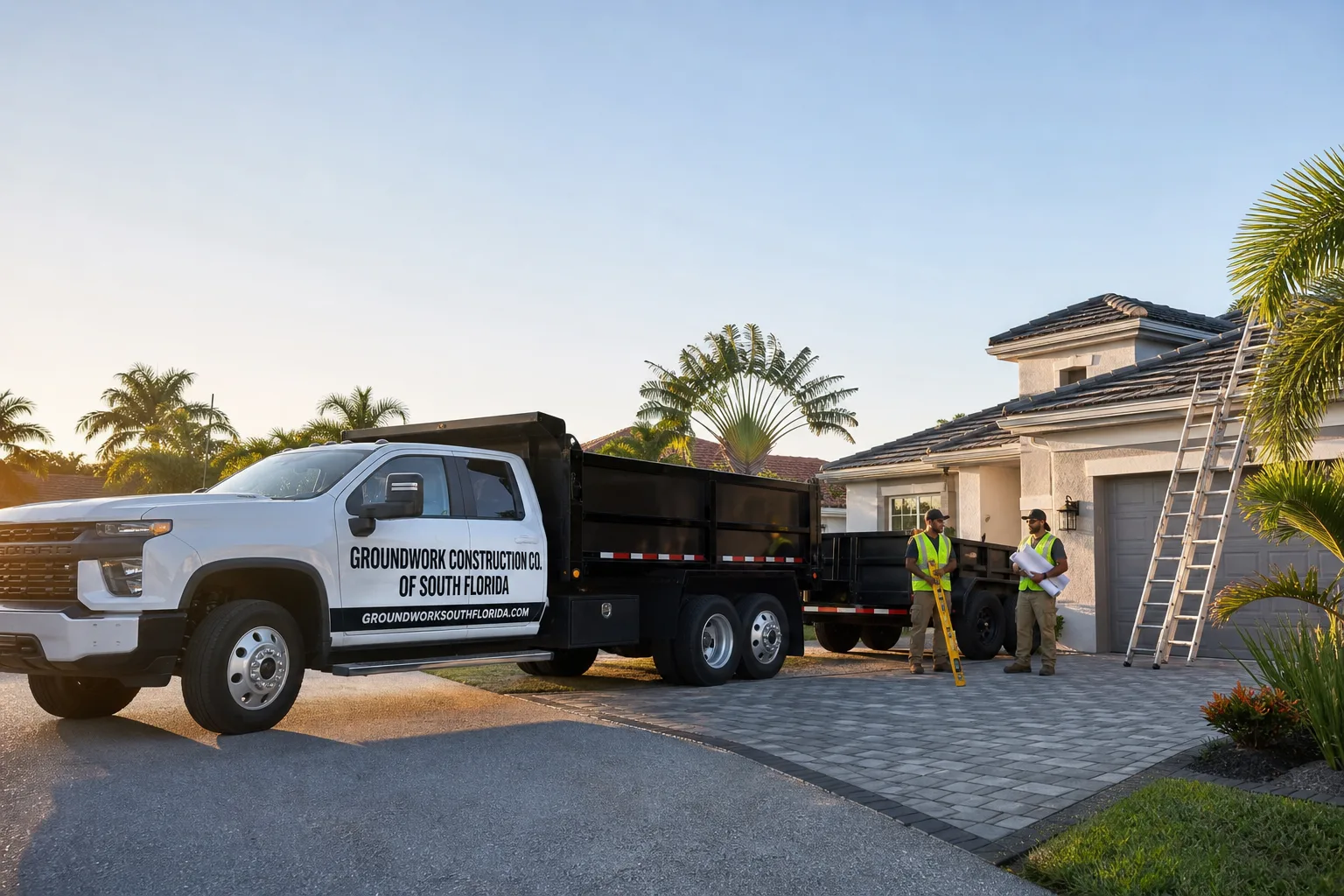
Paver Driveways in Sunset, FL - What to Expect
A paver driveway installation in Sunset typically runs $7,000-$18,000 for a standard two-car residential driveway, with most projects completed in 5-8 business days from excavation to final compaction. You’ll choose between concrete pavers in varying thicknesses and textures, with Belgard, Unilock, and Tremron being the brands we most often specify for Miami-Dade’s climate and code environment. Call (844) 665-0162 and we’ll walk your property, measure the existing apron, and give you a written estimate with line-item choices.
Sunset’s flat, oolitic limestone base and shallow water table mean drainage prep isn’t optional here, it’s what separates a driveway that lasts 20 years from one that heaves after the first summer thunderstorm season. We’ve replaced too many paver installations in the 33173 area where the original contractor skipped the geotextile layer or used inadequate base rock, and the homeowner paid twice.
How We Build a Paver Driveway in Sunset
Every paver driveway we install in Sunset follows a five-stage sequence. Here’s what happens, what takes the time, and what you’ll need to decide before we move to the next phase.
Stage 1: Demo and subgrade exposure (Day 1)
We remove the existing driveway surface, whether that’s cracked concrete, thin asphalt, or a previous paver installation that failed. In Sunset, this almost always means cutting and hauling away material over that near-zero-elevation limestone shelf. We expose the native soil, check for organic matter or uncompacted fill, and photograph the subgrade for your records. You’ll decide now whether to expand the driveway footprint, add a walkway connection, or keep the original dimensions.
Stage 2: Drainage and base installation (Days 1-2)
This is where Sunset’s geography matters most. We install a minimum 6-inch aggregate base of crushed limestone, compacted in 2-inch lifts with a plate compactor and vibratory roller. Given the shallow water table in 33173, we often add a French drain or slot drain at the street apron to move water away from the subgrade before it saturates. You’ll choose the base depth here: 6 inches handles standard passenger vehicles; 8-10 inches is worth it if you park a work truck, RV, or if your home sits on particularly spongy fill near the western edge of Sunset.
Stage 3: Edge restraint and screed layer (Day 3)
We set concrete or aluminum edge restraints along the perimeter, then lay and level a 1-inch bedding course of coarse concrete sand. The screed rails go down, we pull the sand to exact grade, and we don’t walk on it afterward. Your paver pattern choice gets locked in here: herringbone carries vehicle loads best; running bond works for straight, modern aesthetics; basketweave suits older Sunset ranch homes from the 1970s.
Stage 4: Paver laying and cutting (Days 3-5)
We lay pavers from the street upward, maintaining consistent joint spacing with plastic spacers. Cut pieces go against the house, the garage slab, and any curved borders. In Sunset, we frequently encounter garage slabs that settled unevenly after decades on that limestone base, so we shim and feather transitions rather than forcing level across a dip. You’ll do a walkthrough mid-stage to confirm the pattern and any soldier-course border details.
Stage 5: Compaction, joint sand, and final inspection (Day 5-6)
We vibrate the pavers into the bedding course, sweep polymeric sand into the joints, vibrate again, and seal the surface if you’ve opted for it. The polymeric sand hardens when wet, locking the assembly together and preventing weed growth. We photograph the completed work, note any utility clearances, and leave you with care instructions. Most paver driveways in Sunset are drivable the next morning.
The Material Choices You’ll Actually Make
Paver driveways aren’t a single product. Here are the real decisions that move your price and your long-term satisfaction:
- Pavers vs. permeable pavers: Standard interlocking concrete pavers shed water to the edges, which works fine with proper drainage. Permeable pavers let water pass through joints into the base, reducing runoff and meeting Miami-Dade’s stormwater management preferences for larger lots. They cost 20-30% more and require a deeper, open-graded base, but they’re the right call if your Sunset home sits on a lot with poor natural drainage or if you’re expanding impervious surface area as part of a larger project.
- Thickness - 60mm vs. 80mm: 60mm pavers handle residential passenger traffic. 80mm pavers resist cracking under heavier loads and edge chipping from delivery trucks or landscaping equipment. For a standard two-car driveway in Sunset, 60mm is adequate. If your driveway doubles as a work zone or you park a 3/4-ton truck, the upgrade to 80mm pays off.
- Texture and slip resistance: Smooth tumbled pavers look refined but can get slick during South Florida’s summer downpours. Textured or beveled-edge pavers add grip and hide minor staining from oak leaf tannin or irrigation hard water, both common in Sunset’s mature-canopy neighborhoods. We typically steer homeowners toward a medium-texture finish that reads clean without being polished.
- Color and tone: Warm terra cotta and limestone-look pavers dominate Sunset’s streetscape, matching the 1960s-1980s ranch architecture. Gray and charcoal tones work for post-1992 rebuilds with stucco and metal roof palettes. We bring physical samples to your driveway so you see them against your home’s actual paint and roof color in natural light, not under a showroom fixture.
- Sealant - matte, wet-look, or none: Sealant deepens color and resists oil staining but requires reapplication every 3-4 years in South Florida’s UV exposure. Unsealed pavers age naturally and are easier to spot-repair. This is a maintenance-preference decision, not a durability requirement.
What Paver Driveways Cost in Sunset, FL
| Scope | Price Range |
|---|---|
| Standard two-car paver driveway (approx. 600 sq ft) | $7,000 - $12,000 |
| Expanded driveway with walkway or apron extension | $10,000 - $15,000 |
| Large footprint or premium material upgrade | $14,000 - $18,000 |
Five variables push your job toward the low or high end of these ranges:
1. Existing surface condition: Removing thin, cracked concrete is straightforward. Hauling out a thick, steel-reinforced slab or dealing with an abandoned asphalt overlay adds demo hours and disposal weight.
2. Base repair needs: Sunset’s shallow water table means some driveways sit on saturated or poorly compacted fill. If we hit standing water or organic soil during excavation, we replace it with structural fill and may need a geogrid stabilization layer. This adds $800-$2,500 depending on depth and area.
3. Material grade and brand: Entry-level concrete pavers from regional manufacturers run $3-$5 per square foot. Premium lines from Belgard or Techo-Bloc with enhanced colorfastness warranties and tighter dimensional tolerances run $6-$9 per square foot. The material difference on a 600-square-foot driveway is roughly $1,800-$2,400.
4. Pattern complexity and cutting: Herringbone patterns with soldier-course borders require 15-20% more cuts than a simple running bond. Circular inlays or fan patterns add significant labor. We price these specifically in your estimate, not as a surprise.
5. Permit and inspection scope: Unincorporated Miami-Dade County requires a building permit for any new driveway or driveway expansion that changes impervious surface calculations. If your Sunset home is pre-1993, the permit review may trigger questions about hurricane strapping or impact-rated openings if the project is part of a larger renovation. We handle the submittal, but the county’s review timeline can add 2-3 weeks before we break ground.
Your written estimate includes: all demolition and haul-away, base preparation and compaction, edge restraints, pavers, joint sand, and final compaction. It does not include: permit fees (typically $200-$400 in Miami-Dade), tree removal or root pruning, irrigation line relocation, or electrical work for lighting. We’ll flag any of these during the site visit so you’re not surprised.
What Sunset Homes Specifically Do to This Job
Sunset’s housing stock and regulatory environment shape every paver driveway we install here. The 33173 corridor is dominated by 1960s-1980s CBS ranch homes built during Miami-Dade’s westward suburban expansion, many with original driveways poured when “code” meant far less than it does today. We regularly encounter garage aprons that settled independently from the house slab, creating a 2-3 inch step that has to be feathered or cut down rather than masked with thin pavers.
The post-Andrew rebuilding reality matters too. Sunset sits in that corridor where Hurricane Andrew’s 1992 destruction led to one of the nation’s strictest building codes. Any construction on pre-1993 structures triggers mandatory upgrades to hurricane strapping, impact-resistant openings, and structural connections that contractors from Broward County simply don’t encounter at the same rate. If your paver driveway project is part of a full exterior renovation - say, paired with a garage conversion or an ADU addition - the permitting path gets more complex, not less. Homeowners often pair driveway work with our Garage Conversion ADU in Sunset to create rental income, or with ADU Design & Permitting in Sunset when they’re expanding the home’s footprint.
Then there’s the water. Sunset’s flat oolitic limestone base and near-zero elevation give it one of the shallowest water tables in Miami-Dade County. Excavation for driveway base work almost immediately encounters groundwater, and standing water after summer thunderstorms regularly undermines poorly compacted fill. We’ve replaced paver driveways in Sunset where the previous installer skipped the geotextile fabric or used recycled concrete base that fractured under hydraulic pressure. We don’t skip those steps.
Miami-Dade’s product-approval system adds another layer. Every structural and envelope component needs a Miami-Dade Notice of Acceptance (NOA), and we verify NOA numbers on pavers, edge restraints, and drainage fittings before submittal. Out-of-county crews unfamiliar with this workflow get caught at inspection, delaying projects by weeks. Our Sunset crew has been through Miami-Dade’s permitting office enough times to know which plan reviewers flag which details.
If you’re considering this as part of a broader exterior project, our Driveway & Pavers in Sunset page covers the full scope, and our Driveway & Pavers service hub details how our crew coordinates with roofing, window, and fencing teams when you’re addressing everything at once.
Serving Sunset, FL - Our Local Coverage Area
We’re based in the Sunset area and know this community well. Use the map below to see our service coverage - if you’re nearby, we can almost certainly help.
Frequently Asked - Paver Driveways in Sunset
Most residential paver driveways in Sunset are completed in 5-8 business days from the start of excavation, assuming standard dimensions and no permit delays. Miami-Dade County’s permit review can add 2-3 weeks for new or expanded driveways, particularly if your home is pre-1993 and triggers additional structural review. We schedule excavation only after permit release to avoid weather exposure of an open subgrade. Call (844) 665-0162 and we’ll check current county turnaround times for your specific address.
Yes, if you’re installing a new driveway or expanding an existing one in unincorporated Miami-Dade County. The permit ensures your project meets impervious-surface calculations and, for pre-1993 homes, may trigger review of structural connections if the work is part of a larger renovation. We prepare and submit the permit package as part of our service. If you’re only resurfacing an existing driveway of identical dimensions without changing drainage patterns, some jurisdictions allow a simpler resurfacing notification, but we verify this case-by-case.
In most cases, yes. A standard paver driveway installation doesn’t require relocating plumbing or electrical unless you’re changing the driveway footprint or the existing lines were run shallow and unprotected through the work area. During our site visit, we locate visible utility markers and flag any conflicts. If your Sunset home has an older garage with surface-run conduit or an abandoned sprinkler line, we note it in the estimate and address it before excavation begins.
Concrete repair or resurfacing costs less upfront, typically $2,000-$5,000 for patch and overlay work, but it doesn’t solve subgrade or drainage problems. If your Sunset driveway is cracking due to base failure or water saturation, pavers with proper base reconstruction give you a 20-year solution rather than a 3-5 year bandage. For driveways with isolated cosmetic cracking and sound subgrade, repair may be adequate. We’ll tell you honestly which path makes sense after seeing your specific conditions.
We warranty our workmanship, including base preparation, compaction, and installation, for a period we specify in your written contract. Manufacturer warranties on the pavers themselves vary by brand and product line, typically covering structural integrity and colorfastness for 10 years to lifetime depending on the specific paver you select. The warranty doesn’t cover damage from heavy equipment, oil saturation, or failure to maintain joint sand levels. We explain the full terms before you sign, not after.
Get Your Sunset Paver Driveway Estimate
We’ll walk your property, measure your existing driveway, check the subgrade conditions that matter in Sunset’s 33173 environment, and deliver a written estimate with material options from our paver portfolio. No deposit required to schedule, and you’ll speak with Raymond Estevez or a senior member of our crew, not a sales closer. Call (844) 665-0162 or request your free estimate through our site.
Written by Raymond Estevez, Owner at Groundwork Construction Co., serving Sunset and South Florida homeowners since our founding.