
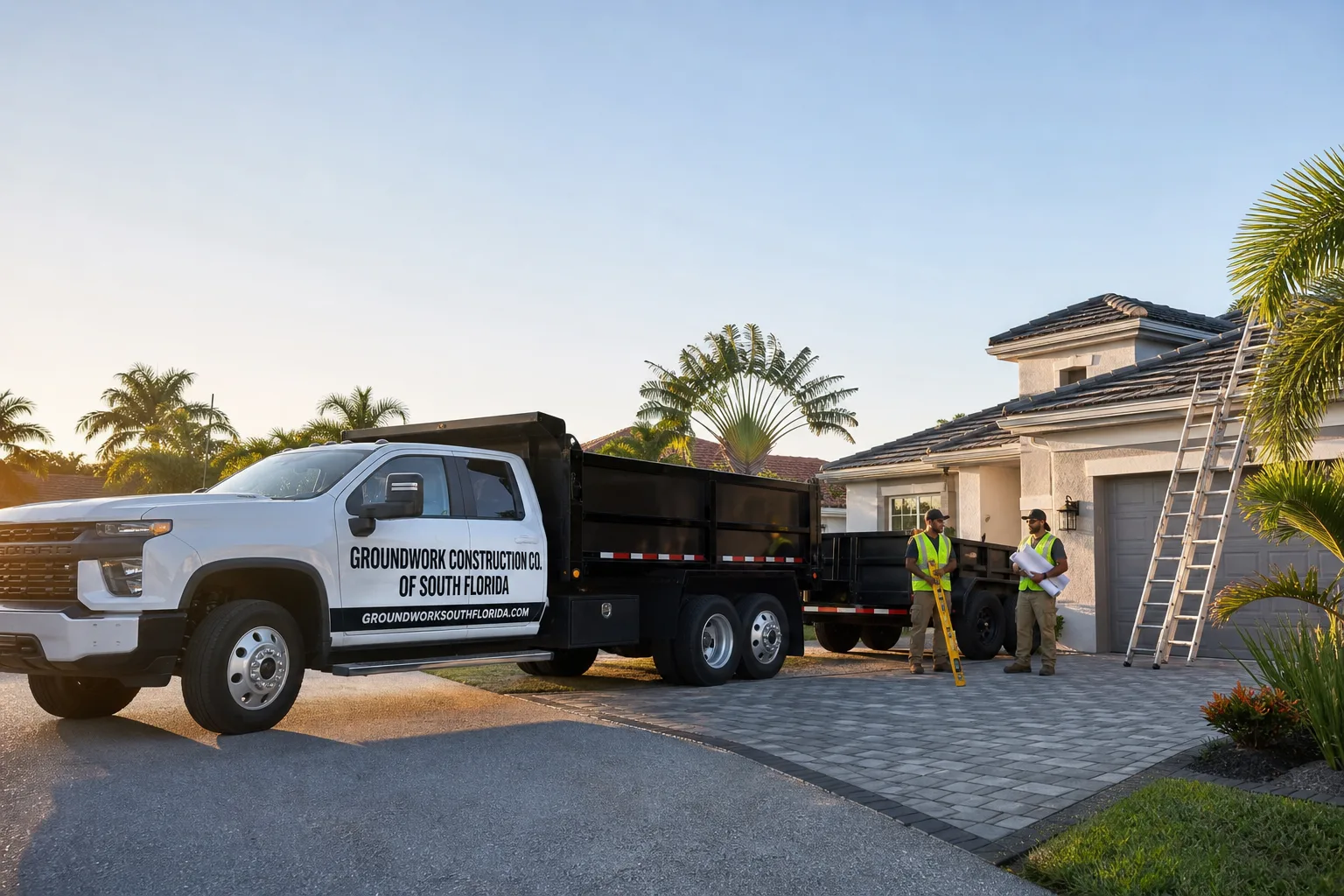
How Much Do Paver Driveways Cost in West Little River, and How Long Do They Take?
Paver driveway installation in West Little River typically runs $7,000-$18,000 for a standard residential job, with most single-story homes on 33147 lots finishing in 4-7 business days from demo to final compaction. We handle permitting through Miami-Dade County’s EPERMITS system, source materials from Belgard, Unilock, Tremron, and Techo-Bloc, and keep crews on-site until compaction and edge restraint are locked in. Call (844) 665-0162 to schedule a free on-site estimate - we’ll measure, check drainage, and give you a written quote with line-item specs before we leave.
Our Paver Driveway Process - What Happens and When
We’ve installed paver driveways across enough 33147 properties to know where the delays hide. Here’s how we sequence the work, what you decide at each stage, and how long each phase takes on a typical West Little River lot.
Stage 1: Site measure and drainage assessment - Day 1, 1-2 hours
We walk the existing driveway with you, check slope toward the street or swale, and look for slab moisture issues common near the Miami Canal corridor. You’ll decide whether to keep the existing concrete and overlay with thin pavers (rarely recommended here) or full-demo to base rock. We mark utility paths, note any sprinkler heads that need relocation, and photograph the approach for our crew foreman. If your home is part of a full Driveway & Pavers in West Little River overhaul, we coordinate scope now.
Stage 2: Demo and base excavation - Days 1-2
We remove the existing surface, whether it’s cracked concrete from the 1960s or an asphalt patch job. Excavation goes 8-10 inches below finish grade for vehicular loads - deeper than pedestrian pavers because your sedan isn’t the heaviest thing crossing this surface. We haul off debris same-day and rough-grade for drainage. Here’s where we discover surprises: tree roots from old ficus hedges, undocumented utility runs, or saturated base from poor lot drainage. We flag anything unexpected before moving forward.
Stage 3: Base installation and compaction - Days 2-3
We lay geotextile fabric, then dump and spread crushed limestone screenings in 4-inch lifts, compacting each layer with a plate compactor until we hit 98% Proctor density. This is the stage most shortcuts happen - and where we don’t. A paver driveway in West Little River’s flat, near-sea-level terrain lives or dies on base drainage. We crown the surface 1/4 inch per foot toward the street or a French drain if the lot has no natural fall. You’ll approve the base before we proceed; this is your last chance to adjust width or radius without material waste.
Stage 4: Paver laying and cutting - Days 3-5
We set screed rails in bedding sand, lay pavers in your chosen pattern, and cut border pieces with a wet saw. Most 33147 driveways use running bond or herringbone for stability under turning wheels; circular patterns look sharp but require more cuts and labor. We install edge restraint in concrete along the perimeter - not plastic spikes, which pull out in our saturated soils. You’ll do a walk-through before we sand the joints.
Stage 5: Joint sand, compaction, and final cleanup - Day 5-7
We sweep polymeric sand into joints, vibrate the surface to settle and lock everything, then mist-activate the sand binder. The driveway is usable immediately for foot traffic; we recommend waiting 24 hours before parking on it to let the sand fully cure. We leave you with care instructions and our contact for any settling issues in the first year.
The Paver Choices You’ll Actually Decide Between
- Concrete pavers (standard): The workhorse choice. 60mm thickness handles passenger vehicles fine; 80mm if you park a work truck or trailer. Colors fade gradually in Miami-Dade’s UV but won’t structurally fail. Budget-friendly, widely stocked, easy to match for future repairs. Best for homeowners who want a clean look without premium spend.
- Tumbled concrete pavers: Same material, factory-processed for rounded edges and antique texture. Hides tire marks and minor staining better than smooth pavers. Costs 15-25% more. Suits the mid-century ranch aesthetic common in West Little River’s 1950s-1970s housing stock.
- Permeable pavers: Open-graded base and wider joints let water percolate through, reducing runoff. Required by some Miami-Dade stormwater management plans for large impervious areas. Higher material cost, specialized base installation, but can eliminate need for a separate drainage system on flat lots. Worth considering if your property ponds after heavy rain.
- Clay brick pavers: Genuine fired clay, not concrete dyed red. Color holds decades longer than concrete in UV. Higher cost, narrower size range, softer surface prone to chipping under heavy loads. We source from specific runs with proven Miami-Dade durability; not all clay pavers meet the freeze-thaw and salt-resistance standards our climate demands.
- Pattern and border decisions: Herringbone carries shear loads best for driveways. Running bond works for straight, single-car approaches. Soldier course borders in contrasting color frame the field and hide edge cuts. We mock up a 4×4 sample on-site before full production so you’re not guessing from a showroom photo.
What Paver Driveways Cost in West Little River, FL
| Component | Typical Range |
|---|---|
| Paver driveway installation (complete) | $7,000 - $18,000 |
| Small driveway (1-car, 10×20 ft) | $5,500 - $9,000 |
| Standard driveway (2-car, 20×20 ft) | $10,000 - $14,000 |
| Large or extended driveway (3-car, circular) | $15,000 - $18,000+ |
| Base repair / drainage correction (if needed) | $800 - $2,500 |
| Permit and inspection fees (Miami-Dade County) | $350 - $750 |
Five factors push your job to the low or high end of that paver driveway range:
1. Existing surface condition. A thin asphalt overlay comes out fast and cheap. A 6-inch reinforced concrete slab from 1962 with rebar grid takes longer, costs more to break and haul.
2. Drainage fixes required. Flat lots near the Miami Canal corridor often need French drains, catch basins, or regrading to meet county stormwater standards. This adds labor and materials but prevents future failure.
3. Paver material grade. Standard 60mm concrete pavers start around $3-$5 per square foot material cost. Premium tumbled, permeable, or clay brick runs $6-$10+. The difference on a 400-square-foot driveway is $1,200-$2,000 in material alone.
4. Cut complexity and pattern. Straight rectangles with a soldier border: efficient. Radius cuts, fan patterns, multiple color inlays: more saw time, more waste, more labor.
5. Permit scope. Miami-Dade County requires building permits for any driveway modification affecting drainage or impervious surface. Simple replacement in kind moves faster; expansion or significant regrading triggers plan review and inspection scheduling that adds time but not necessarily huge cost.
Our written estimates include demo, haul-off, base materials, pavers, edge restraint, joint sand, compaction, and permit coordination. What’s typically separate: sprinkler relocation, tree removal, or connecting new drainage to municipal storm systems.
What West Little River Homes Specifically Do to This Job
West Little River isn’t like working in Fort Lauderdale or Miami proper. The 33147 ZIP sits unincorporated in Miami-Dade County, which means no city building department to walk your permit through - everything runs through the county’s EPERMITS portal, and everything meets High-Velocity Hurricane Zone standards even when the job seems far from wind-related.
The housing stock shapes our approach. These 800-1,400 square foot CBS ranch homes from the 1950s-1970s typically sit on slab foundations with original driveways poured when cars were smaller and codes were looser. We regularly find driveways pitched toward the house, trapping moisture against slab edges - a problem in near-sea-level terrain where the water table sits high. Our base prep includes checking that condition and correcting pitch where possible.
Permitting reality: even a driveway replacement can trigger Miami-Dade’s Notice of Acceptance documentation requirements if we’re using permeable pavers or modifying impervious surface ratios. Contractors who work mostly in incorporated cities often miss this. We’ve learned to submit paver manufacturer data sheets with the initial application, not after the inspector asks. It saves a week.
The climate finishes what the soil starts. Summer thunderstorms on flat lots create standing water that delays demo and base work. We watch forecasts and sequence accordingly - starting excavation when we have a 48-hour dry window, not because we’re delicate, but because compacting saturated limestone screenings is a waste of your money and our reputation. Our Driveway & Pavers crew covers West Little River specifically enough to know which blocks drain poorly and which don’t.
Homeowners here often pair exterior hardscaping with larger property upgrades. We’ve seen increasing interest in ADU Design & Permitting in West Little River and Garage Conversion ADU in West Little River as families look to expand the footprint of these compact mid-century homes. When we’re already on-site for a paver driveway, it makes sense to coordinate scope - one crew relationship, one permitting timeline, one accountable contractor.
Serving West Little River, FL - Our Local Coverage Area
We’re based in the West Little River area and know this community well. Use the map below to see our service coverage - if you’re nearby, we can almost certainly help.
Frequently Asked - Paver Driveways in West Little River
Most residential paver driveways in 33147 finish in 4-7 business days, assuming no drainage surprises and normal Miami-Dade permitting turnaround. Weather delays from summer thunderstorms can add 1-2 days if base work gets rained out. Call (844) 665-0162 and we’ll check the forecast before we schedule your start date.
Yes - because West Little River is unincorporated Miami-Dade County, any driveway work affecting drainage, impervious surface, or curb cut requires a county building permit through the EPERMITS system. We handle application, plan submission, and inspection scheduling as part of our project management. The permit fee typically runs $350-$750 depending on scope.
Usually yes, if lines are properly located and depth-marked. We use utility locating services before demo and hand-dig near known sprinkler runs. Sprinkler heads at driveway edges often need relocation - we sub that to a licensed irrigation contractor and price it separately so you’re not surprised. Underground plumbing in the driveway path is rare in these 1950s-1970s slabs but we verify before cutting.
Paver driveways typically cost more upfront than standard concrete - our concrete driveway installations start at $4,500 versus $7,000 for pavers - but the gap narrows on repair and replacement. Individual pavers can be lifted and reset if settling occurs; concrete requires full-section replacement. Over a 30-year horizon, maintenance costs often favor pavers, especially in our expansive clay soils.
We warranty installation workmanship - base prep, compaction, edge restraint, and joint sand stability - for a period we specify in your written contract. Paver manufacturers warranty material defects separately; Belgard, Unilock, Tremron, and Techo-Bloc each carry their own product coverage terms. We register your materials where required and pass documentation to you at completion. For exact warranty terms on your chosen paver, call (844) 665-0162 and we’ll walk through the specific coverage.
Get Your Free On-Site Estimate for Paver Driveways in West Little River
We’ll measure your existing surface, check drainage and slope, review paver samples from our Belgard, Unilock, Tremron, and Techo-Bloc lines, and leave you with a written estimate that breaks out materials, labor, permits, and any drainage corrections. No deposit required to schedule. Call (844) 665-0162 or request a callback - we typically respond same day for West Little River inquiries.
Written by Raymond Estevez, Owner at Groundwork Construction Co., serving West Little River and Miami-Dade County.