
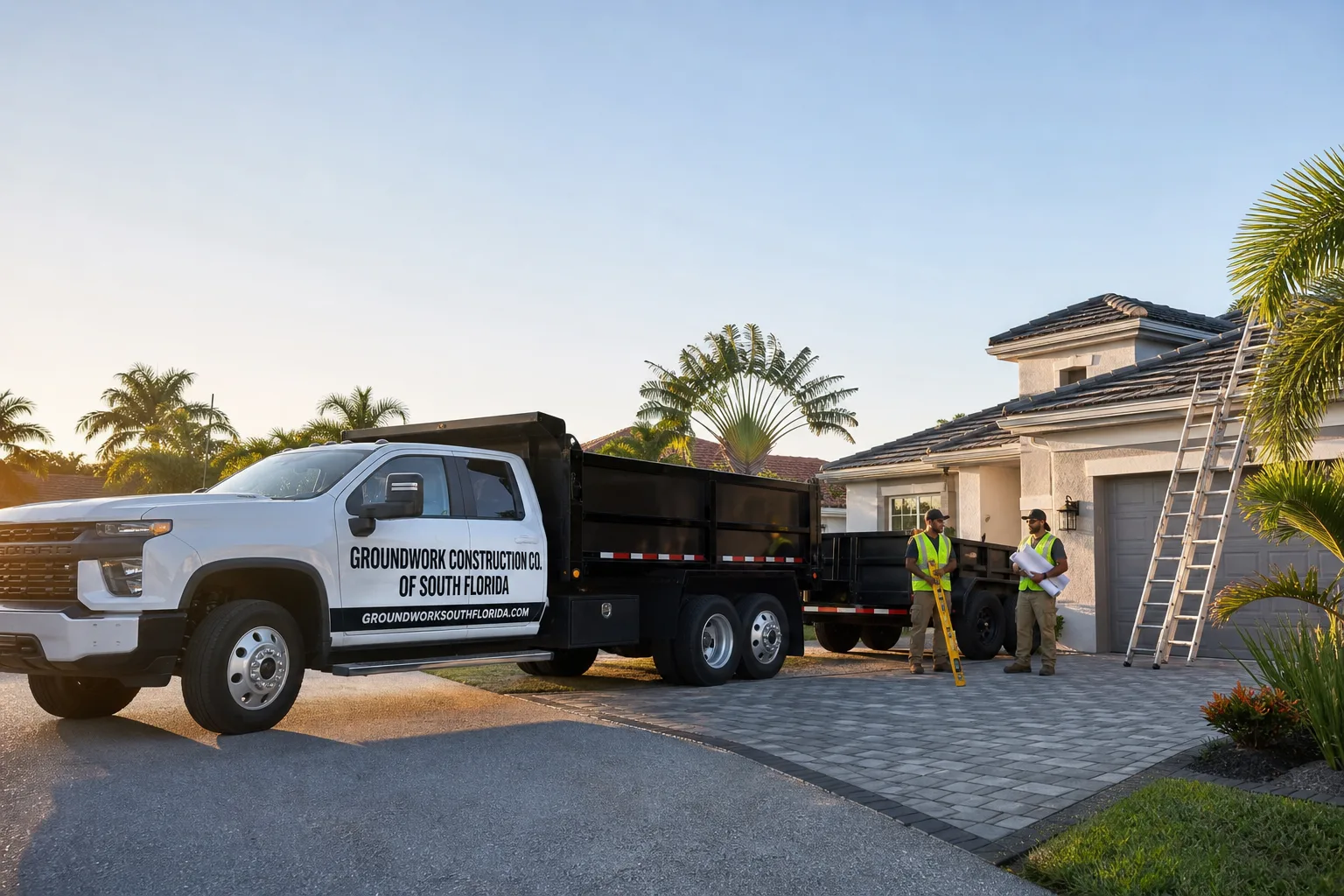
What Specialty Roofing in Miami Actually Involves
Specialty roofing in Miami covers non-standard installations like flat roofs, low-slope systems, green roofs, cool roofs, and hurricane-resistant assemblies that go beyond conventional shingle replacement. Most projects take 3 to 10 days depending on complexity, with permitting adding 2 to 4 weeks in Miami-Dade County. Call (844) 665-0162 for a free on-site estimate and written quote.
Miami’s coastal environment attacks roofing systems from above and below. Salt air accelerates corrosion on fasteners and flashing. Intense UV degrades membrane seams. And the combination of flat roofs on older CBS homes with poor drainage creates chronic ponding that voids most standard manufacturer warranties. That’s why specialty roofing here isn’t just about materials - it’s about designing assemblies that survive conditions conventional systems weren’t built for.
We handle specialty roofing as part of a full exterior envelope approach, but you can also explore Roofing in Miami for broader project scopes. Our Roofing crew works across South Florida, including Miami and nearby Allapattah, Brownsville, Coconut Grove, and Coral Gables.
How We Approach a Specialty Roofing Project
Every specialty roof we install in Miami follows a five-stage sequence. Homeowners know what’s happening, what they’re deciding, and how long each phase takes.
Stage 1: Structural and Existing Roof Assessment - 1 day
We walk the roof, probe the substrate, and inspect the decking from inside the attic or through core cuts on flat systems. On CBS homes built from the 1940s through 1970s - common from Little Havana to Flagami - we’re checking for rebar corrosion that has migrated into roof-to-wall connections. We document existing drainage paths, note any ponding history, and photograph everything. You’ll receive our findings same day, including whether the existing structure can support heavier systems like paver-ballasted cool roofs or if lightweight TPO is the safer path.
Stage 2: Material Selection and Miami-Dade NOA Verification - 3 to 7 days
This is where you choose your assembly, and where our supplier relationships matter. Every product must carry a current Miami-Dade Notice of Acceptance - not just Florida product approval. We verify NOA status directly with the county database before anything gets ordered. Options include single-ply TPO or PVC membranes, modified bitumen with reflective cap sheets, built-up roofing with flood coats, or vegetated green roof assemblies. Each has different slope requirements, R-value contributions, and wind-uplift ratings. We present two to three assemblies that fit your structure, budget, and aesthetic goals.
Stage 3: Permitting and HOA Coordination - 2 to 4 weeks
We pull permits through Miami-Dade County’s roofing division and submit NOA documentation, engineered drawings, and wind-load calculations. If you’re in a gated community or historic district like parts of Coral Gables, we handle HOA architectural review submissions simultaneously. This stage runs parallel to material ordering so we’re not losing calendar time.
Stage 4: Tear-Off, Prep, and Installation - 3 to 10 days
Crews arrive with roll-off containers positioned to avoid blocking narrow Miami alleys or shared driveways common in 33137 and 33138. We strip to the deck, replace compromised plywood or concrete topping, install tapered insulation where drainage is being corrected, and lay the new assembly. On flat roofs, we pay obsessive attention to cricket construction around HVAC curbs and parapet wall flashing - these are the leak points we see most often on callbacks from other contractors.
Stage 5: Inspection, Punch List, and Warranty Registration - 1 to 2 days
Miami-Dade requires a mid-roof and final inspection for most specialty assemblies. We coordinate scheduling, meet the inspector on site, and address any notes immediately. Final documentation includes manufacturer warranty registration, our workmanship warranty terms, and maintenance recommendations specific to your assembly type.
The Specialty Roofing Options You’ll Choose Between
Specialty roofing in Miami isn’t one product. It’s a decision tree where each branch has real consequences for cost, performance, and how often you’re back on the roof.
- TPO single-ply membrane: White reflective surface, excellent for cooling load reduction in Miami’s climate. Seams are heat-welded, not glued, which holds up better to thermal cycling. Typical lifespan 15 to 20 years with proper maintenance. Best for large flat roofs with good structural capacity. Lower material cost, but requires skilled installation for seam integrity.
- PVC single-ply membrane: More chemically resistant than TPO, making it better near grease vents or coastal industrial exposure. Higher material cost but longer track record in South Florida. Welds are more forgiving of temperature variation during installation. We specify PVC for restaurants, medical facilities, and properties within two blocks of saltwater.
- Modified bitumen with cool cap sheet: Two-ply system with torch-applied or self-adhering base and a reflective granulated cap. More puncture-resistant than single-ply, better for roofs with regular foot traffic or multiple HVAC units. Heavier weight requires verified structural capacity, especially on 1940s and 1950s CBS construction with original roof decks.
- Built-up roofing (BUR) with flood coat: Traditional multi-layer asphalt and felt with a flood-applied aluminum coating. The heaviest and most labor-intensive option, but unsurpassed for waterproofing on dead-flat roofs with chronic drainage issues. We specify this when we’re correcting someone else’s failed low-slope installation and need maximum redundancy.
- Green or vegetated roof assembly: Extensive systems with 3 to 6 inches of growing medium, sedum or native grasses, and integrated drainage mats. Reduces stormwater runoff significantly - relevant given Miami’s shallow water table and king-tide flooding. Requires structural engineering, irrigation planning, and ongoing maintenance commitment. Higher upfront cost, but qualifies for some Miami-Dade stormwater credits and extends membrane life by shielding it from UV.
Many homeowners pair exterior envelope upgrades with other projects. If you’re rethinking how your home connects to outdoor space, Sliding & Patio Doors in Miami is a natural complement. For properties with balconies or elevated decks, Glass Railing Systems in Miami can complete the transformation.
What Specialty Roofing Costs in Miami, FL
Specialty roofing in Miami typically runs $12,000 to $35,000 for residential flat or low-slope systems, with green roof assemblies starting around $25,000 and extending past $50,000 for extensive systems on larger homes. Here’s what moves you within or beyond that range:
- Roof size and complexity: A simple 1,200-square-foot flat roof in Allapattah runs toward the lower end. A multi-level roof with parapets, skylights, and HVAC curbs in Coconut Grove pushes labor hours up significantly.
- Existing condition and tear-off depth: Stripping to concrete deck and replacing saturated insulation adds $3 to $5 per square foot. Discovering compromised rebar at roof-to-wall connections can trigger structural repairs that add $2,000 to $8,000.
- Material grade and assembly type: Entry TPO runs roughly $8 to $12 per square foot installed. PVC or multi-ply modified bitumen jumps to $12 to $18. Green roof assemblies with engineered growing medium and irrigation start at $22 per square foot.
- Drainage correction requirements: Installing tapered insulation crickets or new internal drains on a dead-flat roof adds $1,500 to $4,000 but prevents the ponding that destroys most Miami flat roofs within eight years.
- Permit scope and NOA documentation: Straightforward permits run $400 to $800. Complex projects requiring engineer-stamped drawings or variance requests add $1,500 to $3,500 in professional fees.
Our written estimates include tear-off, disposal, decking repair up to specified limits, new roofing assembly, flashing, permits, and inspections. They do not include structural engineering (when required), HVAC relocation, or interior repair of pre-existing water damage. We flag these potentials during assessment so you’re not surprised.
What Miami Homes Specifically Do to This Job
Miami-Dade County’s Notice of Acceptance system creates a compliance environment unlike anywhere else in Florida. A roofing assembly approved in Broward County - literally one mile north in Fort Lauderdale - can be code-illegal here. We’ve seen contractors from outside the county source materials from their usual suppliers, pass initial inspection, then fail final when the NOA documentation doesn’t match the county database. That stalls certificate of occupancy and leaves homeowners in permit limbo. We verify every product’s NOA status before it hits the truck, and we maintain relationships with Miami-Dade-approved suppliers who understand the distinction.
The housing stock in central Miami ZIPs - 33137, 33138, 33142, 33143 and the broader 33125, 33126, 33127 area - is dominated by CBS construction from the 1940s through 1970s. These homes feature flat or low-slope built-up roofs that have been patched repeatedly, often with incompatible materials. Original jalousie windows and single-pane aluminum frames create condensation paths that corrode roof-wall intersections from inside. When we pull a permit for specialty roofing on these structures, we’re also assessing whether the rebar corrosion that typically affects the lower walls has compromised the roofline bond beam. It’s not uncommon to find that a roof replacement triggers a structural reinforcement scope that wasn’t visible from the surface.
The salt-air exposure is relentless. In Coconut Grove and along Biscayne Bay, we’ve measured fastener corrosion rates that compromise standard galvanized hardware within seven years. That’s why we specify stainless steel fasteners, coated structural attachments, and membrane flashings rated for coastal UV exposure on every Miami specialty roof. Standard inland specifications fail here. It’s not a matter of if, but when.
Serving Miami, FL - Our Local Coverage Area
We’re based in the Miami area and know this community well. Use the map below to see our service coverage - if you’re nearby, we can almost certainly help.
Frequently Asked - Specialty Roofing in Miami
Most specialty roofing projects in Miami take 5 to 14 days of actual construction, with permitting adding 2 to 4 weeks before work begins. Complex green roof assemblies or projects requiring structural reinforcement can extend to 3 weeks on site. Call (844) 665-0162 and we’ll give you a realistic timeline based on your specific roof and the current permit queue.
Yes, Miami-Dade County requires permits for all roofing work, and specialty assemblies need additional NOA product documentation and often engineer-stamped drawings. We handle the entire permit process, including Miami-Dade’s separate product approval verification that out-of-county contractors frequently miss. The permit typically takes 2 to 4 weeks depending on complexity.
Usually yes, but it depends on the unit’s condition and the roof assembly type. We work around existing HVAC curbs on most flat roof replacements, installing new flashing and crickets to improve drainage. If the curb itself is corroded or the unit is at end of life, we’ll flag it during assessment so you can coordinate with your HVAC contractor. We don’t move refrigerant lines or ductwork - that’s a separate trade - but we coordinate sequencing so you’re not paying for two mobilizations.
Yes, specialty roofing in Miami typically costs 40% to 100% more than conventional asphalt shingle replacement on a per-square-foot basis, with projects ranging from $12,000 to $35,000 versus $8,000 to $20,000 for standard sloped roofs. The premium reflects specialized materials, more complex installation, and the structural and drainage corrections that flat or low-slope systems require in this climate. You’re paying for an assembly that won’t fail the way the previous one did.
Manufacturer material warranties range from 10 to 20 years depending on the membrane type and installation method, with some premium PVC systems offering up to 20 years when installed by a certified contractor. Our workmanship warranty covers installation-specific issues like seam failure or flashing defects for a separate term. We register all warranties in your name and provide documentation at project closeout. Call (844) 665-0162 for specifics on the assembly you’re considering - estimates are free.
Get Your Specialty Roofing Estimate in Miami
Call (844) 665-0162 to schedule a free on-site assessment for specialty roofing in Miami. Raymond Estevez or a senior member of our team will walk your roof, explain what assembly types fit your structure and budget, and deliver a written estimate within 48 hours. No deposit required to schedule, and we’ll verify Miami-Dade NOA compliance on every product before we propose it.
Written by Raymond Estevez, Owner at Groundwork Construction Co., serving Miami since our founding in South Florida.