
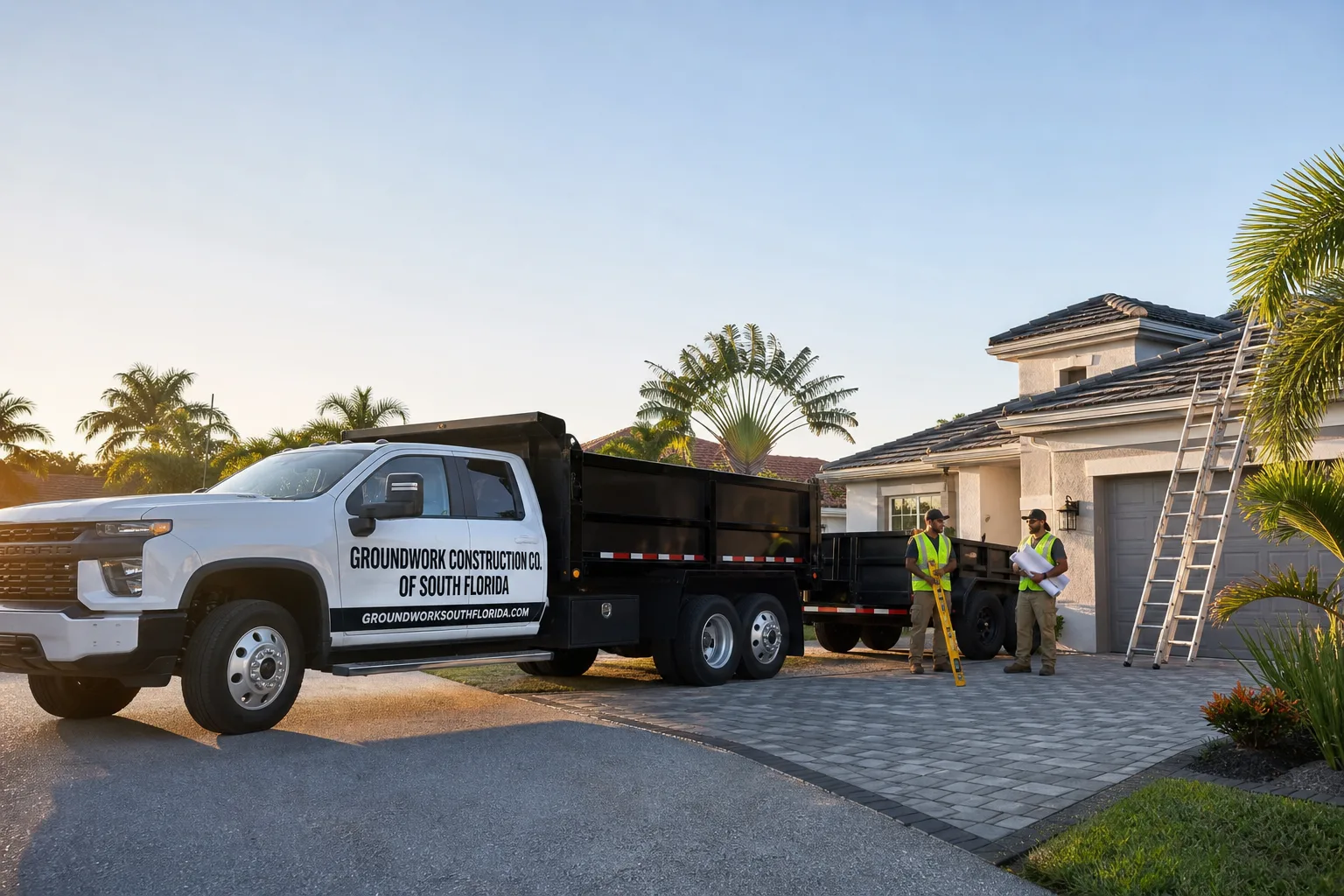
Specialty Roofing in Brownsville, FL: Timeline, Cost, and What Makes It Different
Specialty roofing in Brownsville, FL typically runs $8,000-$20,000 for a full replacement and takes 3-7 days depending on the system complexity and whether we’re working around existing HVAC or solar penetrations. Because Brownsville sits inside Miami-Dade County’s High-Velocity Hurricane Zone, every material we specify must carry a Miami-Dade Notice of Acceptance (NOA), not just a standard Florida Product Approval. Call (844) 665-0162 and we’ll walk you through which specialty systems qualify and what your existing structure can support.
How We Approach a Specialty Roofing Job Start to Finish
Day one is always about access and protection. We tarp the perimeter, set debris chutes, and run a magnet sweep before anyone sets foot on the roof. For the older CBS homes we see throughout Brownsville’s 33142 core, this stage includes a visual check of the roof-to-wall connection straps. Those original metal ties from the 1960s and 70s often show corrosion from decades of salt-laden air, and if we’re already stripping the roof, it’s the only practical moment to upgrade them.
Days two through four cover tear-off and substrate inspection. We remove in sections, never exposing more sheathing than we can re-cover the same day. Specialty roofing systems, whether we’re talking about integrated solar-ready membranes, cool-roof TPO assemblies, or standing-seam profiles with hidden fasteners, demand a flatter, cleaner deck than standard shingle work. We mark every soft spot, every area where the original plywood has delaminated from humidity cycling, and we photograph it for you before deciding on repairs.
Day five shifts to dry-in and detail work. This is where specialty roofing diverges most from a standard re-roof. Flashing transitions, custom crickets around chimneys or mechanical curbs, and membrane terminations at parapet walls all get installed now. In Brownsville’s flat interior terrain, we’ve learned to detail every penetration as if it’s going to sit in standing water, because during summer storms, it often does.
Days six and seven go to the finish system and final inspection prep. We coordinate the Miami-Dade inspector, pull the NOA documentation for every product on your roof, and run our own water-test before the county ever shows up. You get a walk-through with photos of the completed work and a packet with material warranties and maintenance intervals.
The decisions you’ll make along the way: whether to upgrade the roof-to-wall connections (we recommend it on pre-1992 homes), whether to add rigid insulation during the re-cover, and whether to spec a white or reflective cool-roof surface given Brownsville’s intense UV exposure. We bring samples and energy-modeling comparisons to your kitchen table so you’re not guessing.
The Specialty Roofing Options You’ll Actually Choose Between
- Modified bitumen torch-down systems - The workhorse for low-slope sections on older Brownsville duplexes and small multifamily buildings. Two-ply systems with granulated caps hold up to foot traffic and resist puncture, but they don’t reflect heat as well as newer membranes. Good for budget-conscious owners who need a 15-20 year solution and don’t mind slightly higher cooling loads.
- TPO single-ply with mechanical fastening - White reflective surfaces that drop attic temperatures significantly in Miami-Dade’s climate. The seams are heat-welded, not glued, which matters when you’re dealing with thermal expansion cycles. TPO requires a cleaner substrate and more precise installation, but the energy payback is real. We source TPO from manufacturers with current Miami-Dade NOAs, not just Florida Product Approvals.
- Standing seam metal (aluminum or galvalume) - Hidden fasteners, no exposed penetrations, and a 40-60 year lifespan. Aluminum resists salt corrosion better than steel in Brownsville’s environment, though it costs more upfront. The profile height and seam spacing affect both wind uplift resistance and appearance; we show you mockups on similar local homes before you commit.
- Built-up roofing (BUR) with modified cap sheets - Multiple plies of asphalt and reinforcing fabric, finished with a reflective coating. Heavier than single-ply systems, which can matter on older structures with marginal framing. The redundancy is the selling point: if one ply is compromised, the others hold. We see this spec’d most often on commercial-adjacent residential properties in the area.
- Integrated solar-ready membranes - TPO or PVC systems pre-engineered with mounting zones for future panel installation. The membrane warranty stays intact because the mounts don’t penetrate. You’re paying a premium now for a seamless addition later, and it’s worth it only if you’re genuinely planning solar within five years.
What Specialty Roofing Costs in Brownsville, FL
For a typical Brownsville home in the 1,200-2,000 square foot range, specialty roofing runs $8,000-$20,000. That spread reflects real variables we’ve tracked across dozens of local jobs.
Size and complexity drive the baseline. A simple gable roof with one chimney is at the low end. Multiple levels, parapet walls, or integrated gutters push labor hours up fast. Existing condition matters enormously: we regularly find rotted fascia, corroded flashing, and failed underlayment on the 1950s-1970s CBS homes that dominate this neighborhood. Each repair layer adds material and time.
Material grade and system thickness create the next price tier. A 45-mil TPO costs less than an 80-mil reinforced membrane. A four-layer modified system costs more than two-ply. We quote options side by side so you see the trade-off.
Structural upgrades are the wild card. If your roof-to-wall connections don’t meet post-Andrew Miami-Dade standards, and you’re pulling a permit, the inspector will require the upgrade. Same for rotted sheathing or inadequate rafter spacing for the new system’s load. We inspect for this during our initial walk-through and flag it in your written estimate, never as a mid-project surprise.
Permit scope and inspection scheduling add soft costs. Miami-Dade’s HVHZ permitting is more rigorous than Broward’s, and re-inspection fees apply if the first visit fails. We handle all submittals and coordinate inspections, but the county’s timeline isn’t ours to control.
What’s included: tear-off to deck, deck repair up to a specified square footage, new underlayment or insulation board, the finish roofing system, all flashings and penetrations, permit fees, and final cleanup. What’s typically separate: structural reframing, gutter replacement, skylight or solar tube installation, and interior ceiling repair if there’s been long-term leakage. We itemize everything in writing before work starts.
What Brownsville’s Conditions Mean for Your Roof
Brownsville’s placement inside Miami-Dade’s High-Velocity Hurricane Zone changes every decision about a specialty roofing project. The Miami-Dade NOA requirement isn’t bureaucratic trivia; it’s a hard filter that eliminates products widely used in Fort Lauderdale or Palm Beach. We’ve seen contractors from neighboring counties install Florida-approved underlayment or ventilation components that inspectors here red-tag on sight, forcing complete removal.
The housing stock compounds the challenge. Most homes in 33142 were built as concrete block and stucco structures in the decades before Hurricane Andrew, with roof-to-wall connections that were adequate for 1970s wind loads but fail current uplift calculations. When we strip a roof on one of these homes, we almost always find corrosion at the strap connections from decades of salt air and humidity. The metal hasn’t failed yet, but it’s thin enough that a modern inspector will flag it.
The flat terrain and high water table mean something else for specialty roofing: drainage design matters more than slope. Water doesn’t run off quickly on low-pitch roofs in this neighborhood. We specify crickets, tapered insulation, and secondary drainage paths as standard, not upgrades, because we’ve seen what happens when standing water meets a minor seam flaw during August’s afternoon storms.
UV intensity here is genuinely higher than inland Florida markets. Standard asphalt-based products degrade faster. That’s why we lean toward reflective membranes or standing seam metal for specialty applications in Brownsville, even when the upfront cost runs higher. The material survives longer, and the cooling load reduction is measurable.
Serving Brownsville, FL - Our Local Coverage Area
We’re based in the Brownsville area and know this community well. Use the map below to see our service coverage - if you’re nearby, we can almost certainly help.
Frequently Asked - Specialty Roofing in Brownsville
Most specialty roofing projects in Brownsville take 3-7 days from tear-off to final inspection, with an additional 1-2 weeks for Miami-Dade permit approval before work starts. Complex rooflines, structural repairs, or weather delays can extend that. Call (844) 665-0162 and we’ll give you a realistic timeline based on your specific roof geometry.
Yes, any roofing work beyond minor repairs requires a Miami-Dade County building permit, and specialty roofing systems trigger additional HVHZ documentation because they must carry Miami-Dade Notices of Acceptance. We prepare and submit all permit paperwork, including product NOAs and engineering calculations, as part of our standard process.
Often yes, but it depends on the platform type and condition. Curb-mounted units on a flat roof section can usually stay in place while we work around them, though we may need to raise or reflash the curb. Platform-mounted compressors on sloped areas sometimes require temporary relocation for proper membrane or metal detailing underneath. We assess this during our initial inspection and tell you before you sign anything.
Specialty roofing typically costs 20-40% more than a standard asphalt shingle roof of the same size because of material pricing, longer installation time, and stricter fastening and flashing requirements. The payback comes in lifespan, energy efficiency, and in Brownsville’s case, better wind resistance that can affect insurance considerations. We’ll run the comparison for your specific home so you’re choosing with real numbers.
Material warranties range from 15 years on entry-level modified bitumen to 30 years or more on premium TPO and standing seam metal systems. Our workmanship warranty covers installation defects for a separate term, and we register all manufacturer warranties in your name so there’s no gap if you sell the home. We explain exactly what’s covered and what maintenance keeps the warranty valid before we start the job.
Get a Free On-Site Estimate for Specialty Roofing in Brownsville
We’ll walk your roof, take measurements, photograph the existing conditions, and deliver a written estimate with material options and a clear scope within 48 hours. No pressure, no surprises. Call (844) 665-0162 to schedule. If your project is part of a full exterior update, our Roofing in Brownsville page covers how we coordinate roofing with windows, doors, and siding through one team. You can also explore how we serve Brownsville across all our trades, or see what our Roofing crew handles regionally. Many homeowners pair specialty roofing work with Sliding & Patio Doors in Brownsville or Glass Railing Systems in Brownsville for a complete exterior refresh.
Written by Raymond Estevez, Owner at Groundwork Construction Co., serving Brownsville and South Florida homeowners with full-scope residential construction since our founding.