
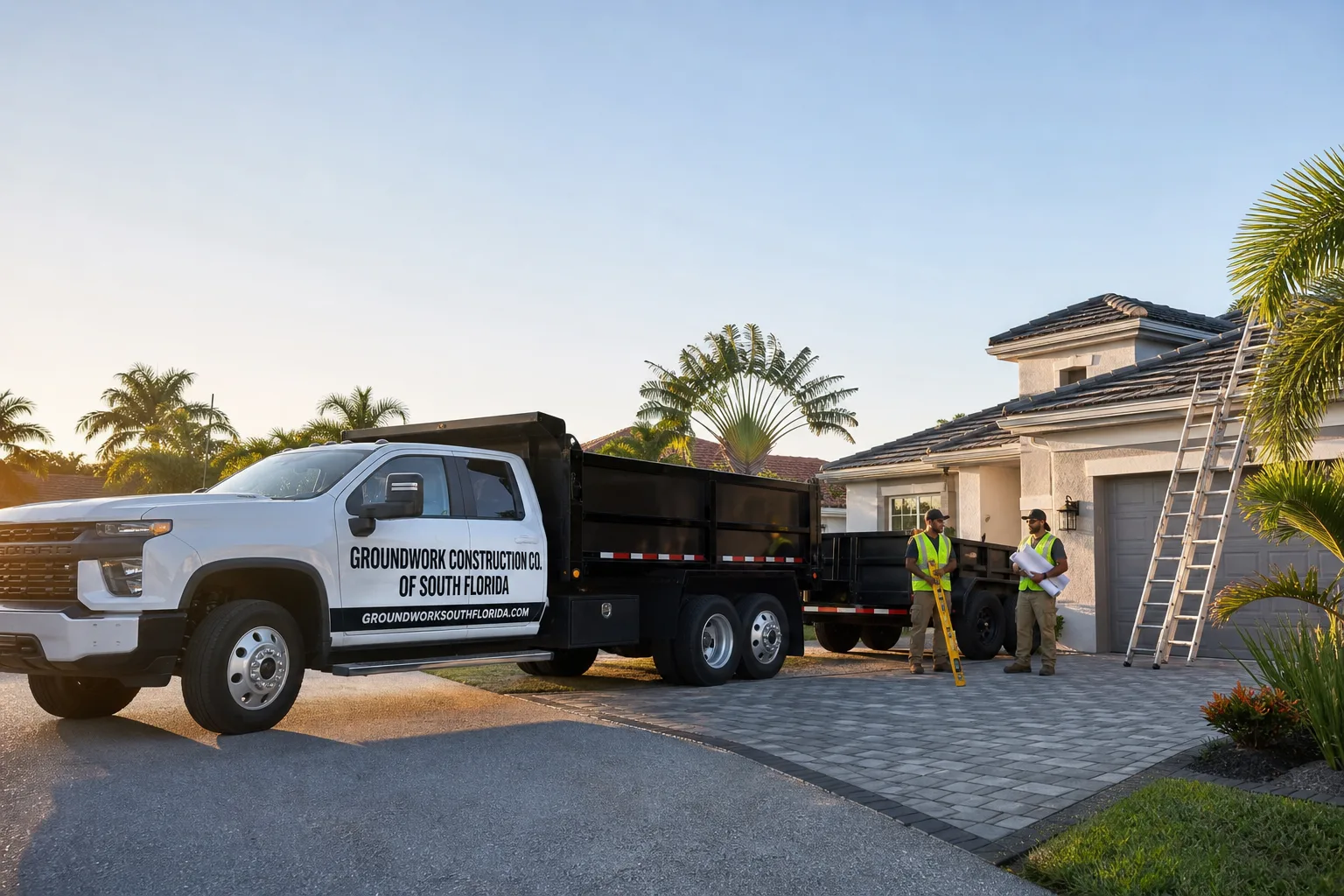
What Specialty Roofing Costs and Involves in Miami Gardens
Specialty roofing in Miami Gardens typically runs $8,000-$20,000 for a full replacement on a standard single-story ranch, with most projects taking 3-5 working days once materials arrive. Because nearly every home here sits on a 1950s-1970s Carol City-era concrete block structure with original flat or low-slope roofing, the job almost always includes hurricane strap retrofitting and Miami-Dade HVHZ code compliance work that simpler re-roofs skip. Call (844) 665-0162 and we’ll walk you through what’s actually required for your specific roof type and whether your existing deck can carry the upgrade.
How We Handle Specialty Roofing from First Call to Final Inspection
We’ve learned that specialty roofing in Miami Gardens demands more pre-construction legwork than almost anywhere else in South Florida. The county’s HVHZ requirements don’t bend for older stock, and the original Carol City builds were never designed for 175 mph wind loads. Here’s how we sequence the work so nothing surprises you mid-project.
Stage 1: On-site assessment and scope lock (Day 1, 2-3 hours)
We climb the roof, photograph the existing deck, measure slopes and penetrations, and check your attic for original tie-beam connections. On Carol City-era homes, we’re specifically looking for whether the roof was ever retrofitted with hurricane straps or if we’re staring at bare timber. This determines whether your permit triggers the mandatory wind mitigation inspection. You’ll decide at this stage whether you want us to spec for a full HVHZ-compliant system or a partial upgrade that still passes code. We bring shingle samples from GAF, CertainTeed, and Owens Corning so you can see color and texture against your stucco.
Stage 2: Permit pull and material order (Days 2-10, homeowner not present)
We submit to Miami-Dade Roofing Permits with full HVHZ product approval documentation. Every shingle, underlayment, and fastener must carry a Miami-Dade Notice of Acceptance (NOA). This is where crews who primarily work Broward County often stall out; they spec materials that work in Fort Lauderdale but fail Miami-Dade’s stricter submittal. We order only after permit approval to avoid restocking fees when the inspector flags a product mismatch.
Stage 3: Tear-off and deck inspection (Day 1 of construction, 4-6 hours)
We strip to the bare deck and assess what the exterior couldn’t reveal: soft spots from decades of flat-roof ponding, termite damage in fascia boards, or original 1×6 plank decking that’s too gapped for modern underlayment. You’ll get a call by noon if the deck needs replacement or if we need to sister new rafters to existing tie-beams for strap anchorage. No work proceeds until you approve the change order.
Stage 4: Structural retrofit and dry-in (Days 2-3)
This is where specialty roofing diverges from standard re-roofs. We install hurricane straps between roof framing and top plates, often requiring us to open soffits or gable-end walls on original construction. The new roof deck goes down, followed by self-adhered membrane in valleys and along eaves, then synthetic underlayment rated for HVHZ exposure. We dry-in each section before dark; Miami Gardens afternoon thunderstorms don’t negotiate.
Stage 5: Finish roofing and inspection coordination (Days 4-5)
Shingles or flat-roof membrane install, followed by metal edge flashing, vent boots, and ridge vent integration. We schedule the Miami-Dade roofing inspector and, if triggered, the separate wind mitigation inspector. Both must sign off before we consider the job complete. We leave you with manufacturer warranty cards, our workmanship documentation, and photos of the strap installation for your insurance file.
The Material and System Choices You’ll Actually Decide Between
Specialty roofing in Miami Gardens isn’t about picking a color. The underlying system determines whether you’ll pass inspection and how your home performs in the next Category 4. Here’s where your money goes:
- Architectural asphalt shingles vs. flat-roof membrane: Most Carol City ranches were built with flat or nearly flat roofs originally covered in hot-mop tar and gravel. If you’re staying flat, we spec TPO or modified bitumen with HVHZ-rated fastening patterns. If you’ve got enough slope, architectural shingles from GAF Timberline HDZ or CertainTeed Landmark give better wind uplift ratings and longer material warranties. Shingles cost less upfront; membrane systems last longer but require specialized crews.
- Deck replacement vs. overlay: Florida code allows one overlay in some cases, but Miami-Dade inspectors often reject overlays on pre-Andrew homes with plank decking. Full 5/8″ plywood replacement adds $2,000-$4,500 but eliminates the callback risk and gives you a clean substrate for underlayment adhesion.
- Standard underlayment vs. self-adhered ice-and-water shield: HVHZ code requires sealed valleys and eaves, but we also recommend full self-adhered coverage on low-slope sections where wind-driven rain can push uphill. The upgrade runs $800-$1,500 on a typical ranch but prevents the leaks we see most often in Carol City homes with original shallow pitches.
- Ventilation strategy: Those 1960s ranches were built with gable vents and zero ridge ventilation. We calculate net free area and often recommend converting to ridge-and-soffit flow, which requires cutting new soffit intakes. It’s additional carpentry, but it extends shingle life by reducing attic heat and moisture.
- Impact-rated skylights or solar tube integration: If you’re opening the roof deck, this is the moment to add daylighting. We work with Velux and Solatube products that carry HVHZ approvals. Retrofitting later means a second permit and another potential leak point.
Our roofing crew coordinates directly with our window and door team if you’re also replacing original jalousies with impact-rated units, which many Miami Gardens homeowners bundle into the same permit cycle.
What Specialty Roofing Costs in Miami Gardens, FL
| Project Component | Typical Range |
|---|---|
| Standard specialty re-roof (existing deck sound) | $8,000 - $14,000 |
| Specialty re-roof with full deck replacement | $11,000 - $17,500 |
| Specialty re-roof with hurricane strap retrofit | $12,500 - $20,000 |
| Flat-to-slope conversion (structural framing added) | $18,000 - $28,000+ |
Five variables push your number within these ranges. Roof size and complexity matter most; a simple 1,200-square-foot gable runs leaner than a 2,000-square-foot hip with multiple dormers. Existing deck condition is the biggest surprise factor, and on Carol City homes built before 1975, we find soft decking on roughly half our tear-offs. Structural retrofit scope determines whether we’re adding straps to accessible tie-beams or reframing sections where original lumber won’t take hardware. Material tier moves the needle less than you’d expect; the jump from standard architectural to premium designer shingles is usually $1,500-$3,000, while the jump from shingle to standing seam metal is substantial and handled on our Roofing in Miami Gardens page. Permit and inspection complexity is fixed for us but variable for less experienced crews who resubmit plans or fail inspections.
Our written estimates include tear-off, disposal, deck repair up to 10% of surface area, HVHZ-rated materials, strap installation, permit fees, and both rough and final inspections. What’s typically separate: full deck replacement beyond 10%, fascia or soffit carpentry, gutter replacement, and any interior drywall repair from pre-existing leaks.
Why Miami Gardens Homes Change the Math on Every Roof Job
The residential fabric of Miami Gardens is almost entirely 1950s-1970s Carol City suburban development, concrete block and stucco ranches built before anyone imagined 175 mph design wind speeds. That history shows up in your roofing permit in very specific ways.
A re-roof permit pulled in ZIP 33056 nearly always triggers Miami-Dade’s mandatory wind mitigation inspection of existing roof-to-wall connections. On original Carol City construction, that means tie-beams resting on top plates with nothing but gravity and old nails holding them together. Contractors who don’t price in the strap retrofitting and inspector coordination routinely blow their budgets by $3,000-$5,000, a mistake we see most often from crews who primarily work Broward County where the same trigger doesn’t apply.
The flat, low-elevation terrain also means any drainage improvement we build into your roof system, from scuppers to internal drains, has to account for a water table that’s rarely more than a few feet down. And the original shallow pitches, often 1:12 or 2:12 on rear additions, were never meant to shed the volume of rain Miami Gardens sees in a summer afternoon. We design for ponding resistance even on nominally sloped sections, because we’ve seen what happens when standard shingle installation meets Carol City geometry.
Homeowners in the Scott Lake and Lake Lucerne areas often pair their roofing project with Sliding & Patio Doors in Miami Gardens to complete the exterior envelope under one permit, or add Glass Railing Systems in Miami Gardens for second-story additions that need HVHZ-rated balustrades.
Serving Miami Gardens, FL - Our Local Coverage Area
We’re based in the Miami Gardens area and know this community well. Use the map below to see our service coverage - if you’re nearby, we can almost certainly help.
Frequently Asked - Specialty Roofing in Miami Gardens
Most specialty roofing projects in Miami Gardens take 3-5 working days of actual construction, plus 7-10 business days for permit approval and material delivery. The timeline stretches if your home needs full deck replacement or if the wind mitigation inspector requires additional strap locations after the first rough inspection. Call (844) 665-0162 and we’ll give you a realistic schedule based on your roof’s current condition.
Yes, every re-roof in Miami-Dade County requires a roofing permit, and specialty roofing on pre-1975 homes almost always triggers the additional wind mitigation inspection. We handle both permit submittals and inspector scheduling as part of our standard process. Attempting to roof without permits in Miami Gardens exposes you to stop-work orders and insurance claim denials.
In most cases, yes. Specialty roofing on a standard Carol City ranch doesn’t require relocating interior systems unless you’re also changing the roofline or adding dormers. If your project includes a flat-to-slope conversion or second-story addition, we’ll flag any plumbing vent or electrical service mast relocations during the initial assessment so they’re priced before construction starts.
Specialty roofing addresses non-standard configurations, older structural systems, or code compliance gaps that a straightforward shingle-over-shingle replacement won’t solve. In Miami Gardens, that typically means hurricane strap retrofitting, deck replacement, low-slope membrane systems, or coordinating multiple inspection types that standard re-roofs don’t trigger.
Material warranties run 25 years to lifetime depending on the shingle or membrane manufacturer, workmanship coverage is backed by our project documentation, and HVHZ-compliant installation preserves your eligibility for wind mitigation insurance discounts. We register all manufacturer warranties in your name and provide the paperwork your insurer requires for premium reduction.
Get an On-Site Estimate for Your Miami Gardens Roof
We’ll walk your roof, photograph the existing conditions, and deliver a written estimate that accounts for the real structural and permitting requirements your Carol City-era home faces. No obligation, no pressure to decide on the spot. Call (844) 665-0162 to schedule your free assessment, or tell us you’re also considering Roofing in Miami Gardens and we’ll scope the full exterior envelope while we’re there.
Written by Raymond Estevez, Owner at Groundwork Construction Co., serving Miami Gardens since our founding in South Florida.